Light, Medium, and Full-Bodied Red Wine: A Collector's Guide
Martine McLarney
September 3, 2026 · 6 min read
Body is usually the first thing you notice about a red wine, before you think about grape or region. It's the weight the wine has in your mouth, the difference between a Pinot Noir that feels light and silky and a Cabernet Sauvignon that coats your teeth and lingers for a minute after you swallow. Once you know where a wine sits on the light-to-full spectrum, you know how to serve it, what to pair it with, and how long it's likely to reward time in the cellar. This guide walks through the different levels of red wine, light-bodied, medium-bodied, and full-bodied, and what actually separates them. For a broader look at grape varieties themselves, see our guide to red wine varieties.
What does body mean in red wine?
What is wine body?
Wine body is the perceived weight and fullness of a wine in the mouth, driven mainly by alcohol, tannin, and extract. Alcohol adds viscosity and a warming sensation on the palate, so higher-alcohol wines tend to feel heavier. Tannin, the phenolic compounds pulled from grape skins, seeds, and sometimes stems, adds grip and structure. Extract is the dissolved solid matter in the wine, things like sugars, glycerol, and phenolics, that give it richness and texture. A wine high in all three reads as full-bodied. A wine low in all three reads as light-bodied. Most red wines land somewhere in between.
What makes a red wine full-bodied?
A red wine reads as full-bodied when it combines alcohol above roughly 13.5 percent, firm tannin, and concentrated extract from ripe, thick-skinned grapes. Warm growing regions, longer hang time on the vine, extended skin contact during fermentation, and oak aging all push a wine toward fuller body. Grape variety sets the ceiling, but climate and winemaking decide how close a wine actually gets to it.
Light-bodied red wines
Which red wines are light-bodied?
Pinot Noir, Gamay, Schiava, and Frappato are the most common light-bodied red wines, generally running under 13.5 percent alcohol with soft, low tannin.
Pinot Noir typically runs 12.5 to 13.5 percent alcohol with light, silky tannin, red fruit character, and an earthy finish. It's the reference point most collectors use for light-bodied red wine. Our complete guide to Pinot Noir covers its regional styles in more depth.
Gamay, the grape behind Beaujolais, runs 12 to 13 percent alcohol with very low tannin and bright acidity. It's often served slightly chilled and works well as an easy weeknight red.
Schiava, grown in Alto Adige, stays around 12 to 12.5 percent alcohol with delicate tannin and a floral, almost rosé-like lightness.
Frappato, from Sicily, sits at 12 to 13 percent alcohol with soft tannin and juicy red fruit, often blended into Cerasuolo di Vittoria.
Light-bodied reds are also the ones that hold up best to a chill. If you're picking bottles for a warm evening, our guide to enjoying red wine in summer covers which of these take well to a few minutes in the fridge.
Medium-bodied red wines
Which red wines are medium-bodied?
Merlot, Sangiovese, Cabernet Franc, and Tempranillo typically land in the medium-bodied range, with alcohol between about 13 and 14.5 percent and moderate tannin.
Merlot runs 13 to 14.5 percent alcohol with softer tannin than Cabernet Sauvignon and plush fruit, which is why it's often used to round out Bordeaux blends.
Sangiovese, the backbone of Chianti, sits at 13 to 14 percent alcohol with firm acidity and medium tannin that softens with a few years of age.
Cabernet Franc runs 12.5 to 14 percent alcohol depending on region, with a peppery, herbal edge and tannin lighter than its offspring, Cabernet Sauvignon.
Tempranillo, the grape behind Rioja, sits at 13 to 14.5 percent alcohol with moderate tannin that's often smoothed further by extended oak aging.
Full-bodied red wines
Which red wines are full-bodied?
Cabernet Sauvignon, Malbec, warm-climate Syrah, and Petite Sirah are classic full-bodied reds, usually above 14 percent alcohol with dense tannin and concentrated fruit.
Cabernet Sauvignon runs 13.5 to 15 percent alcohol with thick skins that give it some of the firmest tannin of any major red grape. Our full guide to Cabernet Sauvignon breaks down its major regions and aging potential.
Malbec, especially from Mendoza, runs 13.5 to 14.5 percent alcohol with velvety but present tannin and dark fruit concentration.
Syrah (Shiraz) from warm regions like the Barossa Valley runs 14 to 15.5 percent alcohol with dense tannin and peppery, smoky fruit.
Petite Sirah runs 14 to 15.5 percent alcohol with some of the highest tannin levels you'll find in a varietal red, which is why many collectors decant it before serving. If you're pouring a young, tannic full-bodied red, our guide to decanting wine covers how long to give it air.
Nebbiolo, the grape behind Barolo and Barbaresco, is a useful exception. It usually sits at 13.5 to 14.5 percent alcohol, not far above medium-bodied wines, but its extremely high tannin and acid push it firmly into full-bodied territory. Alcohol isn't the only lever.
How body changes serving and cellaring
What temperature should each body style be served at?
Lighter reds like Pinot Noir and Gamay show best around 55 to 60°F, while full-bodied reds like Cabernet Sauvignon and Syrah want closer to 60 to 65°F, warm enough for the tannin and fruit to open up. Medium-bodied reds fall in between. Our wine serving temperature guide breaks the full range down by specific style. Glass shape matters too: a wider bowl opens up a full-bodied red's aromatics, while a narrower glass suits the more delicate profile of a light-bodied wine. Our guide to glassware for Cabernet and Pinot covers which shapes work for which body style.
If you're staring at a full shelf of full-bodied reds and aren't sure which one fits tonight's dinner, ask Vincent, InVintory's AI sommelier, for a recommendation pulled from your own cellar instead of a generic pairing chart.
Do full-bodied reds age longer than light-bodied reds?
Not automatically, but full-bodied reds with high tannin and acid tend to have a longer aging window, because those compounds soften gradually over years in the bottle and act as a kind of preservative. A high-quality light-bodied wine like top-tier Pinot Noir can still age for a decade or more, but the aging curve there is usually driven by acid rather than tannin. Body gives you a rough guide, not a guarantee.
Tracking body style across your cellar in InVintory
How do you group wines by body in InVintory?
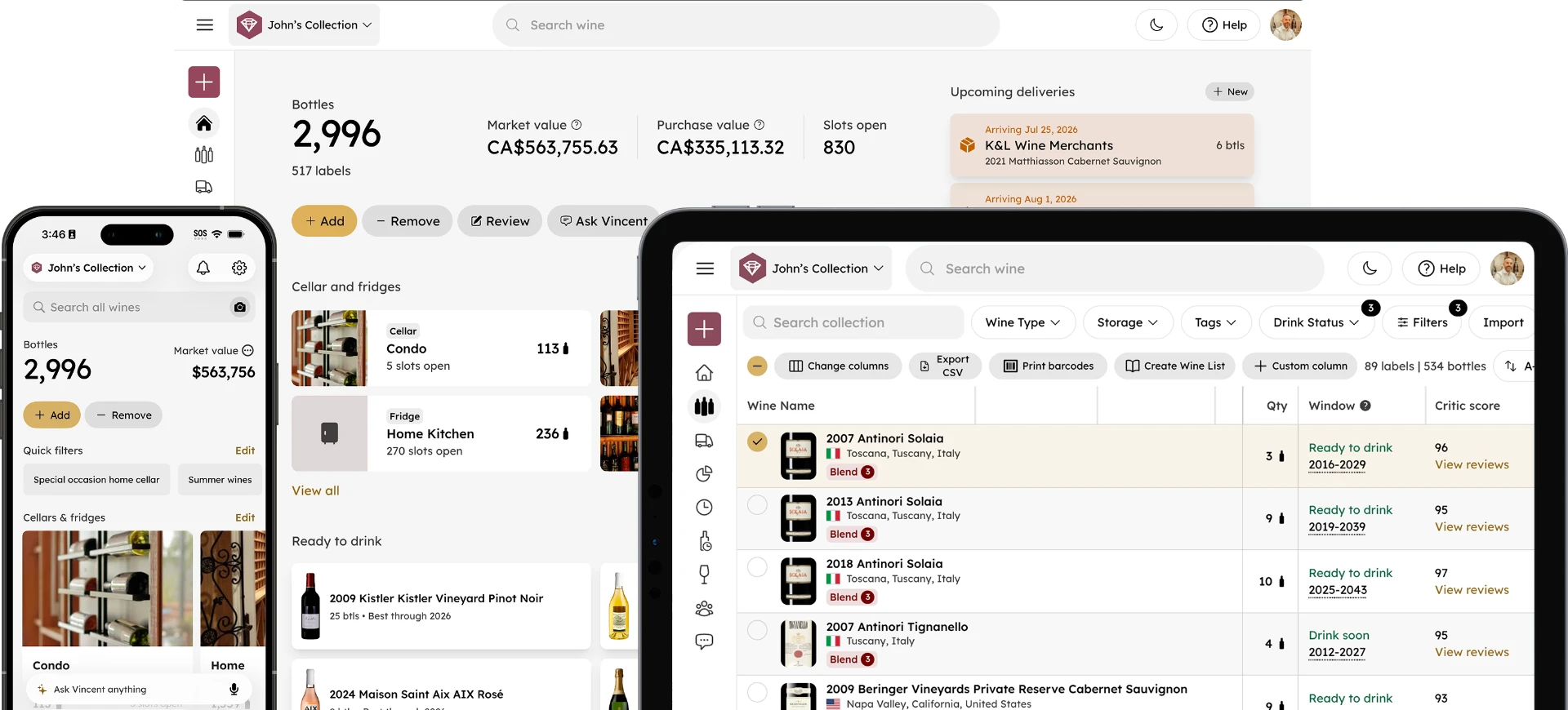
In InVintory, you don't have to memorize which grapes run light or full-bodied. Wine Guide already shows a bottle's structure, including body, tannin, acidity, and alcohol, right on its profile page, and you can save a body-based search as a Quick Filter so it shows up as a one-tap shortcut on your home screen. Open any unfamiliar bottle, a Cabernet Franc you picked up on a whim, for instance, and Wine Guide tells you where it actually lands instead of leaving you to guess from the label. Once you've settled on a body style worth tracking, save it, something like "full-bodied for steak night" or "light reds for warm evenings", and it becomes a shortcut instead of a search you rebuild from memory every time. VinLocate then shows you the visual bottle location for each match in your cellar, so pulling the right one doesn't turn into scanning every rack.
See a bottle's body and structure in Wine Guide the next time you're deciding what to open.
Once you know a wine's body, you stop guessing at what to open, how to serve it, and how long to hold it, and start making that call in seconds.
Compare Free, Premium, and Elite to see which plan fits how deep you want to go with tracking your cellar.
Frequently Asked Questions
Is Pinot Noir light or medium-bodied?
Pinot Noir is generally considered light-bodied. Classic examples from Burgundy and cooler California sites run 12.5 to 13.5 percent alcohol with soft tannin, though riper, warmer-climate versions can edge toward medium-bodied.
What is the fullest-bodied red wine?
Amarone della Valpolicella is one of the fullest-bodied red wines made, because its grapes are dried before fermentation, concentrating sugar and pushing alcohol to around 15 to 16 percent. Old-vine Zinfandel and Petite Sirah are other strong contenders.
Does higher alcohol always mean fuller body?
No. Tannin and extract matter as much as alcohol. Nebbiolo-based wines like Barolo have moderate alcohol but read as full-bodied because of their dense tannin and acid, while some high-alcohol wines with lower tannin can taste less full than their alcohol level suggests.
Is body the same as tannin?
No. Tannin is one contributor to body, but alcohol and extract also play a role. A wine can have high tannin and still feel medium-bodied if its alcohol and extract are moderate, which is part of why body is judged as a whole impression rather than a single measurement.