Pinot Noir, the Complete Collector's Guide
Martine McLarney
August 19, 2026 · 6 min read
Pinot Noir is the grape that punishes shortcuts. Thin-skinned, fussy about climate, and unforgiving of sloppy storage, it is exactly why the good bottles reward so much patience. Building a serious collection means treating Pinot Noir differently than you would Cabernet Sauvignon or other thicker-skinned reds. This guide covers what makes Pinot Noir worth collecting, how region changes what is in the glass, how long to hold a bottle before opening it, what to expect at each price tier, and how to keep the collection organized as it grows.
What makes Pinot Noir worth collecting?
Pinot Noir rewards collectors who care about nuance over power. It is the grape most closely associated with terroir, meaning the same variety planted a few miles apart can taste like two different wines, which makes building a collection genuinely educational.
Is Pinot Noir a good wine to cellar?
Yes, top Pinot Noir ages well for 10 to 20 years, though it is more sensitive to storage conditions than Cabernet Sauvignon. Its lighter tannin structure and higher natural acidity give serious examples real staying power, but that same delicacy means temperature swings, light exposure, and humidity problems show up faster than with a heavier, more tannic wine. A great red Burgundy or a top Willamette Valley bottle can develop for two decades in the right cellar, layering in forest floor, dried cherry, and savory spice as the fruit recedes. A mid-tier bottle from a good producer usually peaks earlier, in the five to ten year range. Because Pinot Noir has less tannin and pigment to act as a natural preservative, consistent cool storage matters more here than with almost any other red variety worth collecting.
Beyond aging potential, Pinot Noir is worth collecting because it is one of the most food-versatile reds you can own, spans an enormous price range, and gives you a real education in how climate and soil translate into flavor. For the same logic applied to a bigger, more structured variety, see our Cabernet Sauvignon Complete Collector's Guide. For the full lay of the land across red varieties, our guide to types of red wine is a good starting point.
How region shapes the bottle
Few grapes translate place into flavor as transparently as Pinot Noir. Thin-skinned and early-ripening, it picks up the character of its site, soil, and climate more readily than thicker-skinned grapes, which is why serious collectors chase specific villages and vineyard sites rather than just a producer name.
What is the difference between Burgundy and New World Pinot Noir?
Burgundy Pinot Noir tends to be leaner, higher in acidity, and more earthy and mineral-driven, while New World Pinot Noir (from Oregon, California, and New Zealand) usually shows riper fruit, softer acidity, and a more immediately generous style. Burgundy's cooler climate and centuries of vineyard classification produce wines that can be austere in youth, built around red fruit, dried herbs, and a strong sense of the specific plot they came from. New World regions generally give you fruit-forward wines that are easier to enjoy on release, though the best from Oregon and Central Otago can rival Burgundy for structure and aging potential.
Côte de Nuits
The Côte de Nuits is Burgundy's benchmark for structured, age-worthy Pinot Noir. This narrow strip of villages, including Gevrey-Chambertin, Vosne-Romanée, and Chambolle-Musigny, produces wines with firm structure, dark cherry and violet notes, and real tension between fruit and earth. Village-level wines are approachable within five to eight years; grand cru and premier cru bottlings are built for the long haul.
Willamette Valley
Willamette Valley has become America's answer to Burgundy, with a cool climate and volcanic soils that produce Pinot Noir with real structure alongside generous fruit. Sub-AVAs like Dundee Hills and Ribbon Ridge show distinct character, and top producers here make wines that age gracefully for 10 to 15 years.
Sonoma Coast
Sonoma Coast delivers riper, more fruit-forward Pinot Noir shaped by fog and cooling Pacific influence. Expect darker fruit and a touch more weight than Burgundy or Oregon, in a style that is often approachable young but still capable of rewarding five to ten years of patience from the coolest sites near the coast.
Central Otago
Central Otago produces some of the most concentrated, sun-ripened Pinot Noir in the world, thanks to its continental climate and high-altitude vineyards. Wines here lean toward dark cherry and plum with a mineral edge, and top examples built for structure can develop well for eight to twelve years.
How long should you age Pinot Noir?
When is Pinot Noir ready to drink?
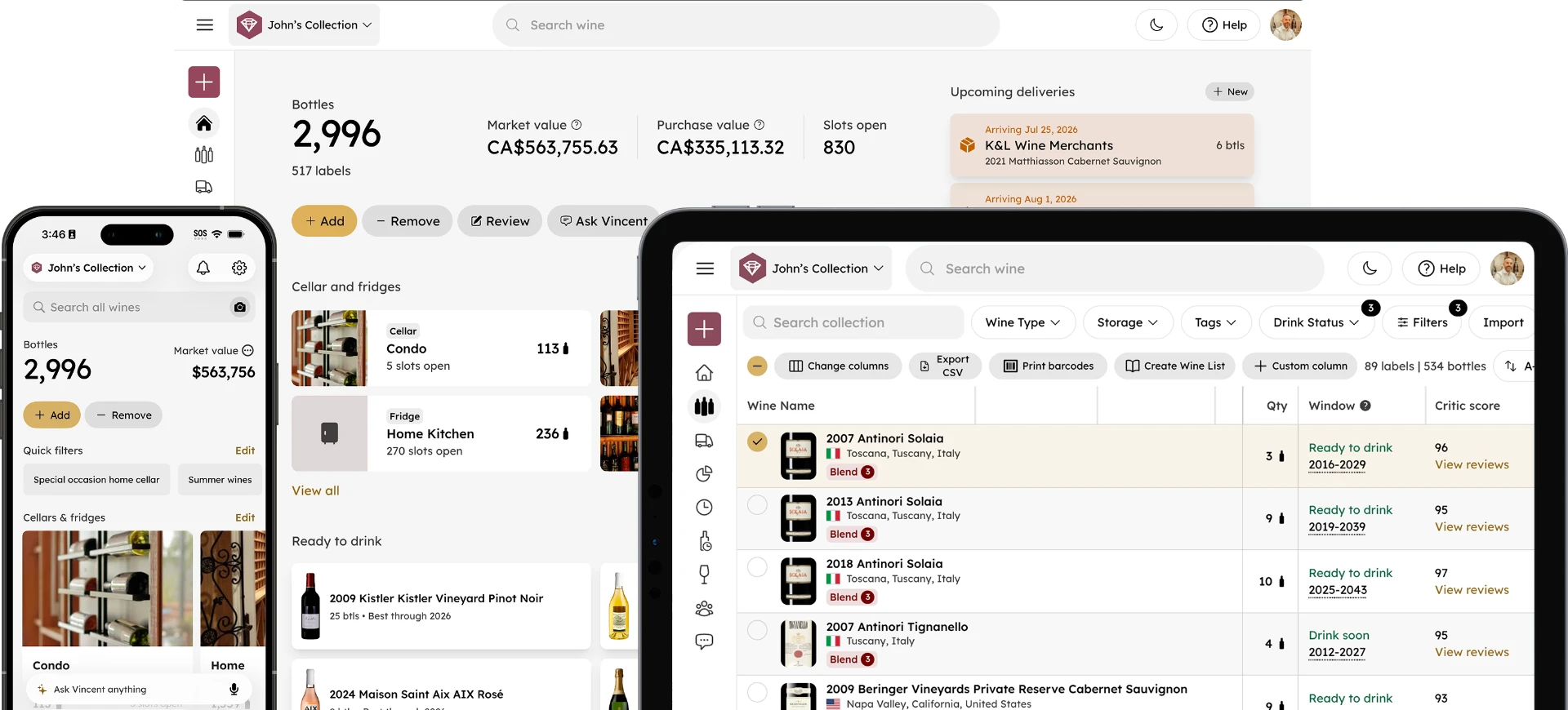
Everyday Pinot Noir under $40 is usually ready to drink on release and best enjoyed within one to three years, while premium bottles in the $40 to $100 range often benefit from three to seven years of cellaring, and serious Burgundy or top New World examples over $100 can reward eight to twenty years. The nuance sits in producer style and vintage. A warm, ripe vintage tends to soften sooner than a cooler, more structured one, and producers who favor whole-cluster fermentation make wines that need more time to integrate. Watch for the signs of readiness: color shifting from bright ruby toward brick or garnet, fruit turning less primary and more dried, and tannins softening into the background. For a deeper breakdown of how drink windows work across grape varieties, our guide on when a wine is ready to drink covers the mechanics. InVintory's Ready to Drink feature calculates this window automatically, so you are not relying on memory to know which Pinot is at its peak right now.
Ask Vincent what's ready to drink → InVintory AI Sommelier
Buying Pinot Noir by price tier
Pinot Noir spans one of the widest price ranges of any red variety. Knowing what you are paying for at each tier keeps you from overpaying for hype.
Under $40: Approachable, fruit-driven wines from the Willamette Valley entry tier, Central Otago's broader appellation bottlings, Sonoma or Monterey County blends, and generic Bourgogne Rouge from France. Made to drink now, within a year or two of release, and rarely improved by extended cellaring.
$40 to $100: Village-level Burgundy, single-vineyard Oregon and Sonoma Coast bottlings, and serious Central Otago producers live here. Expect more concentration, a clearer sense of site character, and enough structure to reward three to seven years in the cellar.
$100 to $300: Premier cru Burgundy, top-tier Willamette Valley reserve bottlings, and cult New World producers sit at this level. These wines show real depth and are built to age, often needing five years minimum before they show their best.
$300 and up: Grand cru Burgundy from producers like Domaine de la Romanée-Conti, Armand Rousseau, or Comte de Vogüé, along with the most sought-after cult Pinots from Oregon and California, occupy this tier. These are collector wines built to age for decades, typically bought with a specific occasion or long-term hold in mind.
Pairing Pinot Noir with food
Pinot Noir's combination of moderate tannin, bright acidity, and red fruit character makes it one of the most food-friendly reds you can own. Its acidity cuts through richer dishes the way a heavier red cannot, while its lower tannin means it will not clash with delicate proteins the way a young Cabernet might.
Roast chicken and duck are classic pairings, balancing fat against acidity and red fruit. Salmon and other fatty fish work well too, especially with a lighter-styled Pinot served slightly chilled. Earthy dishes built around mushrooms, lentils, or root vegetables echo the forest floor and umami notes in mature bottles, and this is where aged Burgundy shines. Charcuterie and softer cheeses like Brie or young Gruyère are reliable standbys for casual tastings. In warmer months, a lightly chilled Pinot Noir is one of the few reds that genuinely improves with a short stint in the fridge, a technique covered in our guide on how to enjoy red wine in summer. Glassware is a topic on its own, but a wide-bowled Burgundy glass does change how Pinot's aromatics show up, and our glassware guide for Cabernet and Pinot covers it in detail.
Tracking your Pinot Noir in InVintory
A Pinot Noir collection is harder to manage from memory than most, since so much of its value depends on knowing which producer, vineyard, and vintage sits in which slot, and whether a bottle is years from its peak or already past it.
Every bottle you log gets a calculated drink window through the Ready to Drink feature, so you can see which of your Burgundy or Willamette Valley bottles are ready now versus which still need time. On Premium and Elite, VinLocate gives you the visual bottle location for any bottle in your cellar, so you are not digging through bins wondering whether that Chambolle-Musigny is on the top shelf. Vincent, InVintory's AI Sommelier, is also exclusive to Premium and Elite, and is especially useful for Pinot Noir, where pairing nuance and drink-window timing matter more than with heavier reds. Ask him what to serve with a roast chicken dinner and he will pull a recommendation from bottles you actually own, or ask him to read a restaurant's wine list.
Start tracking your collection → Get started with InVintory
For collectors tracking multiple regions, InVintory's tagging, with unlimited custom tags on Premium and Elite, lets you organize bottles by appellation, producer, or vintage. If you are cataloging other red varietals too, our guide to types of red wine helps with a consistent tagging system.
Free tracks unlimited bottles across up to 10 cellars and fridges, plus drink-window and food-pairing data, so you can start cataloging a Pinot Noir collection at no cost. Premium adds VinLocate, Vincent, and collection value tracking, useful as your Burgundy or Oregon holdings grow. Elite adds market price tracking and sensor integration for insurance and investment needs. Compare the full breakdown on the InVintory pricing page.
Pinot Noir does not forgive neglect, in the cellar or in your records. Keep the storage steady and the tracking honest, and the bottles will tell you exactly when they are ready.
Ready to organize your Pinot Noir collection? Try InVintory free
FAQ
Is Pinot Noir a good wine for beginners to start collecting?
Yes, Pinot Noir is a good starting point because its lower tannin makes it approachable young, while still offering enough range, from a $20 Bourgogne Rouge to a $500 grand cru, to grow into as your budget develops. Village-level Burgundy or a Willamette Valley bottling from a known producer gives you a reliable baseline before you branch into pricier appellations.
How is Pinot Noir different from Cabernet Sauvignon for collecting purposes?
Pinot Noir is lighter-bodied, lower in tannin, and more sensitive to storage conditions than Cabernet Sauvignon, so it needs more careful temperature control but rewards you with more delicate, terroir-driven complexity. Cabernet's thicker skins and higher tannin give it a longer margin for error in storage, covered in full in our Cabernet Sauvignon collector's guide.
What temperature should I store Pinot Noir at?
Store Pinot Noir at a consistent 55°F (13°C), the same target as most red wine, but treat temperature stability as more important than for heavier reds since its delicate structure shows fluctuation damage faster. Avoid direct light and vibration, and keep humidity around 60 to 70 percent to protect corks.
Can inexpensive Pinot Noir still age well?
Most Pinot Noir under $40 is made for early drinking and will not improve with age, since it lacks the concentration and structure needed for long cellaring. There are exceptions from strong vintages and careful producers, but as a rule, buy inexpensive Pinot Noir to drink within a year or two.