How Wine Investment Actually Works: Bottles, Cases, Funds, and Shares
Madeleine Cruickshank
September 7, 2026 · 10 min read
Can someone explain how wine investment actually works?
Wine investment takes five main forms: buying physical bottles you store yourself, buying cases held in bond by a merchant, buying en primeur futures before release, buying units in a wine fund, and buying fractional shares in individual bottles.
Each is a genuinely different asset, with different custody, costs, liquidity, and risk. Those differences matter far more than most introductory wine investment content acknowledges, and they're the subject of the rest of this post.
Do you physically own the bottles?
It depends entirely on the vehicle, and in two of the five you own a contract rather than wine. With physical bottles and cases in bond, you hold title to identifiable wine. With en primeur, you hold a contractual claim to wine that doesn't exist in finished form yet. With a fund, you own units in the fund, and the fund owns the wine. With fractional ownership, you own a recorded interest in a bottle held by a platform, which is closer to a securities-like arrangement than to owning wine.
This distinction becomes concrete in exactly the situation nobody plans for: if the entity holding your wine fails, what you actually own determines what you can recover.
The Five Ownership Models Compared
Physical bottles, stored by you
You own the wine outright and hold it yourself. There is no minimum beyond the price of a bottle. Liquidity depends entirely on your own effort to find a buyer. The main risk is storage: unmanaged temperature, humidity, or provenance gaps directly damage both the wine and its resale value.
Cases held in bond
You own specific, identified cases stored in a bonded warehouse, typically arranged through a merchant. Minimums usually start at a case rather than a bottle. Liquidity is better than home storage because professional storage and documented provenance make resale considerably easier. The main risk is counterparty: you're relying on the warehouse and merchant to hold, record, and release your wine correctly, and on paying ongoing storage fees.
En primeur futures
You own a contractual right to wine that has not yet been bottled or delivered, purchased before release. Minimums are typically case-based. Liquidity is poor until the wine is physically delivered, which can be a year or more out. The main risks are delivery risk (the merchant must still be solvent when the wine ships) and price risk (the release price may turn out higher than the market price once the wine arrives).
Wine fund units
You own units in a pooled vehicle, not any specific bottle. Minimums are generally substantially higher than buying a case and are set by the fund. Liquidity is governed by the fund's own redemption terms, which may include lock-up periods or scheduled redemption windows rather than sale on demand. The main risks are manager risk, fee drag, and redemption terms that may not let you exit when you want to.
Fractional shares
You own a recorded percentage interest in specific bottles or cases held by a platform. Minimums are typically the lowest of any vehicle, which is the main appeal. Liquidity depends on whether the platform operates a secondary market and whether there's a buyer on it. The main risks are platform risk and the fact that your ability to sell is generally constrained to whatever exit mechanism that specific platform provides.
What is buying in bond?
Buying in bond means purchasing wine that is stored in a bonded warehouse with duty and applicable taxes not yet paid, remaining suspended while the wine stays in bond. This matters for investment because wine can change hands between buyers without leaving bond, which avoids triggering those charges on each transaction, and because bonded storage provides the professional conditions and documented chain of custody that resale buyers expect.
What is en primeur, and how does it differ from buying finished wine?
En primeur is buying wine after harvest but before it's bottled and released, paying a release price upfront and taking delivery a year or more later. Unlike buying finished wine, you're committing capital before the wine physically exists in sellable form, on the expectation that the release price is favorable relative to where the wine will trade once available. If the market price at delivery is below what you paid, the futures purchase was simply a worse deal than waiting.
How do wine funds work?
A wine fund pools capital from multiple investors and buys and manages a portfolio of wine on their behalf, with investors owning units in the fund rather than specific bottles. Management is handled professionally, which removes the sourcing, storage, and selling burden from you, and in exchange the fund charges fees that reduce net returns. Redemption terms vary considerably and are the single most important thing to read before committing, since they determine whether and when you can actually get your money out.
How does fractional wine ownership work?
Fractional ownership lets you buy a percentage interest in a specific bottle or case held by a platform, lowering the entry cost well below buying the bottle outright. The platform handles storage and custody, and typically operates the only market where your share can be sold. That last point is the one to weigh carefully: your exit is generally limited to whatever mechanism that platform provides, which is a different liquidity profile from owning a bottle you can sell to anyone.
Which Acquisition Approach Nets the Best Return After Fees?
Single bottles, full cases, or futures?
Full cases in original packaging generally offer the best after-fee position for investment purposes, because unbroken original wooden cases command a premium at resale that individual bottles don't, and because per-unit transaction costs are lower when you buy and sell in case lots.
Every vehicle has fee drag somewhere: retail margin, storage, insurance, fund management fees, platform fees, seller's commission at exit, or a spread between bid and offer. Model the round trip, not just the purchase, since the exit costs are where most of the surprise lives. For more on what drives resale value regardless of vehicle, see our guide to which wines actually hold their value.
What It Costs to Hold Each One
Who pays for storage and insurance under each model?
You pay directly for physical bottles you store yourself and for cases in bond; the fund or platform absorbs those costs internally for fund units and fractional shares, which means you're still paying, just through fees rather than an invoice.
That distinction is worth understanding rather than glossing over. With physical ownership, storage and insurance are visible, controllable costs you can shop around. With pooled vehicles, they're embedded in a fee structure you don't control and may not see itemized. Neither is inherently better; they're just different ways of bearing the same underlying cost. For what insuring physical wine actually involves, see our guide to insuring a wine collection.
What is the minimum to get started?
Minimums vary enormously by vehicle rather than converging on a single figure. Physical bottles have effectively no minimum beyond the bottle price. Cases in bond generally start at a case. Fractional platforms typically have the lowest entry point of any vehicle, which is their central selling point. Funds generally have the highest, often substantially so, and set their own thresholds.
If a low entry point is your main constraint, that narrows the field considerably, but it's worth weighing against the liquidity and custody tradeoffs above rather than treating minimum investment as the only variable.
Getting Out
How liquid is each option?
None of these are liquid in the way a listed security is, and the differences between them are still significant. Selling physical bottles you own means finding a buyer yourself through auction, a merchant, or a private sale, which gives you full control and full effort. Cases in bond sell more readily because provenance and storage are already documented. Fund units are subject to the fund's redemption schedule, which may be periodic rather than on demand. Fractional shares depend on the platform's secondary market having an actual buyer.
For the practical mechanics of selling wine you physically own, see our guide to selling wine from your collection, and for the timing question specifically, our guide on when to drink, sell, or hold.
If You Own the Bottles, You Own the Tracking Problem
How do you track physically owned investment wine?
Track cost basis, provenance records, and storage history per bottle, since those three things determine both what you can prove at resale and what your actual return is after costs. This applies to physical bottles and cases in bond. It does not apply to fund units or fractional shares, where the manager or platform handles recordkeeping and you're tracking a position rather than a cellar.
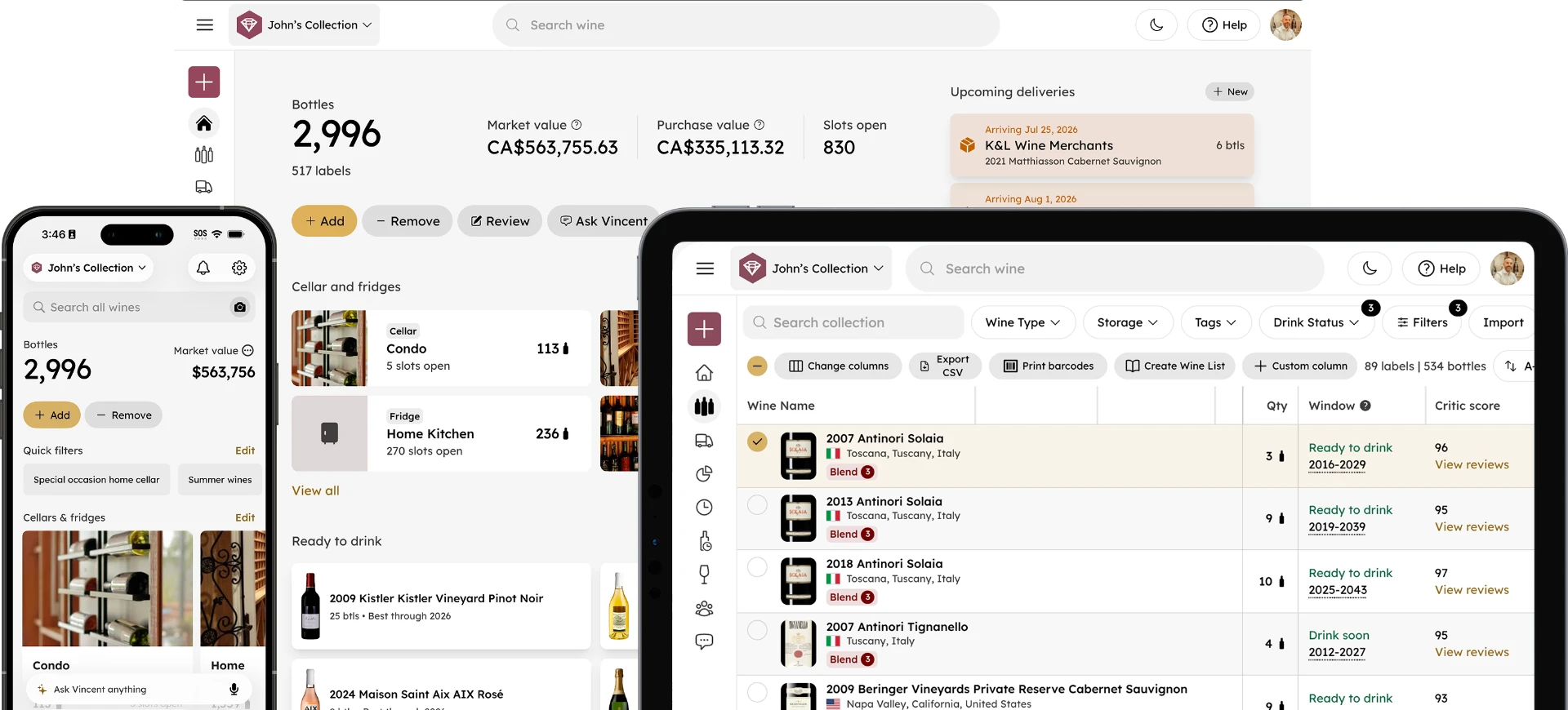
For physical holdings, that means recording purchase price and date, the merchant or auction source, storage conditions and location, and any documentation that came with the purchase. InVintory records all of this per bottle alongside continuous market valuation, which is what turns a cellar into something you can actually assess as an asset rather than estimate.
Record cost basis and provenance per bottle
For collections held primarily as assets where reporting depth matters, see InVintory Elite. For more on why documentation directly affects resale value, see our guide to how wine provenance affects value.
If you're still deciding whether wine investment suits you at all, rather than which vehicle, start with our guide to investing in wine.
This post is general information, not financial advice
Wine is an unregulated, illiquid asset, and the vehicles described here carry different and material risks. Consult a qualified advisor before committing capital, and read the specific terms of any fund or platform carefully before investing.
Knowing which of these five things you're actually buying is the part most people skip, and it's the part that determines everything else.
Track what you own, what it cost, and what it's worth.
Compare Free, Premium, and Elite →
FAQ
Is wine investment regulated?
Wine itself is generally not a regulated financial instrument, though specific vehicles may fall under financial regulation depending on their structure and jurisdiction. Funds and fractional platforms are more likely to face regulatory oversight than a private purchase of bottles, but this varies widely and you should not assume protection exists.
Do you pay tax on wine investment gains?
This is entirely jurisdiction-specific and depends on the vehicle, how long you held it, and your own circumstances. Consult your own tax advisor rather than relying on general guidance, since the treatment differs meaningfully between countries and between vehicles.
Can you drink wine you bought as an investment?
If you own physical bottles or cases, yes, though drinking a holding obviously realizes no financial return. With fund units or fractional shares, generally no, since you don't hold title to specific drinkable bottles.
What happens to your wine if a storage provider or platform fails?
This depends on whether you hold title to identifiable wine or a contractual claim. Wine held in your name in a bonded warehouse is typically more recoverable than an interest in a pooled or platform-held structure. Read the custody terms before committing, since this is exactly the scenario those terms exist to govern.
Is buying in bond better than storing at home?
For investment purposes, generally yes, because bonded storage provides professional conditions and a documented chain of custody that resale buyers expect, and because wine can change hands in bond without triggering duty. For wine you intend to drink, home storage is simpler and cheaper.