How Wine Provenance Affects Value: A Collector's Guide
Madeleine Cruickshank
August 5, 2026 · 6 min read
Does provenance affect a wine's value?
Yes, significantly. Provenance, the documented history of who has owned a bottle and how it's been stored, can meaningfully raise or lower a wine's value even when two bottles of the same producer and vintage taste identical. A bottle with a clear, verifiable history commands a real premium over an otherwise identical bottle with an unknown past, because buyers and appraisers are pricing in risk, not just what's inside the bottle.
Why Provenance Matters So Much
The core problem provenance solves is trust. A buyer can't taste a bottle before purchasing it in most cases, and can't verify with certainty that it hasn't been mishandled, counterfeited, or stored somewhere damaging at some point in its life. Documented provenance closes that gap. It tells a buyer, with evidence rather than assurance, that a bottle has been where it's claimed to be and cared for the way it's claimed to have been.
This matters more as a bottle's value rises. For an everyday wine, provenance is largely irrelevant, as nobody is asking for chain-of-custody paperwork on a $20 bottle. For anything genuinely valuable, particularly older bottles or ones changing hands multiple times, provenance can be the difference between a strong sale price and a buyer walking away entirely.
Producer or Merchant Receipts
The strongest form of provenance is a direct record from the producer or an original merchant, showing the bottle was purchased through a legitimate channel rather than acquired somewhere unverifiable. Keep original receipts, order confirmations, or allocation letters for any bottle you consider significant, and treat these documents as part of the bottle's value, not just paperwork to file away.
If you bought directly from a producer or a well-established merchant, this is often the easiest provenance to establish, since the transaction itself is documented at the source.
Auction House Ownership Records
For bottles that have changed hands through an auction, the auction house's own records serve as a recognized form of provenance, particularly for well-established houses with a track record of authentication standards. A lot's auction history, including prior sale dates and any condition notes recorded at the time, becomes part of that bottle's documented record going forward.
If you're buying at auction specifically to build a collection with resale value in mind, keep the auction house's paperwork indefinitely rather than treating it as a one-time transaction record, since it becomes part of the bottle's provenance for as long as you own it.
Storage Facility Documentation
Professional, bonded wine storage facilities typically provide documentation of a bottle's time in their care, including the conditions maintained and the dates a bottle entered and left storage. This kind of record matters most for bottles held long-term, since it directly addresses the biggest hidden risk in an unknown bottle's history: whether it was ever exposed to damaging heat, light, or humidity swings during years nobody was watching.
Can I create my own provenance record if I don't have formal documentation?
To some degree, yes. A personal record, purchase details, storage conditions, and periodic condition notes, kept consistently over time, is better than nothing and can support a bottle's history even without third-party paperwork. It won't carry the same weight as an auction house or professional storage record for a high-stakes sale, but for insurance, personal record-keeping, and most ordinary transactions, a detailed personal history goes a long way.
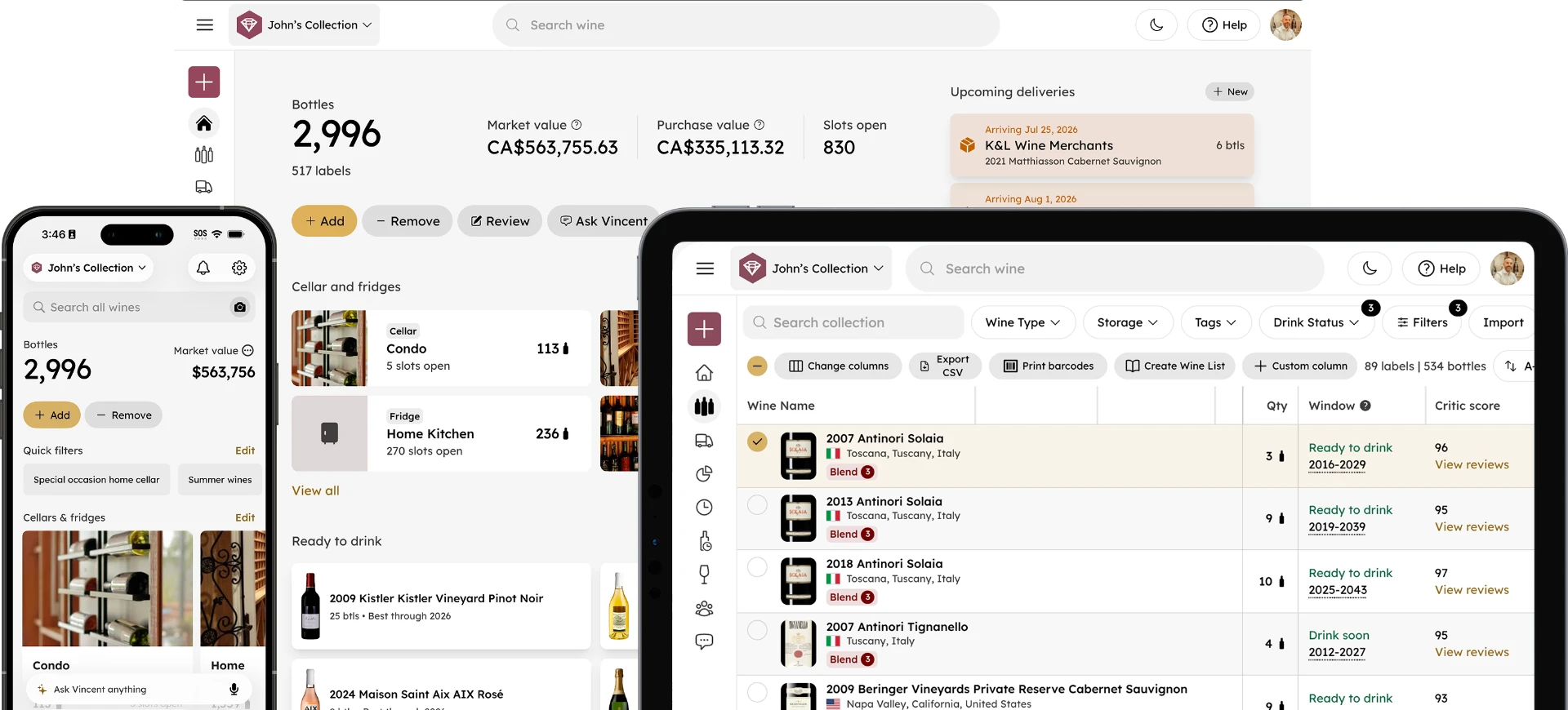
InVintory's Collection Analytics tracks your bottles' documented history alongside their current market value automatically, so the record you're building day to day, rather than reconstructed later from memory, becomes your provenance record over time.
Start building a documented history before you need it: explore Collection Analytics in InVintory →
Provenance and Counterfeit Risk
Provenance also serves a purpose beyond storage and handling: it's one of the main defences against counterfeit bottles, which are a genuine problem at the higher end of the market, particularly for old, rare, and highly sought-after wines. A bottle with a continuous, verifiable chain of ownership back to the producer or an early legitimate sale is far harder to fake convincingly than one that surfaces with no history at all. This is part of why buyers at the high end of the market are often willing to pay a real premium for a fully documented bottle, and why an undocumented bottle claiming to be something rare and valuable deserves real scrutiny before you trust the claim.
What a Gap in the Record Actually Costs You
A bottle with no provenance at all isn't necessarily worthless, but it's discounted, sometimes substantially, relative to an identical bottle with a clean, documented history. Buyers and appraisers price in the uncertainty, since an undocumented bottle could have been stored badly, tampered with, or simply misrepresented, and there's no way to rule any of that out without a record.
This gap tends to widen with a bottle's overall value. A modest, everyday bottle with no history barely loses anything in relative terms. A genuinely rare or expensive bottle with no history can lose a meaningful share of what an identical, documented bottle would fetch, since the stakes of being wrong are much higher for a buyer at that price point.
Building Provenance Going Forward
The easiest time to build strong provenance is the moment you acquire a bottle, not years later when you're trying to sell it. Keep purchase records as they happen, document storage conditions consistently rather than only when you remember to, and treat any bottle you consider significant as one worth photographing and noting in detail from day one.
For more on what actually drives a wine's value beyond provenance specifically, see our guide to which wines actually hold their value. And since insurers require much of the same documentation provenance depends on, see our guide to insuring a wine collection for how the two overlap. For a broader view of wine as an asset, see our guide to investing in wine.
Provenance isn't paperwork for its own sake. It's the difference between a bottle's story being verifiable and a bottle's story being an assumption a buyer has to take on faith.
Build a documented history for every bottle you own.
FAQ
What is the strongest form of wine provenance?
A direct purchase record from the producer or an established merchant is generally the strongest, since the transaction is documented at the source rather than reconstructed later.
Does provenance matter for everyday, inexpensive wine?
Not much. Provenance becomes meaningful as a bottle's value rises, since that's when buyers and appraisers have the most at stake in verifying a bottle's history before relying on it.
Can I still sell a wine with no documented provenance?
Yes, but expect a discount relative to an identical bottle with a clean, verifiable history. The size of that discount tends to grow with the bottle's overall value.
How do auction houses verify a wine's provenance?
Established auction houses maintain their own ownership and condition records for lots that pass through them, which becomes part of a bottle's recognized provenance for future sales.