Which Wines Actually Hold Their Value? A Collector's Guide
Madeleine Cruickshank
July 20, 2026 · 6 min read

Does wine actually appreciate in value?
Most wine does not appreciate. The overwhelming majority of bottles are made to be consumed, not held as an asset, and their value declines the moment they're opened, the same as most consumer goods. A small, specific segment of the market, generally fine wine from established producers with a track record of aging well and a history of secondary market demand, is the exception, and even within that segment, returns are far from guaranteed.
What Actually Drives Value in the Wines That Do Hold It
Producer reputation
Wines that hold or increase in value overwhelmingly come from producers with a long, consistent track record, not a single good vintage from an unknown estate. Reputation built over decades is difficult to replicate quickly, which is part of why the same handful of regions and estates dominate the secondary market.
Vintage quality
Within a producer's lineup, certain vintages are recognized as standout years due to growing conditions, and these command a premium over an average or weaker year from the same estate. This is why two bottles from the same producer, just a few years apart, can carry very different values.
Provenance
Documented, verifiable storage history matters enormously for high-value bottles. A bottle with a clear chain of custody, ideally purchased directly from the producer or a reputable merchant and stored under proper conditions the entire time, is worth more than an identical bottle with an unknown history, even if both taste the same.
Scarcity
Limited production runs, allocation-only releases, and wines from small estates naturally support value better than large-production wines, simply because supply can't expand to meet demand the way it can for a mass-market label.
Critic scores and secondary market demand
High scores from established critics and consistent demand on secondary markets (auction houses and specialist merchants) are the clearest external signals of whether a specific bottle is genuinely investment grade, as opposed to just expensive.
Common Mistakes That Erode Value
Even bottles from the right producer, region, and vintage can lose value through avoidable mistakes.
Poor storage undermines everything else
A wine with perfect provenance on paper but inconsistent temperature or light exposure during storage loses much of that advantage, since serious buyers and appraisers factor storage history into a bottle's condition assessment, not just its label.
Chasing hype vintages after prices have already moved
By the time a vintage's reputation is widely known, much of the price appreciation has often already happened. Buying well ahead of broad recognition, based on genuine quality signals rather than buzz, is a very different position than buying after a vintage is already famous.
Breaking up original cases or lots
Complete, original wooden cases (often abbreviated OWC) tend to command a premium over the same bottles sold individually, since an intact case is easier to verify and more attractive to collectors and buyers alike.
Ignoring the difference between drinking stock and holding stock
Treating an entire collection as investment-grade, rather than being deliberate about which bottles are meant to hold value and which are meant to be enjoyed, tends to produce worse outcomes on both fronts.
Which Regions Tend to Hold Value Best
Bordeaux, Burgundy, Champagne, and, more recently, top-tier Napa Valley Cabernet make up the bulk of what's traded on established fine wine markets. That doesn't mean every bottle from these regions holds value, plenty of everyday Bordeaux or Burgundy is made to drink, not to trade, but when a wine does hold value reliably, it disproportionately comes from one of these regions.
What This Means for Your Own Collection
If you're building a collection primarily to enjoy, this distinction matters less; drink what you like, when you like it. If part of your collection is meant to hold or grow in value, it's worth being deliberate about which bottles you're treating that way, and keeping accurate records on each one.
How do you track a wine collection's value accurately over time?
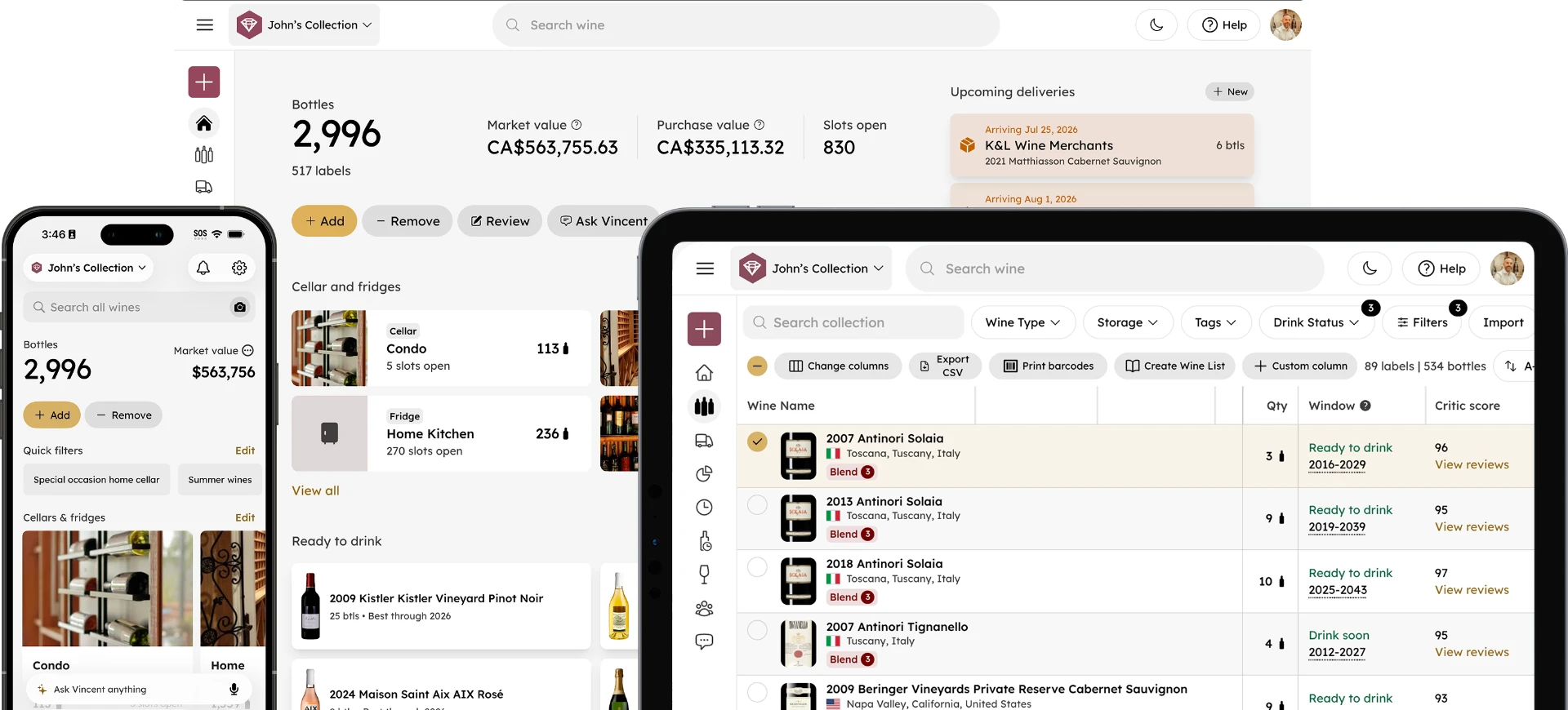
InVintory's Collection Analytics tracks real-time market value across your entire collection automatically, sourced from institutional-grade fine wine data providers including Liv-ex and Wine Labs, rather than requiring you to research and update prices manually. This matters most for exactly the kind of bottles discussed above, where value shifts meaningfully over time and knowing your collection's current worth is useful for insurance, estate planning, or simply understanding what you own. For more on this pricing system and what's changing as it rolls out, see our update on InVintory's wine collection value pricing.
Keeping a documented history for higher-value bottles, when you bought it, from whom, and how it's been stored, also supports the provenance case if you ever decide to sell. For collectors managing larger, higher-value cellars where this kind of tracking matters most, InVintory Elite adds white-glove cellar documentation and sensor-based storage monitoring on top of standard valuation tracking.
Building a Collection With Both Goals in Mind
Most serious collectors end up with a mix: bottles bought to drink soon, bottles held for a special occasion, and a smaller set held deliberately for the long term. Being clear with yourself about which bucket a bottle falls into, rather than treating the whole collection the same way, makes both the drinking and the investing side easier to manage. For a broader framework on building out a collection from the ground up, see our guide to building a wine collection from 50 to 500 bottles, and for help deciding what to do with a bottle you already own, see our guide on when to drink, sell, or hold.
Value isn't something that happens by accident. It's the result of specific, identifiable factors, and knowing which ones apply to your own bottles is the difference between hoping and actually knowing.
Want to see what your collection is actually worth right now?
Explore Collection Analytics in InVintory →
FAQ
Does all wine increase in value over time?
No. Most wine is made to be consumed and loses relevance, if not literal value, the longer it sits unopened past its intended drinking window. Only a small segment of fine wine, generally from established producers with a track record of aging and market demand, reliably holds or increases in value.
What is the single biggest factor in whether a wine holds its value?
Producer reputation, built over a long track record, is generally the strongest single factor, since it's the hardest thing for a newer or lesser-known estate to replicate quickly.
Do I need documentation to prove a bottle's storage history?
For high-value bottles, yes, ideally. A clear chain of custody from purchase to present, especially proof of proper storage conditions throughout, meaningfully supports a bottle's value on the secondary market.
Should I invest in wine the same way I invest in stocks?
No. Wine is illiquid, storage-dependent, and far more concentrated in a small number of producers and regions than most financial assets. Treat it as a specialized collectible with its own risks, not a direct substitute for a diversified investment portfolio.
Ready to track your collection's value automatically?