When to Drink, Sell, or Hold: A Wine Collector's Guide
Madeleine Cruickshank
May 26, 2026 · 5 min read

Every collector reaches the same moment eventually. You're standing in front of your cellar or wine fridge, looking at a bottle you've been aging for years, and you're not sure what to do with it. Open it tonight? Hold it another few years? Sell it while the market is strong?
The decision matters more than most collectors realize. Open a bottle too early and you miss what it was building toward. Hold too long and you miss the window entirely. Sell at the wrong moment and you leave money on the table. Getting this right consistently is what separates a well-managed collection from a cellar full of missed opportunities.
This guide gives you a practical framework for making that call on any bottle in your collection.
The Three Outcomes Every Bottle Has
What are the options for a bottle in your collection?
Every bottle in your cellar is heading toward one of three outcomes: you drink it, you sell it, or you hold it longer. The goal is to make that decision deliberately rather than by default.
Most collectors default to holding. It's the path of least resistance. But holding indefinitely is not a strategy. Every wine has a drinking window, and every wine that sits past its peak is a bottle that was either never opened at its best or sold too late to capture its value. Once you've waited too long to open a wine, it's gone in the worst possible way.
The framework below gives you a clear set of questions to answer for any bottle, so the decision becomes systematic rather than emotional.
When to Drink
How do you know when a wine is ready to open?
A wine is ready to drink when it is within its optimal drinking window and you have a reason good enough to justify opening it.
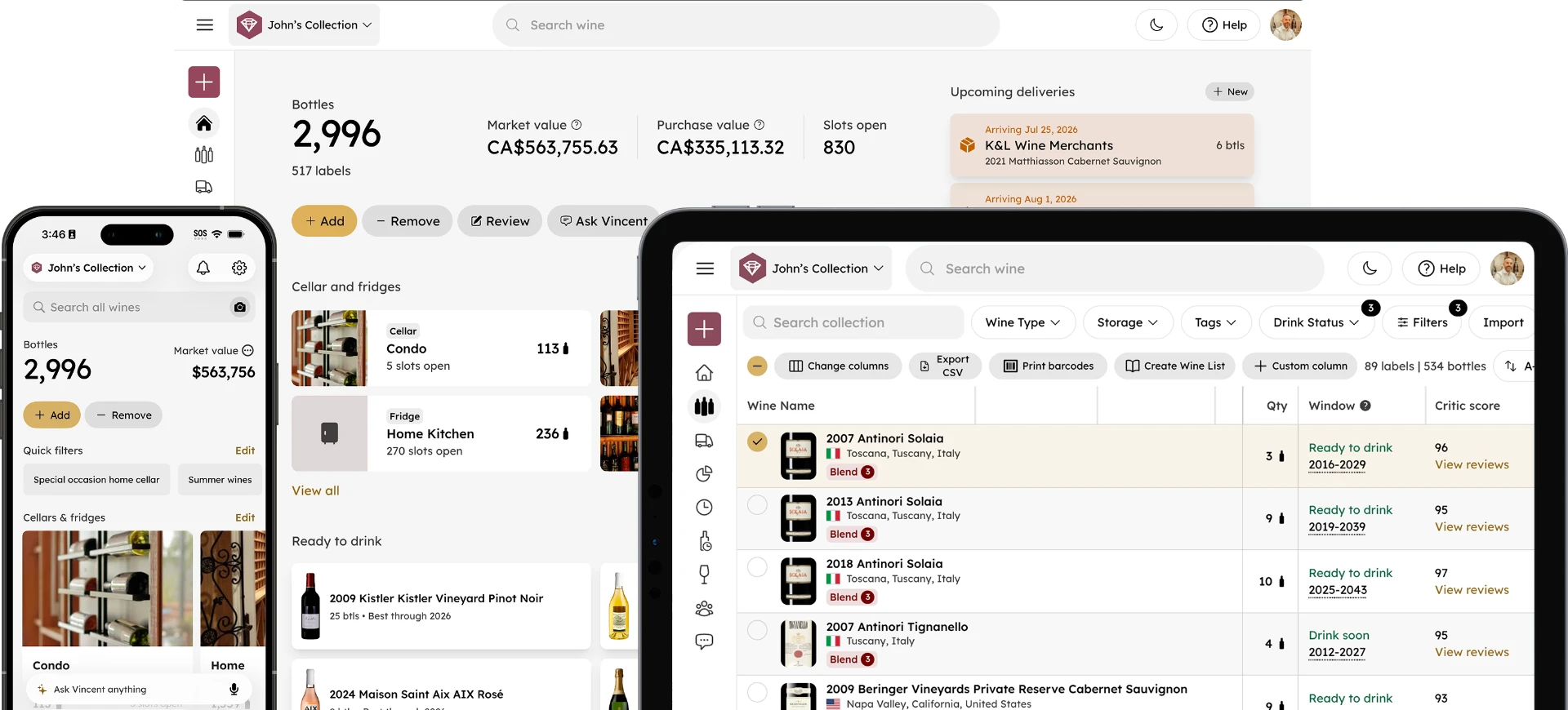
The first part is objective. Drinking windows are based on the wine's structure, vintage conditions, producer track record, and expert assessment. InVintory calculates drinking windows for every bottle in your collection automatically, and the Ready to Drink feature surfaces bottles currently in their window on your home screen so you never have to check manually.
The second part is more personal. Some collectors treat their best bottles as perpetually "not ready" even when the data says otherwise. There are many reasons why collectors don't drink some of their best bottles. Perhaps they've been saving them for a special occasion that never materialized, or for the right group of wine lovers with which to share them. If you find yourself perpetually waiting, that's a signal to recalibrate.
Drink when:
- The bottle is at or near its peak drinking window
- The occasion is meaningful enough to do it justice
- You have the right glassware, the right food, and the right company
- Holding longer offers no meaningful gain in quality or value
A practical rule
If a bottle has been in your cellar for more than three years past its estimated peak, open it now. The window is either closing or already closed.
When to Sell
When is the right time to sell a wine from your collection?
The right time to sell is when a wine's market value and its drinking window intersect favorably, and before both start to decline.
As a wine nears or enters its peak, demand often rises. Although it is tempting to wait one more year, collectors benefit when they act before the wine begins to plateau. The collector who sells a 2010 Pétrus at peak demand captures more value than the one who holds until the wine is past its best.
There are also non-market reasons to sell that serious collectors often overlook.
Sometimes selling is not about the bottle but the broader arc of your collecting life. A new cellar project, a shift in focus, or simply wanting more space can create the right moment to exit gracefully. Many collectors decide to sell because their tastes evolve; Burgundy might take precedence over Bordeaux, or Champagne becomes a new focus.
Sell when:
- The wine is approaching or at its peak drinking window and market demand is strong
- Your tastes have shifted and you no longer want to drink it
- You need to free up cellar space for bottles you're more excited about
- The return on the bottle exceeds what you'd gain from drinking it
- Storage conditions are changing (a move, a kitchen renovation, etc)
One practical note
Avoid over-holding. Many sellers wait too long. Because wine is perishable, hesitation can reduce value. If you've been meaning to sell a bottle for more than a year and haven't, set a deadline.
When to Hold
Which bottles are worth holding longer?
Hold a wine when it has clear aging potential, the market is still building, and you genuinely intend to drink or sell it before its window closes.
Collectible wines should possess age-worthiness and have solid secondary market demand from auctions, fine wine brokers, and traders. Not every wine in your cellar meets that standard, and it's worth being honest about which bottles do and which are just taking up space.
The most common holding mistake is holding wines that were never built for long aging. Most wines produced globally are made to be drunk within three to five years of vintage. Holding them longer doesn't improve them, but diminishes them. Knowing which wines reward patience and which don't is the foundation of a well-managed cellar.
Hold when:
- The wine is demonstrably age-worthy and not yet at its peak
- Market conditions suggest value will continue to build
- You have proper storage conditions to protect the investment
- You have a clear plan for when you'll revisit the decision
A wine without a plan is a wine that gets held by default until it's too late. Set a review date for every significant bottle in your cellar and revisit it annually.
InVintory’s Premium plan offers unlimited custom tags, custom information fields, and quick collection filters that make tracking cellared wines over time easy and seamless.
How to Apply This Framework to Your Collection
How do I track drink-or-sell decisions across a large collection?
The framework above is straightforward for a single bottle. Applied across hundreds of bottles, it requires a system.
InVintory gives you the data layer the framework depends on. Drinking windows, market values, collection analytics, and the Ready to Drink list all feed into the same three questions: is this bottle in its window, what is it worth, and what do I want to do with it?
For a broader look at how collection value tracking works in InVintory, this post on Collection Analytics covers what the data shows and how to use it. And for collectors managing their cellar as a financial asset, this post on the real cost of mismanaging a wine cellar makes the case for why systematic decision-making pays off.
See What's Ready to Drink in Your Collection →
Frequently Asked Questions
How do I know if my wine is past its drinking window?
InVintory tracks drinking windows for every bottle in your collection and flags bottles that are approaching or past their peak. You can also check tasting notes from critics and producers for guidance on when a specific wine is expected to peak and how long it holds after that point.
Is it better to drink or sell investment-grade wine?
That depends on whether the bottle's market value exceeds the personal value of drinking it. Experts believe that wine is at its highest value when it is living somewhere between seven to fifteen years of its vintage. If a bottle has appreciated significantly and you no longer feel the urgency to open it, selling near peak demand is often the better financial decision. If the bottle is something you've been looking forward to for years, open it. That's what it was for.
What is the most common mistake collectors make with aging wine?
Holding too long. Most collectors err toward over-holding rather than opening too early, which means bottles frequently pass their peak before they're opened. A systematic approach to reviewing your cellar annually — using drink window data, market values, and InVintory’s collection management features — prevents this from happening by default.
How do I track the market value of bottles I'm considering selling?
InVintory tracks market prices for every bottle in your collection automatically, drawing from institutional-grade fine wine market data. Your collection value is visible at a glance in Collection Analytics, and individual bottle prices are available on each bottle's Wine Guide page.
Can I manage the drink-or-sell decision for a large collection?
Yes. The key is having the right data. InVintory's combination of drinking window tracking, market price data, collection analytics, and the Ready to Drink list gives you everything you need to apply a consistent framework across a collection of any size.
A great cellar isn't just about what you own. It's about knowing what to do with it and when.