How to Sell Wine From Your Collection
Madeleine Cruickshank
August 10, 2026 · 6 min read
Where can I sell wine from my collection?
The main channels are specialist auction houses, brokers, private sale, and the in-bond exchange market for investment-grade wine held in bond. Which one fits depends on your collection's value, how quickly you need to sell, and how much of the legwork you want to do yourself.
Auction Houses
Auction houses (Sotheby's, Christie's, Acker, and several regional and online specialists) work best for rare, high-value bottles or small lots with strong provenance and collector appeal. They offer the widest buyer reach and can achieve strong prices for genuinely scarce wine, but the process takes months from consignment to payment, and many houses set a minimum consignment value before they'll take a collection.
Brokers
A broker shops your collection directly to their existing buyer network rather than putting it in front of the general public at auction. This is typically faster than waiting for an auction date, though you're still paying for the introduction, and a broker's success depends heavily on how strong their specific buyer relationships are for the kind of wine you're selling.
Private Sale
Selling directly to another collector can deliver the highest net proceeds, since there's no auction house or broker taking a cut. The tradeoff is real: finding a trustworthy buyer at a fair price takes time and connections, and in most of the United States, individuals can't simply sell alcohol on their own without a license, which limits how a fully private sale can actually be completed and shipped.
The In-Bond Market
For blue-chip, standard-format investment wine, particularly current-drinking Bordeaux first growths or established Burgundy, exchanges like Liv-ex offer a faster, more transparent alternative to auction, with real-time pricing. This market suits liquid, easily identifiable stock better than rare or unusual bottles that benefit from a curated auction narrative.
How Much Do Auction Houses and Brokers Charge to Sell Wine?
Auction house seller's commissions typically range from around 10 to 25 percent for smaller lots, often dropping to 5 to 15 percent for mid-value consignments, and sometimes falling to zero for especially high-value or desirable lots that houses compete to win. Commission is generally negotiable, particularly for a large or valuable collection, so it's worth approaching more than one house rather than accepting the first offer.
Brokers charge their own commission for finding a buyer, which varies by broker and isn't standardized the way auction house rates roughly are. Get a broker's fee structure in writing before consigning anything, since it directly affects your net proceeds.
Does a bigger collection get a better commission rate?
Often, yes. Auction houses frequently apply a sliding scale where larger or more valuable consignments earn a lower commission percentage, since the house is more motivated to win a substantial collection than a single bottle.
What Documentation Do Buyers Require?
Buyers, whether an auction house, a private collector, or a broker, want continuous proof that a bottle has never left professional, temperature-controlled storage, along with a clear ownership history. This is provenance, and its absence directly affects what a buyer is willing to pay, sometimes substantially. For a full breakdown of what counts as strong provenance and how to build it, see our guide to wine provenance and value.
Practically, this means having purchase receipts, storage facility records if applicable, and any prior auction or dealer paperwork organized and ready before you approach a buyer, not assembled after the fact once someone asks.
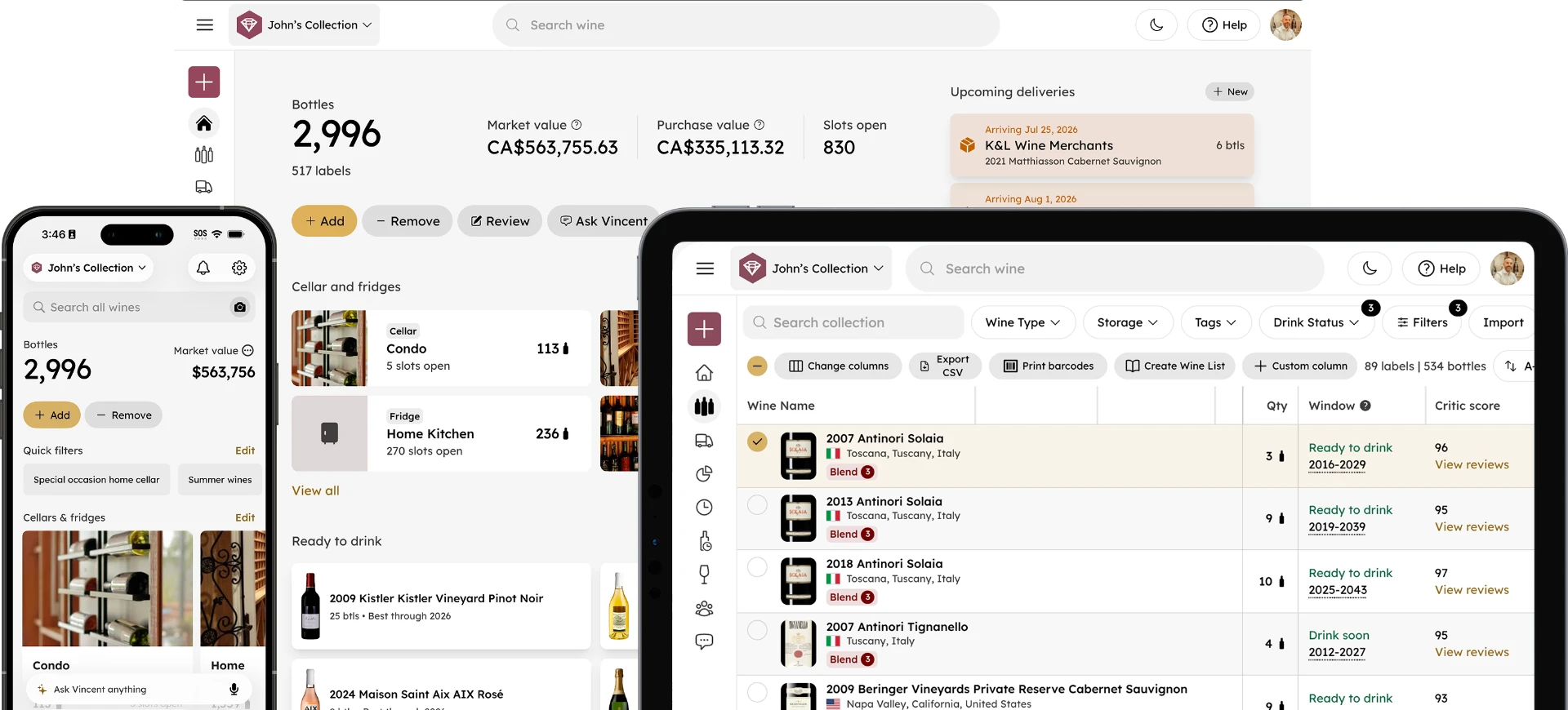
InVintory's Collection Analytics tracks your bottles' documented history alongside current market value automatically, which gives you a ready reference when you're preparing a collection for sale rather than reconstructing records from memory.
Get your collection's records organized before you sell: explore Collection Analytics in InVintory →
How Do I Ship Wine to a Buyer Legally?
Wine shipping laws are set at the state level in the US and are built around licensed wineries and retailers, not private individuals selling to other private individuals. This is a major part of why most collectors sell through an auction house, broker, or licensed retailer rather than shipping a sold bottle themselves: those channels are set up to handle compliant shipping, while a private, unlicensed shipment between individuals falls into a legal gray area in much of the country and can be outright prohibited depending on the states involved.
If you're selling through an auction house or broker, they typically handle shipping logistics and compliance as part of the transaction. If you're arranging a private sale, check both your state's and the buyer's state's specific alcohol shipping rules before committing to handle shipping yourself, since the rules vary considerably and getting this wrong carries real legal risk.
Preparing Your Collection Before You Approach a Buyer
Whichever channel you choose, an accurate, well-documented inventory makes the entire process faster and typically results in a better outcome, since buyers and appraisers can move with confidence rather than discounting for uncertainty. If you haven't already decided which bottles you're actually ready to part with, see our guide on when to drink, sell, or hold before you start reaching out to buyers. For more on how value is established in the first place, see our guide to investing in wine, and if insurance is part of your current setup, see our guide to insuring a wine collection for how that documentation overlaps with a sale.
Selling well starts well before you contact a single buyer. The collections that sell smoothly are almost always the ones that were tracked accurately the whole time they were owned.
Ready to prepare your collection for sale?
FAQ
What's the fastest way to sell a wine collection?
A broker or a direct offer from a specialist wine buyer is typically faster than auction, since you skip waiting for a scheduled sale date, though you may net less than a well-marketed auction lot would achieve for genuinely rare bottles.
Do I need a license to sell wine from my personal collection?
In most of the United States, yes, for anything beyond a very limited, informal transaction, which is why most collectors sell through a licensed auction house, broker, or retailer rather than directly to another private individual.
How do auction houses decide what commission to charge?
Commission is usually based on the size and value of the consignment, with larger or more desirable lots often earning a lower rate, and is frequently negotiable, especially for substantial collections.
What paperwork should I keep to make selling easier later?
Purchase receipts, storage facility documentation, and any prior auction or dealer records for significant bottles. Keeping this organized as you buy, rather than reconstructing it later, makes a future sale considerably smoother.