How to Pass Down a Wine Collection
Madeleine Cruickshank
October 12, 2026 · 7 min read

How do you pass down a wine collection?
You pass down a wine collection the same way you pass down any valuable property: keep a complete inventory, get its value on record, say in your will who receives which bottles, and leave your executor the documents they need to act. A cellar is part of your estate and can be taxed like other assets, yet a single line in a will rarely tells an executor enough to handle hundreds of bottles that are each worth something different.
This guide is general information, not legal or tax advice. Estate and tax rules differ by country, state and province, and they change. Before you change your will, speak with an estate planning lawyer, a tax advisor or accountant who works with estates, and, if your collection includes valuable bottles, a qualified wine appraiser.
The short version:
- Inventory everything. Every bottle, every location, including wine stored offsite.
- Put a value on record. Keep current market values, and get an appraisal for valuable bottles.
- Decide how the cellar is divided. Name specific bottles for specific people, or set a fair method.
- Brief your executor. Tell them where the records, storage contracts and keys are.
- Plan for tax with a professional. Wine counts toward the value of your estate.
Is a wine collection taxed when you die?
It can be. Wine is property, so it counts toward the value of your estate, and it is valued at what it is worth when you die, not what you paid for it. Whether any tax is actually owed depends on where you live and how large the estate is.
In the United States
Federal estate tax applies only to large estates. According to the IRS, the filing threshold for a death in 2026 is $15,000,000, and the estate is valued at fair market value, not at what you originally paid. A cellar bought decades ago at release prices can count for far more than its receipts suggest. Some states levy their own estate or inheritance taxes with different rules, so ask an advisor about yours.
In Canada
In Canada, the Canada Revenue Agency treats a person who dies as having sold all their property just before death, at fair market value. This is called a deemed disposition, and any resulting capital gain is reported on the final return. Property left to a surviving spouse or common-law partner who lives in Canada may not trigger a gain at that point. Your accountant can tell you how this applies to wine.
What is a valuation date, and why does it matter?
A valuation date is the date on which your bottles are valued for estate and tax purposes, and it is usually tied to the date of death. Wine prices move, so the number that matters is what each bottle was worth on that date, not what you paid or what it fetched at auction years earlier.
In the United States, the IRS says the basis of inherited property is generally its fair market value on the date of death, or on an alternate valuation date if the executor files an estate tax return and elects it. That value also matters to your heirs later, because it is the starting point for any gain when they sell. In Canada, the value is fair market value immediately before death.
What you can do now: keep current market values in your records and have high value bottles appraised. Your executor may still need a valuation as of the date of death, but a recent appraisal and a clean inventory make that job faster and cheaper. Our guide on how to get a wine collection appraised covers who to hire and what they will ask for.
What does an executor need to handle a wine collection?
An executor needs to know what you own, where it is, what it is worth and what you want done with it. Most executors are not wine people, so leave them a package they can act on without guessing:
- A complete inventory with the location of every bottle, including professional storage, bonded warehouses and wine bought as futures that has not been delivered yet.
- Purchase records and receipts, which support value and provenance.
- Provenance documents for valuable bottles. See how wine provenance affects value.
- Your insurance policy details, so coverage continues while the estate is settled. See how to insure a wine collection.
- Access instructions for cellars, storage accounts and keys, kept somewhere secure rather than written into the will itself.
- Your wishes for each part of the cellar: keep, gift, sell or drink, and the name of a trusted merchant, sommelier or appraiser they can call.
If you expect part of the collection to be sold, say so, and point your executor to our guide on how to sell wine from your collection.
How do you divide a wine collection fairly between heirs?
Divide by value, not by bottle count. Bottles are not interchangeable: one may be worth many times another, and two bottles of equal value today may be at very different points in their drinking window. Splitting a cellar “equally” by number is rarely equal.
Common approaches, which your lawyer can write into your will:
- Specific gifts. Name particular bottles or cases for particular people. Best for sentimental wines, like a birth year vintage.
- Equal value lots. Use appraised values to build lots of roughly equal worth, one per heir.
- Taking turns. Heirs choose one bottle or lot at a time in an order set by lot. It works when heirs know wine and get along.
- Sell and share the proceeds. The cleanest split when no one wants to store or drink the wine.
Many families combine them: specific gifts first, then the rest divided by value or sold. Whatever you choose, think about storage. A bottle left to someone with nowhere cool to keep it can be damaged by heat long before anyone opens it.
For the other side of this process, share our guide for heirs: I inherited a wine collection. Now what?
What records should survive you?
A current inventory that your executor can open without your phone or passwords, stored with your will or with your lawyer. Update it after any major purchase or sale, so the version they find matches the cellar. For which fields to include, see our guide to wine collection reporting for audits, moves and estate planning.
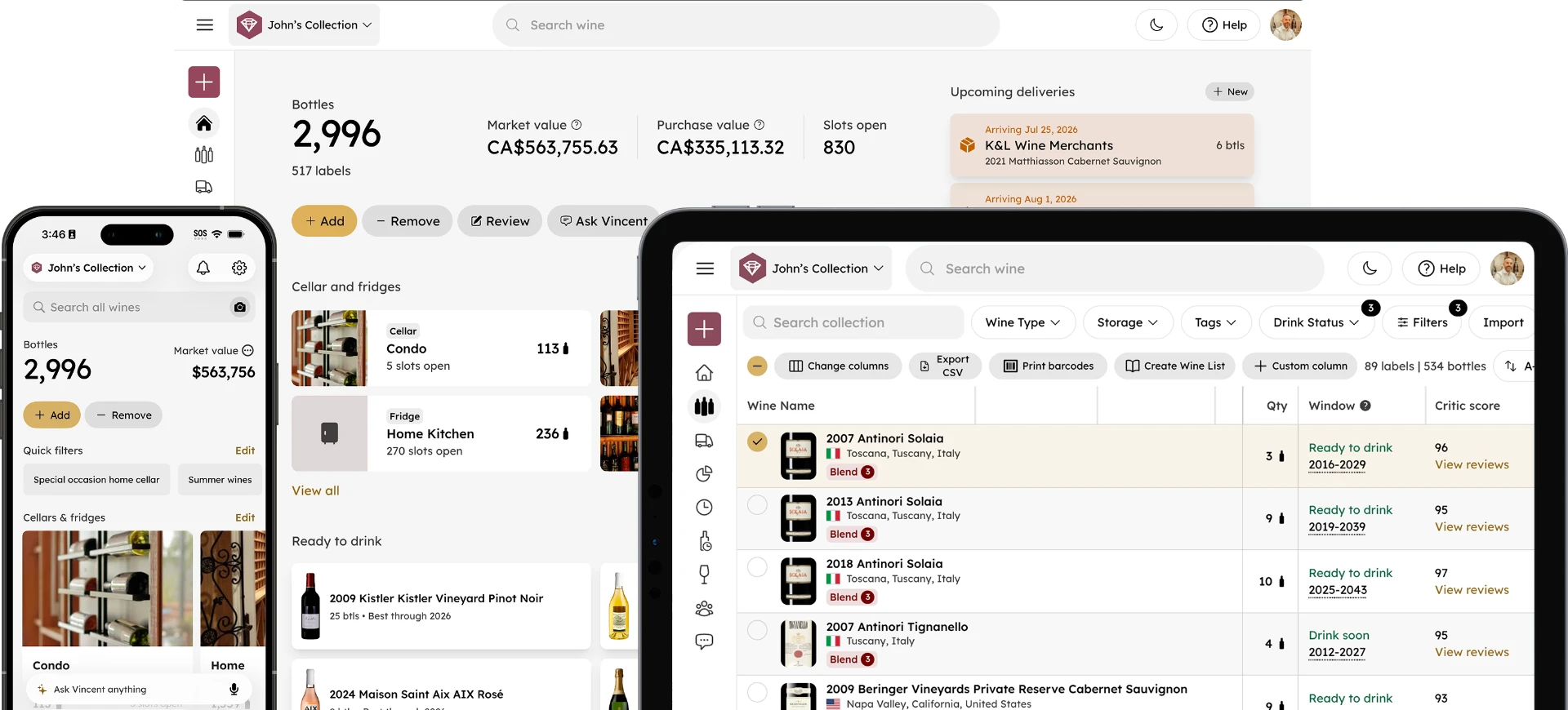
If you track your cellar in InVintory, you can export your collection to keep alongside your estate documents. The InVintory help center walks through the export. For large or high value cellars, see InVintory Elite.
FAQ
Can I leave my wine to one person and the rest of my estate to others?
Usually, yes. A will can leave a collection, or named bottles, to a specific person as a separate gift. Ask your lawyer how that gift affects any tax owed and how the rest of the estate is shared.
Do my heirs pay tax on inherited wine?
It depends on where you live. In Canada, the gain from the deemed disposition is reported on the final return of the person who died. In the United States, heirs may owe tax later if they sell the wine for more than its value on the date of death. A tax advisor can confirm the rules that apply to you.
Should I have my collection appraised now?
Yes, if it includes valuable bottles. A recent appraisal gives your executor and heirs a credible starting point, even though the estate may still need a valuation as of the date of death.
What happens to wine stored offsite?
It is part of your estate like any other bottle, but your executor can only claim it if they know it exists. List every storage facility, account number and contract in your inventory and estate documents.
A collection is easiest to pass down when it is already documented. Start tracking your cellar in InVintory so the record is ready when your family needs it.