How to Get a Wine Collection Appraised
Madeleine Cruickshank
September 1, 2026 · 7 min read
What does a wine appraisal actually do?
A wine appraisal is a formal, documented valuation of a collection prepared by a qualified appraiser, used to support insurance coverage, estate planning, donation, or sale. It produces a written report that an insurer, court, or tax authority will accept as evidence of value, which is the part that distinguishes it from any number you generate yourself.
How is an appraisal different from an app's estimated value?
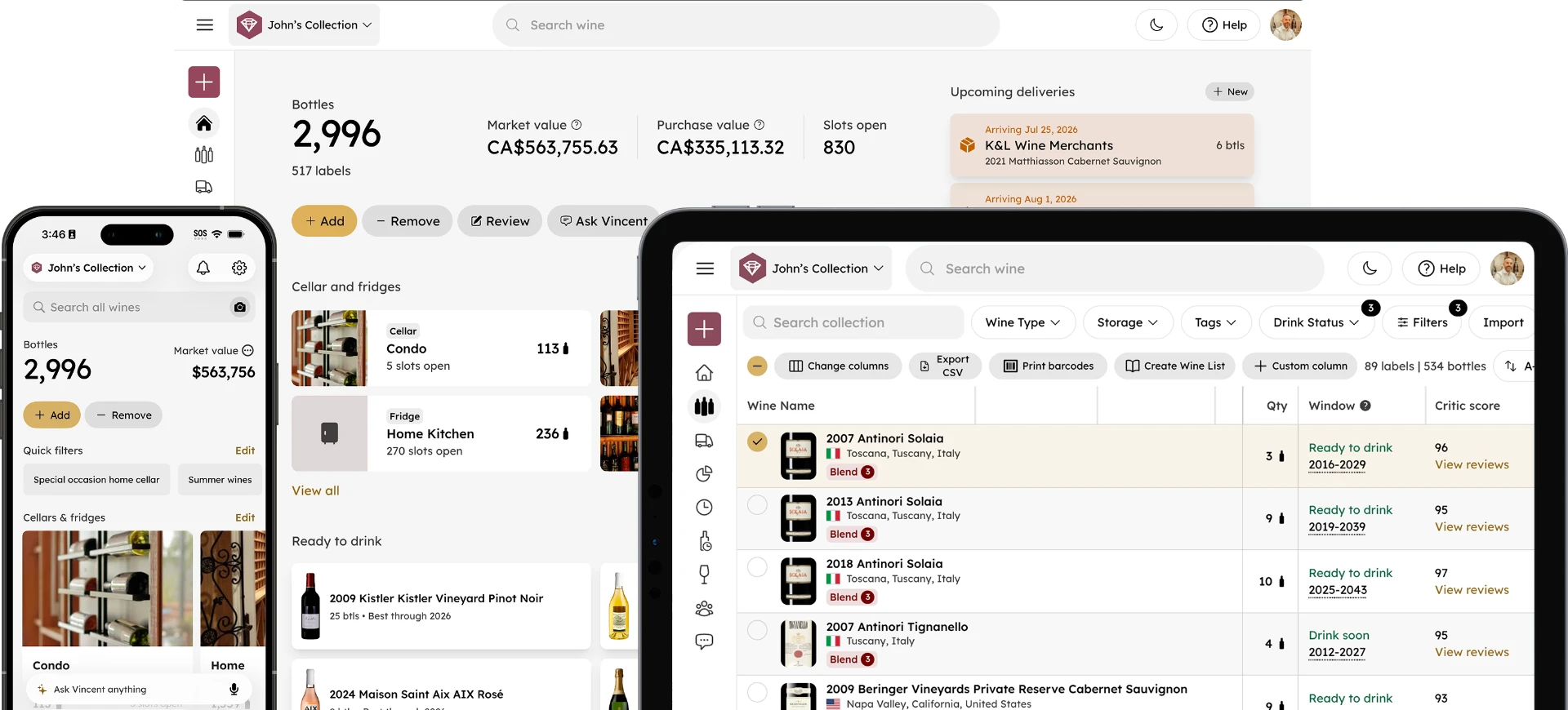
An app tracks market prices continuously and gives you a running estimate; an appraisal is a point-in-time document prepared by a credentialed third party. Both are useful, and they do different jobs. InVintory's Collection Analytics keeps you current on what your collection is broadly worth day to day, and our guide to tracking collection value automatically covers how that works. An appraisal is what your insurer, your attorney, or a tax authority will actually accept when a number needs to hold up formally.
If you need documentation for a claim, an estate, or a donation, an app valuation is a strong starting point, not a substitute.
When Should a Collector Get a Wine Collection Appraised?
The common triggers are scheduling insurance coverage, inheriting a collection, estate planning, donating wine to charity, or preparing to sell. Each involves someone other than you needing to accept a value, which is exactly when an informal estimate stops being enough.
If you've recently inherited bottles and don't yet know what you have, an appraisal usually comes after an initial inventory rather than before it. See our guide on what to do after inheriting a wine collection for that first step.
Who Is Qualified to Appraise a Wine Collection?
Look for an appraiser credentialed through a recognized personal property appraisal organization, most commonly the American Society of Appraisers (ASA), the International Society of Appraisers (ISA), or the Appraisers Association of America (AAA), and who works in compliance with USPAP, the Uniform Standards of Professional Appraisal Practice.
Wine appraisers are typically credentialed first as personal property appraisers, then specialize. A strong candidate pairs that appraisal credential with genuine wine-market expertise, whether that's sommelier certification, WSET qualifications, or auction-house experience. One without the other is a gap: wine knowledge alone doesn't produce a report an insurer will accept, and a general personal property credential alone may not reflect real fluency in fine wine markets.
How do you vet an appraiser?
Ask four things directly: where they earned their appraisal designation and how long that training took, whether they're current on the latest USPAP edition, what their specific wine-market background is, and how they structure their fee. Reputable appraisers answer all four readily.
One clear red flag: an appraiser who charges a percentage of your collection's appraised value rather than a flat or hourly fee. Percentage-based fees create an obvious incentive problem and are inconsistent with USPAP standards.
How Is Wine Appraisal Priced?
Appraisers typically charge hourly, as a flat project fee, or per lot, depending on collection size and complexity and whether the appraisal is conducted in person or remotely. Costs vary widely by market and appraiser, so get a written fee structure upfront rather than assuming a standard rate. The one structure to avoid, as above, is a fee calculated as a percentage of appraised value.
What Documentation Do Appraisers Ask For?
Appraisers generally want an itemized inventory including producer, vintage, bottle format, and quantity; purchase records where you have them; provenance and chain-of-custody documentation; storage condition history; and photographs of both the collection and any notable individual bottles.
The quality of what you hand over directly affects both the cost and the accuracy of the appraisal. An appraiser working from a complete, organized inventory spends less time reconstructing basics and more on actual valuation. For what makes provenance documentation strong, see our guide to how wine provenance affects value.
What's Actually in an Appraisal Report
A USPAP-compliant report is a formal document, not a spreadsheet with a total at the bottom. It typically identifies the appraiser and their credentials, states the intended use and intended users, defines which value standard was applied and why, describes the methodology and data sources behind the figures, itemizes the collection with individual valuations, and notes the effective date of the valuation.
That last item matters more than collectors expect. An appraisal is explicitly a snapshot as of a specific date, which is part of why insurers and courts accept it and also why it goes stale.
In-person or remote appraisal?
Some appraisers work remotely from a detailed inventory and photographs; others insist on inspecting the collection in person, particularly for high-value bottles where condition assessment and authentication matter. In-person inspection generally costs more and takes longer, but for genuinely rare or valuable bottles it's often the appropriate level of rigor. Ask which approach an appraiser uses and why before engaging them.
How Do You Export an Appraisal-Ready Inventory?
Build the itemized inventory in InVintory first, then export it as a complete record covering producer, vintage, format, quantity, storage location, and purchase details. This gives an appraiser exactly the structured starting point they ask for, rather than a partial list assembled under time pressure.
Build your appraisal-ready inventory
For larger or higher-value collections where reporting depth matters most, InVintory Elite adds more comprehensive export and documentation support. For the practical export workflow, see our guide to wine collection reporting and our guide to exporting audit-ready inventories for insurance.
How Often Should an Appraisal Be Updated?
Most appraisers and insurers suggest updating every few years, or sooner after significant market movement or meaningful changes to the collection. Fine wine values shift, sometimes sharply, and a valuation from several years ago can leave you underinsured without any change on your part. For how appraisal timing fits into coverage specifically, see our guide to insuring a wine collection.
If you're planning to sell rather than insure, an appraisal typically precedes consignment; see our guide to selling wine from your collection for what comes next, and our guide to which wines actually hold their value for why some bottles appraise higher than others in the first place.
This post is general information and not legal, tax, or insurance advice. Requirements vary by insurer, jurisdiction, and purpose, so confirm what you specifically need with your own insurer or advisor before commissioning an appraisal.
An appraisal is only as good as the records behind it. The collectors who get accurate valuations quickly are the ones who were already tracking properly before they needed to.
Ready to build the inventory an appraiser will ask for?
Compare Free, Premium, and Elite →
FAQ
Can I appraise my own wine collection?
You can estimate its value yourself, and a good tracking app makes that straightforward, but a self-produced valuation is not a formal appraisal. Insurers, courts, and tax authorities generally require a report from a credentialed, independent third party.
Will my insurer accept an app-generated valuation?
Usually not as a formal appraisal, though it can support one. Insurers typically want a USPAP-compliant report from a qualified appraiser for scheduled coverage. Check directly with your insurer, since requirements vary.
What is the difference between replacement value and fair market value?
Replacement value reflects what it would cost to replace a bottle at retail today, and is typically used for insurance. Fair market value reflects what a bottle would sell for between a willing buyer and seller, and is typically used for estate, donation, and tax purposes. The same collection can carry two different legitimate numbers depending on which standard applies.
Do I need an appraisal to sell wine at auction?
Not usually, since auction houses conduct their own valuation as part of accepting a consignment. An independent appraisal can still be useful for your own planning or to sanity-check what a house offers.