I Inherited a Wine Collection. Now What?
Madeleine Cruickshank
August 7, 2026 · 6 min read
What's the first thing I should do with an inherited wine collection?
Build a complete inventory before you sell, drink, or move a single bottle. Until you know exactly what you have, you can't identify what's actually worth something, and it's easy to accidentally give away or drink a bottle that mattered.
Step 1: Inventory Everything Before You Touch Anything
Go bottle by bottle and record the producer, vintage, and any visible detail on the label, even if a name or region doesn't mean anything to you yet. Photograph labels you can't immediately identify, since a clear photo is often enough for later research or an appraiser to work from. Note anything unusual: a wax-dipped capsule, an auction house sticker, a handwritten note tucked with the bottle, or a distinctive storage location, since any of these can be a clue about a bottle's history or significance.
This step matters most for exactly the collections where the person doing the inheriting knows the least. If you're unfamiliar with wine, resist the urge to guess at value from a label's appearance alone. Plenty of ordinary-looking bottles are worth real money, and plenty of impressive-looking bottles aren't.
Step 2: Identify Which Bottles Might Actually Be Valuable
How do I know which inherited bottles are worth something?
Look first at producer reputation, vintage, and region, since these are the factors that most reliably signal value, and search each distinct producer and vintage combination you find to see whether it shows up in current market listings at all. A bottle that doesn't appear anywhere in current market data is more likely a modest, everyday wine, while one that shows up consistently across multiple sources is worth a closer look.
Older doesn't automatically mean valuable, and many wines are actually well past any useful drinking window by the time they're inherited, which is worth knowing before you assume age alone makes something special. For a broader look at what actually drives value, see our guide to which wines actually hold their value.
Step 3: Get an Accurate Valuation
Once you've identified the bottles worth a closer look, get an actual valuation rather than guessing from a single price you saw online. Market prices vary by source, and a single listing isn't the same as a reliable valuation, particularly for older or harder-to-find bottles where pricing data can be thin.
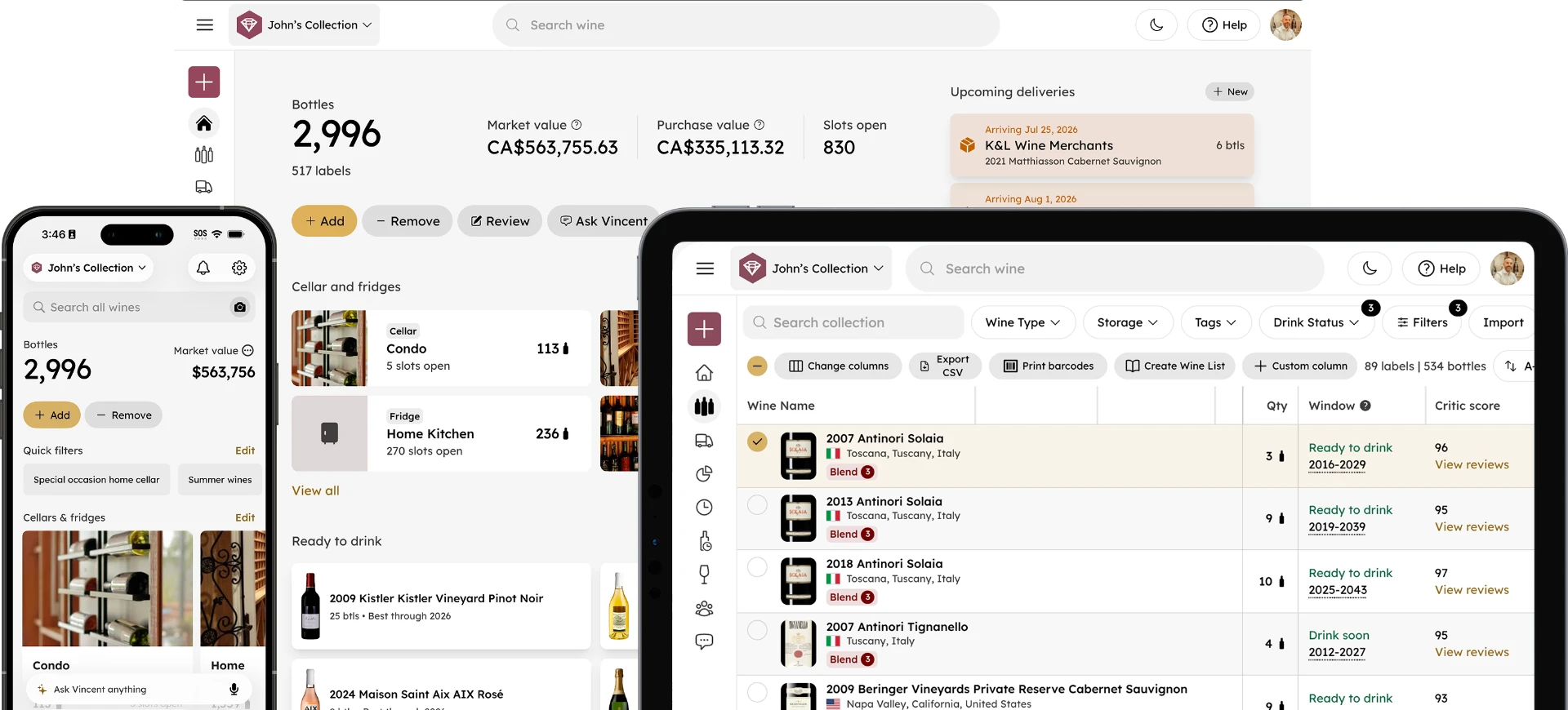
InVintory's Collection Analytics tracks real-time market value automatically once bottles are logged, sourced from institutional-grade fine wine data providers, so you get a genuine current figure across the entire inherited collection rather than researching each bottle individually by hand.
Get a real valuation on what you've inherited: explore Collection Analytics in InVintory →
If Multiple People Are Inheriting the Collection Together
When a collection passes to more than one person, whether siblings, a broader family, or an estate with multiple beneficiaries, the inventory and valuation steps above become even more important, since they give everyone the same shared, factual starting point rather than competing impressions of what's valuable. Agree on how the collection will be divided, sold, or shared before individual bottles start disappearing, and keep a single, shared record rather than letting each person maintain their own separate notes on what they've taken.
Step 4: Decide What to Keep, Sell, or Drink
With an inventory and valuation in hand, you're in a position to actually decide, rather than guess. Some bottles will be worth keeping and drinking yourself, some will be worth selling through the right channel for their value, and some may simply be ready to enjoy now rather than held for any other reason. This decision looks different for every collection, but it should always come after the inventory and valuation steps above, not before them. For a full framework on making this call bottle by bottle, see our guide on when to drink, sell, or hold.
What if the collection is large or includes potentially high-value bottles?
For a larger inherited collection, or one that includes bottles you suspect are genuinely high value, InVintory Elite adds white-glove documentation support, building out a fully cataloged, professionally verified record of the collection rather than leaving that work to you alone. This matters most when the collection's value is significant enough that getting the documentation right affects real financial decisions, including insurance, estate settlement, or a future sale.
When Sentimental Value and Financial Value Don't Match
Not every decision here is purely financial, and it's worth naming that directly. A bottle with real market value might mean nothing to you personally, while a modest bottle that was clearly meaningful to whoever left it to you might be worth keeping regardless of what it's worth on paper. There's no wrong answer to this, but it's worth deciding deliberately, bottle by bottle, rather than letting the inventory and valuation process make every decision for you. Documenting a bottle's story, who gave it to whom, when, and why, alongside its market details, preserves that context for whatever you eventually decide to do with it.
Protecting What You've Inherited While You Sort It Out
While you work through the steps above, make sure the collection is stored somewhere reasonably stable, cool, dark, and away from vibration, rather than left in whatever conditions it was found in if those conditions look obviously poor. And once you know a collection includes anything genuinely valuable, insurance is worth addressing sooner rather than later. See our guide to insuring a wine collection for what that actually involves.
If you're weighing whether the investment angle matters to you personally, beyond just the immediate sort-and-decide process, see our guide to investing in wine for the broader picture.
An inherited collection can feel overwhelming precisely because you're starting with more questions than answers. A complete inventory is what turns that uncertainty into an actual set of decisions you can make with confidence.
Ready to document and value what you've inherited?
FAQ
Should I drink or sell an inherited bottle right away?
Not until you've inventoried and valued the full collection. Drinking or selling before you know what you have risks losing a bottle worth far more than it seemed.
How do I find out if an inherited wine is worth money?
Start with producer, vintage, and region, and check whether that specific combination appears in current market data. A bottle that shows up consistently across sources is worth a closer, more formal valuation.
Do I need to insure an inherited wine collection?
If the collection includes anything genuinely valuable, yes, standard homeowner's coverage typically caps collectibles well below what a serious cellar is worth. See our guide to insuring a wine collection for the specifics.
What if I don't know anything about wine and inherited a large collection?
Start with the inventory step regardless of your own knowledge level. A complete, photographed record gives you or a professional appraiser something solid to work from, rather than starting from nothing.