Wine Faults: Corked, Oxidized, or Heat Damaged?
Madeleine Cruickshank
August 17, 2026 · 6 min read

How can you tell if a wine is faulty?
The most common faults each have a distinct smell or taste: cork taint smells like wet cardboard, oxidation tastes flat and loses fruit character, reduction smells like burnt match or rubber, and heat damage shows up as stewed, jammy fruit with a pushed or bulging cork. Identifying which one you're dealing with is mostly a matter of knowing what to smell for.
How Do I Know if a Wine Is Corked?
A corked wine smells of wet cardboard or a damp basement and tastes muted, with fruit character suppressed rather than simply absent. It's caused by TCA (2,4,6-trichloroanisole), a compound that can develop in natural cork. Estimates of how often this actually happens vary considerably depending on the source, cork industry studies report figures under 1 percent, while independent tasting panels have found rates as high as 3 to 7 percent, so treat any single number you see cited with some skepticism rather than as a settled fact.
If you're not sure whether a wine is corked or just an unfamiliar style, the wet cardboard smell is the most reliable tell. A wine that's simply not to your taste doesn't smell musty; a corked wine does.
What Does Oxidized Wine Taste Like?
Oxidized wine tastes flat and loses its fresh fruit character, often taking on a slightly sherry-like, nutty, or bruised-apple quality it shouldn't have. This happens when a wine has had too much contact with oxygen, whether from a compromised cork seal, a bottle stored upright for too long, or simply a wine that's been open too long after pouring. Color can shift too: white wine oxidizes toward a deeper gold or brown, red wine can take on a brownish tinge at the edges earlier than its age would suggest.
What Is Reduction, and Is It a Fault?
Reduction shows up as a burnt match, rubber, or garlic-like smell, and it happens when a wine has had too little oxygen exposure rather than too much, often in wines sealed with a very tight closure. Unlike most faults, reduction sometimes blows off with a few minutes of air, a vigorous swirl or a short decant can resolve it entirely. If the smell fades and the wine underneath is otherwise sound, it likely wasn't a permanent fault at all, just a temporary state.
What Are the Signs of Heat Damaged Wine?
Heat damaged wine shows stewed, jammy fruit character instead of fresh fruit, often paired with a physical sign: a cork that's been pushed slightly out of the bottle, or visible seepage around the capsule. Heat causes the liquid to expand, and that expansion is what pushes the cork, so a pushed cork on a bottle you didn't cause yourself is a meaningful clue that it was exposed to excessive heat at some point before it reached you. For more on how heat exposure happens in the first place, see our guides on transporting wine safely in summer and wine storage in summer heat.
Fault vs. Simply Past Peak: How to Tell the Difference
A fault is a defect; being past peak is a graceful decline. A wine past its ideal drinking window loses vibrancy and complexity gradually, but it doesn't develop the specific off-smells (wet cardboard, burnt match, flat oxidation) that mark an actual fault. If a wine simply tastes duller or less interesting than you'd hoped, without any of the specific signs above, it's more likely past its peak than faulty. See our guide to when a wine is ready to drink for the fuller picture on maturity and peak timing.
What to Do When You Find a Faulty Bottle
Can you return a faulty bottle of wine?
Often, yes, if you bought it from a retailer or restaurant recently and the fault is clearly identifiable, most sellers will accept a return or exchange for a genuinely faulty bottle, particularly cork taint. This is less straightforward for older bottles from your own cellar with no clear point of purchase to return to.
Should you log a faulty bottle or just delete it?
Log it rather than deleting it, especially if you own other bottles from the same producer, vintage, or case. A single corked bottle is bad luck. Multiple faulty bottles from the same source is a pattern worth knowing about, and you'll only catch that pattern if you keep a record rather than quietly discarding each one.
Preventing the Faults You Can Control
Cork taint isn't something you can prevent through storage, since it originates in the cork itself before the bottle ever reaches you. Oxidation and heat damage are different: both are largely preventable through proper storage and handling. Stable, moderate temperature and horizontal storage for corked bottles address most of what's within your control. If you're seeing recurring issues that look environmental rather than bottle-specific, see our guide to diagnosing wine cellar mold and humidity problems.
Logging Faults and Patterns in InVintory
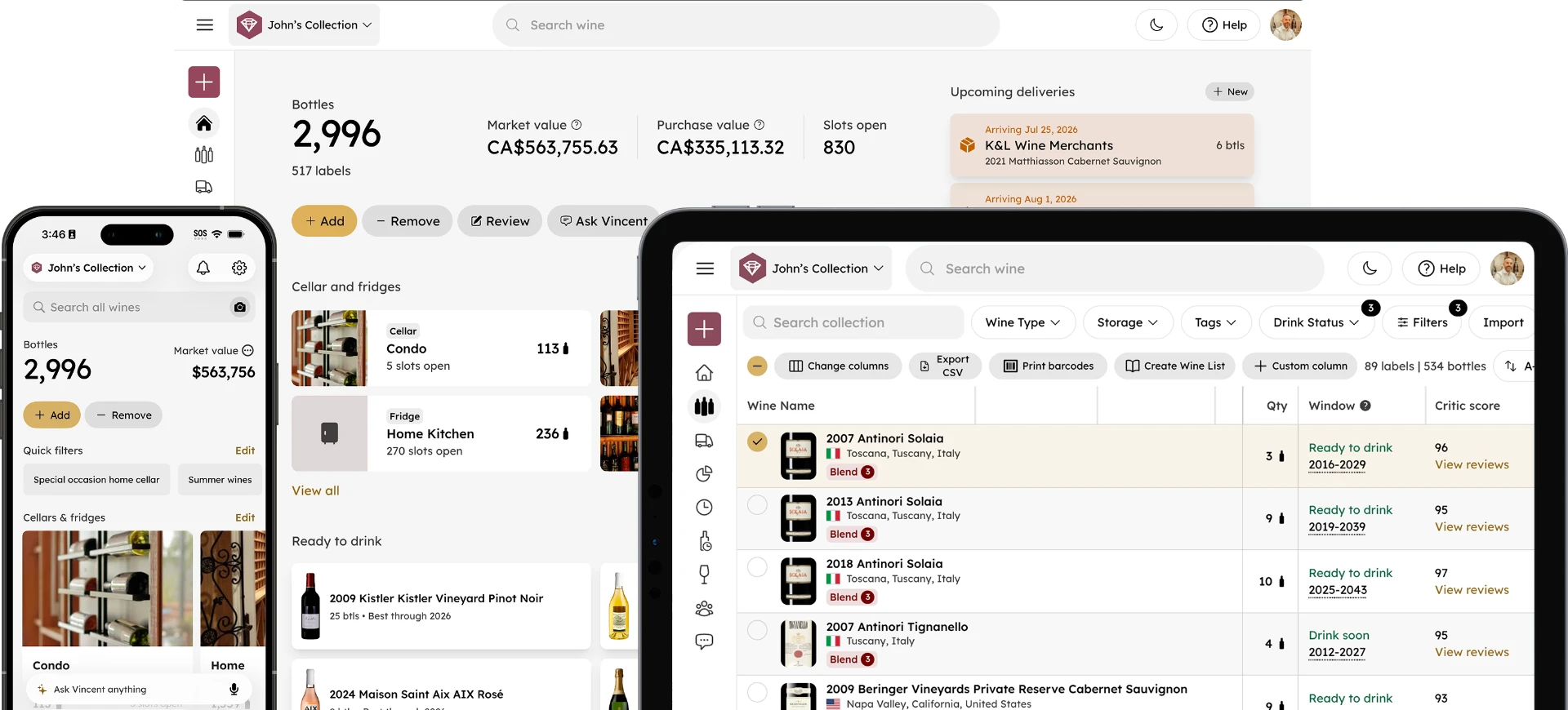
Tracking which bottles turned out to be faulty, and from where, is one of the more overlooked uses of a detailed collection record. InVintory's Wine Guide lets you note a fault directly on a bottle's record, so if a pattern emerges across a case or a producer, you'll actually see it rather than relying on memory across purchases that may be months or years apart. For more on building out this kind of record over time, see our guide to tasting notes and consumption history.
Condition tracking also matters beyond your own drinking experience. A documented history of a bottle's condition, faults included, is part of what affects resale value; see our guide to how wine provenance affects value for the fuller picture.
Track faults alongside every other tasting note
Ask Vincent to help diagnose what you're smelling →
If you're managing a larger or higher-value collection where condition tracking genuinely affects resale value, see InVintory Elite for more comprehensive provenance and condition documentation.
A fault doesn't mean the whole case is a loss. It means you now know something specific and worth recording about that wine.
Start tracking faults, notes, and patterns across your collection.
FAQ
Is corked wine dangerous to drink?
No, TCA contamination affects flavor and aroma, not safety. A corked wine is unpleasant, not harmful.
Can heat damaged wine still be enjoyable to drink?
Sometimes, though it won't show what the wine was capable of at its best. If the fruit reads as stewed rather than completely flat, it may still be drinkable, just not representative of the bottle's true character.
Does a screw cap eliminate the risk of cork taint?
Yes, screw caps eliminate cork taint specifically, since TCA originates in natural cork. They don't protect against oxidation or heat damage, which can affect any closure type.
How quickly should I address a suspected fault after opening a bottle?
Evaluate it within the first few minutes of pouring, since a genuine fault (corked, oxidized, or heat damaged) is usually apparent early and won't meaningfully improve with time in the glass, unlike reduction, which can resolve on its own.