Wine Cellar Mold and Humidity: Causes and Fixes
Madeleine Cruickshank
July 29, 2026 · 6 min read
What does mold on a wine label mean?
It usually signals humidity above 70 percent for a sustained period, not necessarily a damaged bottle. Mold on the outside of a bottle or on cardboard packaging is typically cosmetic, affecting the label rather than the wine itself, though it's worth treating as an early warning sign rather than ignoring it.
Diagnosing Common Humidity Problems
Mold on Labels or Cellar Surfaces
Visible mold, usually a fuzzy white, gray, or black growth, on labels, wooden racks, or cellar walls points to sustained humidity above roughly 70 percent, often combined with poor air circulation. It tends to show up first in corners or against exterior walls where airflow is weakest.
The fix
Improve ventilation with a small fan to keep air moving, and address the humidity source directly, whether that's a cooling unit not managing moisture properly or a cellar space without adequate climate control. Wipe down affected surfaces with a mild bleach solution or specialized cellar cleaner, and address the underlying humidity before the mold returns.
Dry, Crumbling, or Shrunken Corks
Corks that feel unusually dry, crumble when a cork puller is removed, or have visibly shrunk within the neck of the bottle point to humidity that's too low, generally below 50 percent, for a sustained period.
Why this matters
A dried-out cork lets in more oxygen than intended, which can prematurely age or spoil the wine, sometimes without any obvious sign until the bottle is finally opened.
The fix
Add humidity to the storage environment, through a humidifier designed for wine storage, a water tray in a wine fridge, or, for a full cellar, a dedicated humidification system. Address this quickly once identified, since cork condition tends to worsen the longer it sits in overly dry conditions.
Label Damage Without Visible Mold
Peeling, bubbling, or discoloring labels, even without visible mold growth, often indicate humidity swings rather than a single sustained condition. Moving between too dry and too humid repeatedly stresses the paper and adhesive more than a stable, even-if-imperfect humidity level would.
The fix
Focus on stability as much as the specific number. A consistent 65 percent humidity is generally better for label condition than a fluctuating range that averages out to the same figure.
Seasonal Patterns Worth Knowing
Humidity problems don't distribute evenly across the year. Basement cellars in humid climates often see their highest risk in late summer, when outdoor humidity peaks and any gaps in a cooling system's dehumidification struggle to keep pace. Dry-cork problems, by contrast, tend to show up more in winter, when heating systems pull moisture out of indoor air generally, including in spaces adjacent to a wine storage area even if the storage itself is separately climate-controlled.
Knowing which season tends to stress your specific setup lets you check more attentively during that window rather than treating every month as equal risk. If you've had a mold issue before, mark the season it occurred on your calendar as a reminder to check conditions proactively the following year, rather than waiting to notice a problem again.
What Causes Humidity Problems in the First Place
Inadequate climate control
A wine fridge or cellar cooling system built for temperature but not humidity management is a common root cause, particularly with smaller freestanding units.
Poor sealing
Gaps around doors, windows, or cellar entry points let outside humidity levels influence the interior more than intended, undermining even a well-specified cooling system.
No air circulation
Stagnant air allows humidity (and any mold spores present) to concentrate in specific spots rather than staying evenly distributed, which is why mold often shows up in corners first rather than throughout a space.
Seasonal shifts
Basement cellars in particular can see meaningful humidity swings between seasons if the space isn't actively climate-controlled year-round, since ambient humidity outdoors changes with the weather.
A Quick Seasonal Prevention Checklist
A short routine check, done monthly rather than only when something looks wrong, catches most humidity problems before they become visible. Check your hygrometer reading against your target range, look at corners and low-airflow spots for early mold growth, inspect a random sample of corks for dryness or shrinkage, and confirm your cooling unit's drainage isn't blocked, since blocked drainage is a common hidden cause of localized humidity spikes even when the overall reading looks fine.
When to Call a Professional
A single humidity spike you can trace to an obvious cause, like a door left open, is usually fine to address yourself. Recurring mold, especially in a finished cellar space, or a cooling system that seems unable to hold a stable humidity range despite your efforts, is worth having assessed by someone who installs or services cellar climate systems, since the underlying cause may be mechanical rather than something you can fix with a humidifier alone.
Monitoring So You Catch This Early
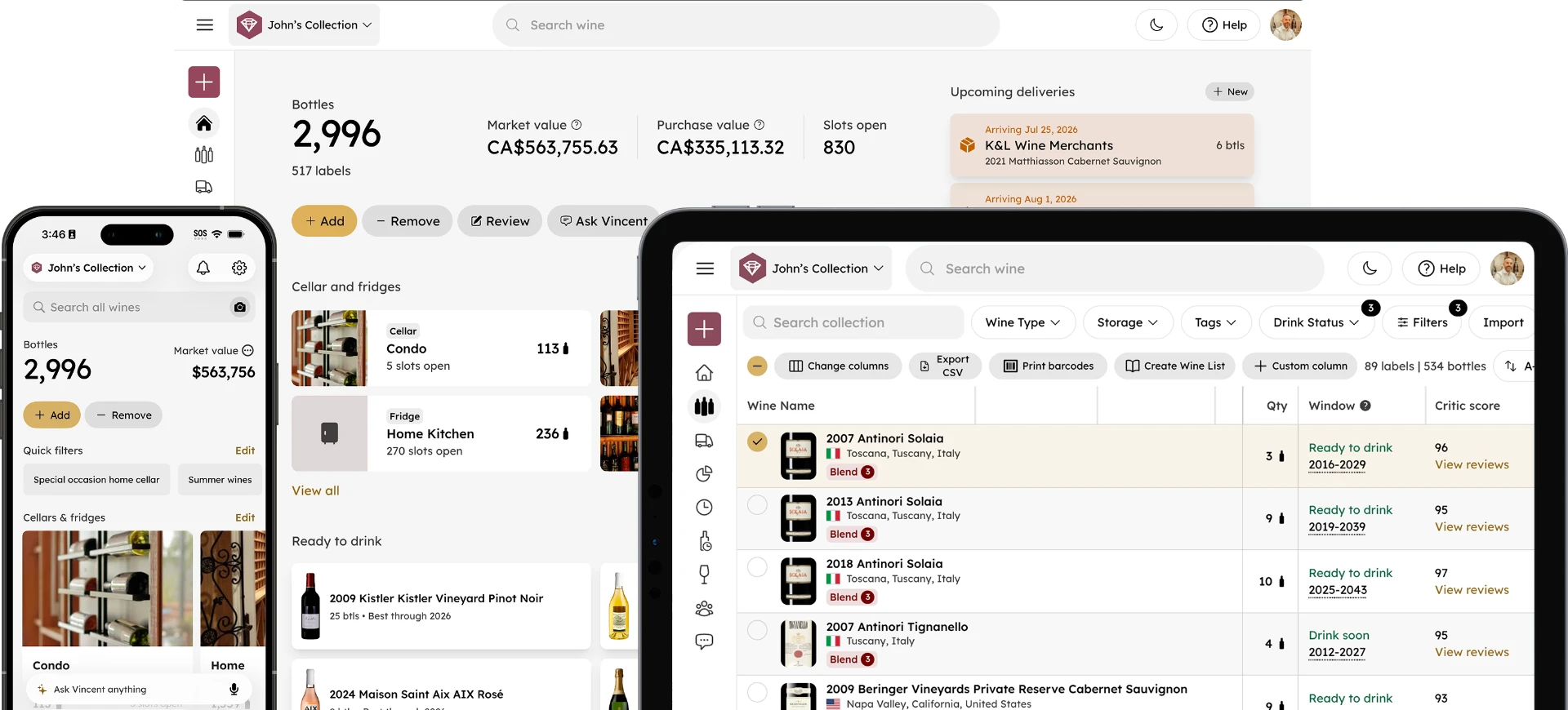
Most humidity problems get more expensive to fix the longer they run unnoticed. Continuous monitoring catches a drift before it becomes visible mold or crumbled corks. InVintory Elite integrates with Govee and other IoT sensors, alerting you the moment humidity moves outside your set range, rather than after a problem is already visible on the label.
Catch humidity problems before they cost you a bottle: explore sensor monitoring with InVintory Elite →
If you're storing wine while away from home for an extended period, or dealing with the specific stress of summer heat, see our guide to wine storage in summer heat, and for general storage guidance including ideal humidity ranges, see our wine storage temperature guide.
If you're setting up storage for the first time and want to avoid these problems altogether, see our guide to organizing a wine collection.
Mold and dried corks are almost always fixable once you know what's actually causing them. The expensive version of this problem is the one nobody notices until the bottle is already open.
Want an alert the moment conditions drift?
See How InVintory Elite Monitors Your Cellar →
FAQ
Is mold on a wine bottle dangerous?
Mold on the outside of a bottle or label is typically cosmetic and doesn't affect the wine inside, since the cork and glass provide a seal. It's still worth treating as a sign that your storage humidity needs attention.
What humidity level prevents mold in a wine cellar?
Staying below roughly 70 percent relative humidity, with good air circulation, generally prevents mold growth while still keeping corks from drying out below the 50 percent floor.
Can a dried-out cork ruin a bottle of wine?
It can. A dried cork lets in more oxygen than intended, which can prematurely age or spoil the wine, sometimes without an obvious sign until you open the bottle.
How do I know if my humidity problem is a quick fix or something bigger?
A single spike tied to an obvious cause, like a door left open, is usually easy to fix yourself. Recurring mold or a cooling system that can't hold a stable range despite your efforts is worth having professionally assessed.