Wine Storage in Summer Heat: What to Check Now
Madeleine Cruickshank
July 14, 2026 · 5 min read
Summer can be hard on a wine collection. Heat accelerates aging, humidity swings dry out corks or invite mold, and a cooling system that worked fine in April can quietly fall behind once temperatures climb. Here's what actually matters and what to check before the next heat wave hits.
What temperature should wine be stored at in summer?
Wine should stay between 45°F and 65°F year-round, with 55°F widely cited as the ideal target. Consistency matters more than hitting that number exactly. A collection held steady at 60°F will fare better than one swinging between 50°F and 70°F.
Why Heat Is the Real Threat
Above roughly 70°F, wine ages faster than intended, and above 80°F, heat starts breaking down the flavor and aroma compounds that took years to develop. Heat also makes the liquid inside the bottle expand, which can push against the cork and eventually let air in. Once a wine has been heat-damaged, there is no way to reverse it.
The bigger risk usually isn't a single hot day. It's sustained heat over weeks, or a cooling system that's quietly losing ground during the hottest part of summer.
Not All Wines Are Equally Vulnerable
Delicate whites and sparkling wines tend to show heat stress fastest, since their aromatics are more fragile and their acidity is part of what makes them work. A Champagne or a crisp Riesling that's been sitting warm for a week can taste noticeably flat compared to one that's been stored properly.
Fuller-bodied reds have somewhat more of a buffer, since their tannin and structure can mask minor heat stress longer, but "more of a buffer" doesn't mean immune. A robust Cabernet held at 75°F for a summer will still age faster and lose nuance compared to one held at 55°F, even if the damage isn't as immediately obvious on the palate.
If you're prioritizing which bottles to move to the coolest part of your storage during a heat wave, put delicate whites and sparkling wine first.
What to Check Before the Next Heat Wave
Ambient temperature around your storage
A wine fridge in a hot garage, sunroom, or kitchen works much harder than one in a climate-controlled room. Check your unit's rated maximum ambient temperature and compare it to where it actually lives.
Signs your cooling system is falling behind
Interior temperature creeping above your set point, unusual compressor noise, or heavy ice buildup on evaporator coils are all signs a unit is struggling before it fails outright.
Humidity, not just temperature
Aim for 50 to 70 percent relative humidity. Air conditioning tends to dry the air out, which can shrink corks and let oxygen in. Damp basements risk the opposite problem: mold and label damage above 80 percent humidity.
Direct sunlight and UV exposure
UV light degrades wine and fades labels regardless of temperature. Blackout curtains or UV-filtering film help if your storage area gets any natural light.
For which bulbs are safe and how quickly exposure causes a fault, see how light damages wine.
Never the garage, attic, or car trunk for anything beyond a short trip
These spaces see the widest daily temperature swings in summer, which is more damaging than a moderately warm but stable environment.
Built-In vs. Freestanding Units in Summer
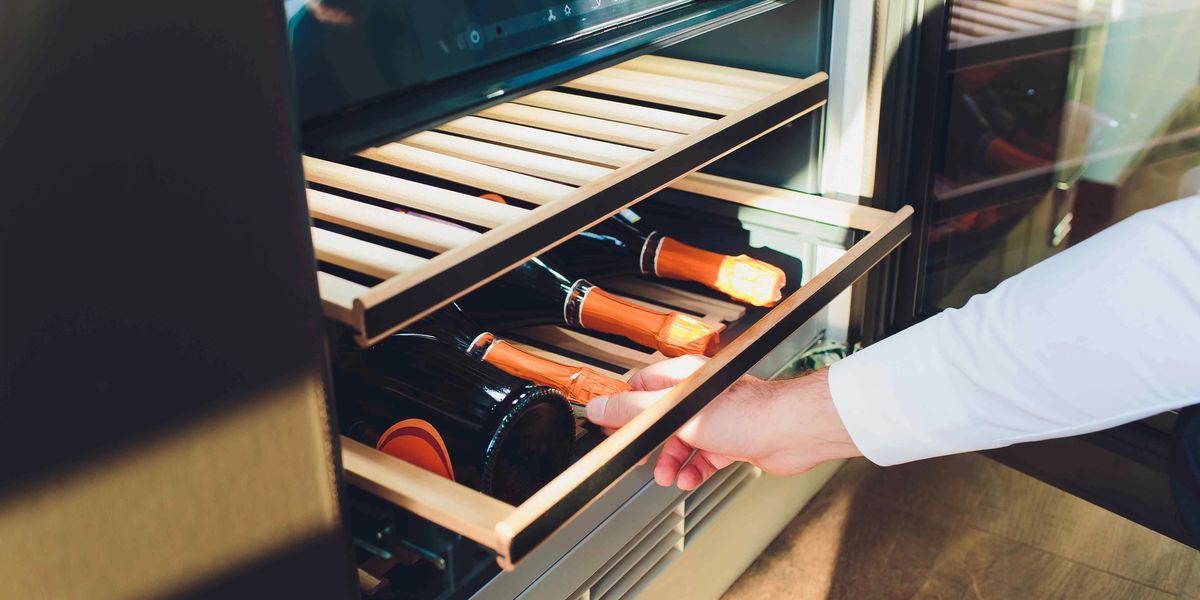
Built-in wine fridges, the kind installed flush into cabinetry, need proper front-venting to expel heat, and if that venting is blocked or undersized, the unit works harder in summer and may never quite reach its set temperature on the hottest days. If your built-in unit seems to struggle more in summer than winter, check that its vents aren't obstructed by nearby cabinetry or stored items.
Freestanding units need clearance on all sides, typically a few inches, to let heat dissipate properly. A freestanding fridge pushed flush against a wall in a warm room is one of the more common, and easily fixed, causes of underperformance in summer.
Many modern units, including dual-zone models with separate compartments and independent digital temperature controls, let you monitor and adjust both zones directly from the display. If your unit has this feature, it's worth checking both zones individually during a heat wave rather than assuming the overall reading reflects every shelf evenly, since the zone closer to the compressor or door can run slightly warmer.
Tracking Conditions Without the Guesswork
A simple thermometer and hygrometer tell you the current state of your storage, but they don't tell you what happened while you were at work or away for a weekend. Smart sensors like Govee track temperature and humidity continuously and can alert you if conditions drift outside a safe range.
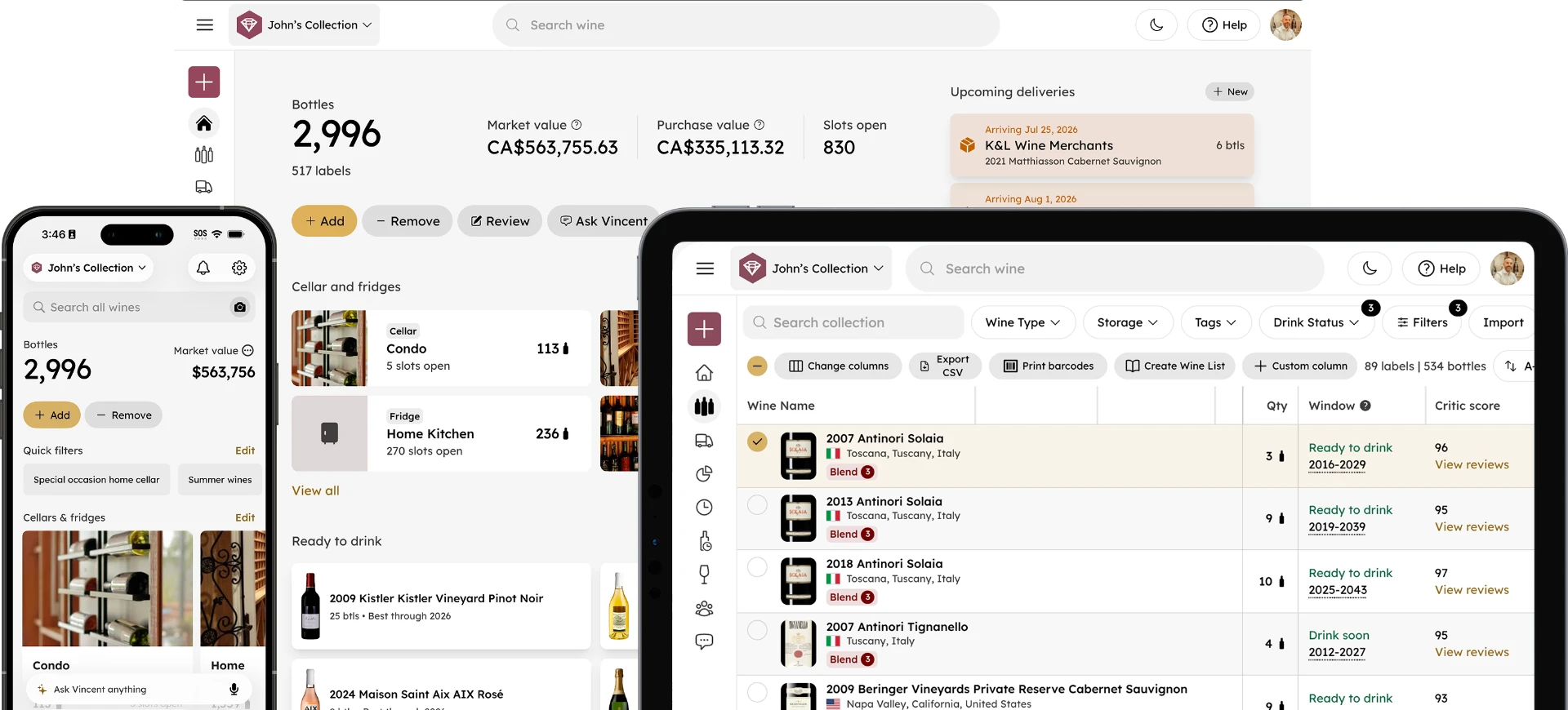
InVintory Elite integrates directly with Govee and other IoT sensors, so temperature and humidity monitoring lives alongside the rest of your collection data rather than in a separate app. If a reading drifts outside your set range, you get notified before it becomes a problem instead of after.
If You Suspect Heat Damage
Check for a pushed or bulging cork, wine that has seeped past the seal, or a noticeably higher fill line than usual. None of these guarantee the wine is ruined, but they're worth noting before you open the bottle so you know what you're evaluating.
Keeping accurate records of what's in your collection, and when you bought it, makes it easier to spot patterns if multiple bottles from the same period show signs of stress.
Want climate monitoring built into your collection tracking? Explore InVintory Elite or get started with InVintory free.
FAQ
Can I store wine in a regular kitchen refrigerator during summer?
Short term, yes, for a few weeks at most. Regular refrigerators run colder and drier than ideal wine storage, which can dry out corks over time. They're fine for wine you plan to drink soon, not for long-term storage.
How do I know if my wine fridge is struggling in summer heat?
Watch for the interior temperature reading higher than your set point, unusual compressor noise, or visible ice buildup on interior coils. Any of these suggest the unit is working harder than it should.
Does humidity matter as much as temperature for summer wine storage?
Yes. Temperature gets more attention, but humidity outside the 50 to 70 percent range can dry out corks or, on the other end, encourage mold and damage labels.
Which wines should I move first if my storage gets too warm?
Prioritize delicate whites and sparkling wines, since their aromatics and acidity are the most sensitive to heat stress. Fuller-bodied reds have somewhat more tolerance, though they're not immune to long-term damage either.