Sparkling Wine Types Explained: A Collector's Guide
Madeleine Cruickshank
July 21, 2026 · 6 min read

What are the main types of sparkling wine?
The main types are Champagne, Prosecco, Cava, and Cremant, each defined by where it's made and how it's produced, not just by having bubbles. Champagne and Cremant use the traditional method (a second fermentation in the bottle), Cava also uses the traditional method but from Spain, and Prosecco is typically made using a tank method that produces a lighter, fruitier style.
Champagne
Champagne can only legally carry that name if it's made in the Champagne region of France, using approved grapes (primarily Chardonnay, Pinot Noir, and Pinot Meunier) and the traditional method, where the second fermentation that creates the bubbles happens inside the bottle itself. This process, plus extended aging on the lees (the spent yeast cells), is what gives Champagne its characteristic toasty, bready notes alongside its fruit.
Champagne is typically the most structured and age-worthy of the four styles covered here, and non-vintage bottlings are designed to be consistent from year to year, while vintage Champagne reflects a single, standout harvest.
Prosecco
Prosecco comes from northeastern Italy and is made primarily from the Glera grape, using the tank method (also called the Charmat method) rather than the traditional method. The second fermentation happens in large pressurized tanks instead of individual bottles, which preserves more fresh fruit character and produces a lighter, less yeasty style than Champagne.
Prosecco is generally meant to be enjoyed young, within a year or two of release, rather than cellared long term.
Cava
Cava is Spain's traditional-method sparkling wine, made primarily from indigenous grapes like Macabeo, Xarel-lo, and Parellada, though Chardonnay and Pinot Noir are also permitted. Because it uses the same bottle-fermentation process as Champagne, Cava often delivers similar structure and complexity at a noticeably lower price point.
Reserva and Gran Reserva Cava spend longer aging on the lees than standard Cava, producing a richer, more Champagne-like profile.
Cremant
Cremant is France's answer to Champagne from outside the Champagne region, made using the same traditional method but from different grapes and regions, most notably Cremant de Loire, Cremant d'Alsace, and Cremant de Bourgogne. Because it isn't permitted to use the Champagne name, Cremant is often one of the best value entry points into traditional-method sparkling wine.
Other Traditional Method Sparkling Wines
Beyond these four, a handful of other regions produce traditional-method sparkling wine worth knowing, including English sparkling wine (increasingly made from the same grapes as Champagne, on similar chalky soils) and various regional Spanish and Italian traditional-method bottlings outside the Cava and Prosecco designations. These are worth exploring once you're comfortable with the four core styles above.
Vintage vs. Non-Vintage Sparkling Wine
What's the difference between vintage and non-vintage sparkling wine?
Non-vintage sparkling wine (labeled NV) is blended from multiple years to maintain a consistent house style year after year, while vintage sparkling wine comes entirely from a single, exceptional harvest and reflects that specific year's conditions.
Most Champagne and Cava production is non-vintage, since blending across years is what lets a producer deliver the same recognizable style reliably, regardless of how any single growing season performed. Vintage releases are typically reserved for standout years and are priced and positioned accordingly, since a producer is essentially staking a claim that a specific year deserves to stand on its own rather than being blended away.
Prosecco doesn't generally follow this same vintage/non-vintage distinction in practice, since most Prosecco is meant to be consumed young regardless of the specific year, and Cremant follows patterns closer to Champagne, with non-vintage as the standard and vintage as the exception.
Serving Sparkling Wine Properly
Serving temperature affects sparkling wine more noticeably than it does most still wine, since both aroma and the perception of bubbles change significantly with temperature.
Champagne and Cava are best served cold, generally 45°F to 50°F, cold enough to keep the wine crisp and the bubbles tight, but not so cold that it mutes the aromatics entirely.
Prosecco does well slightly warmer within that same general range, since its fruit-forward character can get muted if served too cold.
Cremant follows serving guidance similar to Champagne, given the shared production method.
An ice bucket with roughly half ice and half water chills a bottle faster and more evenly than a refrigerator alone, typically reaching serving temperature in 20 to 30 minutes.
Tracking Sparkling Wine in Your Own Collection
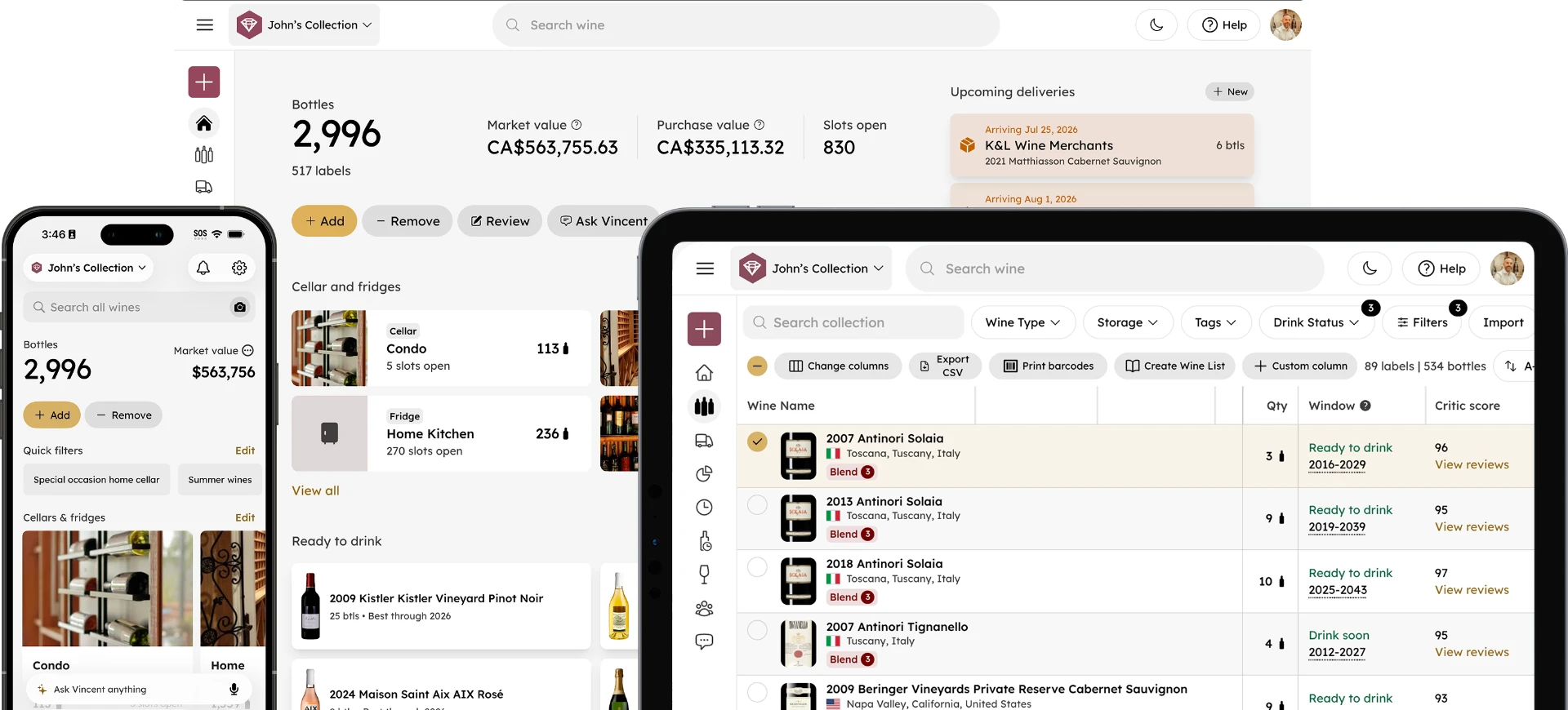
Sparkling wine brings its own tracking considerations: most styles are meant to be consumed relatively young, so knowing what you have and when it was disgorged (for Champagne and other traditional-method wines, the date it was removed from extended lees aging) matters more than it does for most still wines. InVintory's Wine Guide feature lets you log detailed bottle information, including producer, vintage, and tasting notes, so you're not relying on memory to know which of your sparkling bottles are best enjoyed now versus which can hold a bit longer.
If you're building out a sparkling wine section of your cellar for the first time, or want a place to note tasting impressions as you work through different styles, that's exactly what the Wine Guide feature is built for.
For more on the varietal side of things, see our guides to red wine varieties and white wine varieties, and if rosé is more your speed, our complete guide to Provence rosé covers one of the most well-known pink wine regions in depth.
Sparkling wine deserves the same attention in your cellar records as anything else you collect, not an afterthought in the back of the fridge.
Not sure which sparkling style pairs with what you're serving?
Ask Vincent, Your AI Sommelier →
FAQ
What is the difference between Champagne and Prosecco?
Champagne is made in France using the traditional method, with a second fermentation inside the bottle. Prosecco is made in Italy using the tank method, with the second fermentation happening in large pressurized tanks, producing a lighter, fruitier style.
Is Cava the same quality as Champagne?
Cava uses the same traditional method as Champagne, which gives it similar structural complexity, though it's typically made from different grapes and priced considerably lower. Higher-tier Cava, like Reserva and Gran Reserva, closes much of that quality gap.
What is Cremant, and how is it different from Champagne?
Cremant is traditional-method sparkling wine made in French regions outside Champagne, such as the Loire Valley, Alsace, and Burgundy. It uses the same bottle-fermentation process as Champagne but different grapes and terroir, and generally costs less.
Does sparkling wine need to be stored differently than still wine?
The same basic principles apply: cool, dark, stable temperature, and horizontal storage if it has a cork. Most sparkling wine is meant to be consumed sooner than age-worthy still reds, so tracking when you bought it matters more than it does for a wine meant to sit for a decade.
Ready to log your sparkling wine collection properly?