Provence Rosé Wine: Appellations and Buying Guide
Martine McLarney
July 3, 2026 · 7 min read
By Martine McLarney, Director of Wine at InVintory
Provence rosé is one of the most recognized wine styles in the world, and one of the most misunderstood. Most collectors treat it as just a casual summer wine, but the finest Provence rosés are bone dry, made entirely from red grapes, and are capable of aging a decade.
About half of all premium rosé sold worldwide comes from a single region in southeastern France. And the producers making it have been doing so for over 2,600 years.
This guide covers everything a collector needs to know about Provence rosé: how it's made, what defines its style, which appellations matter, and exactly what to buy depending on your budget and what you want to drink.
Why Provence Rosé Matters
What makes Provence the world's benchmark for rosé?
Provence accounts for roughly 50 percent of all premium rosé sold worldwide. The region produces over 140 million bottles of rosé per year: more than 80 percent of its entire wine output. In 2023, 9.8 million cases of Provence rosé were imported to the United States alone, making it the number one wine category for growth in the US over the last decade.
The numbers reflect something the French have known for centuries: Provence rosé isn't a trend. It's a category. And the region's combination of ancient winemaking history, exceptional terroir, and a commitment to a specific pale, dry style has made it the global standard against which all other rosé is judged.
Rosé is also no longer seasonal. The French drink it year-round, with oysters in winter, with ratatouille in summer, with cheese at any time. The idea that it's a summer-only wine is a marketing construct, not a culinary reality.
Where Is Provence?
Where is Provence located and why does geography matter for rosé?
Provence sits in the southeastern corner of France, between Marseille and the Italian border. The Mediterranean Sea borders it to the south. The Alps protect it to the north and east. The region enjoys over 3,000 hours of sunshine per year (roughly double what Bordeaux receives), and approximately 300 days of sunshine annually.
The Mistral wind is Provence's defining climatic feature. It can exceed 100 km/h and blows more than 100 days per year. Named after the Occitan word for "masterly wind," it sweeps humidity out of the region, keeps vines healthy without chemical intervention, and shapes not just the wine but the architecture of the villages it passes through.
Provence is also one of the oldest wine regions in France. Greeks planted vines here around 600 BC when they founded Massalia, the city now called Marseille. That is 2,600 years of winemaking.
What Makes Provence Terroir Distinctive
What gives Provence rosé its character?
Terroir, or the combination of climate, soil, topography, and human influence, is what makes the same grape taste completely different depending on where it's grown. Grenache from Provence makes a pale, delicate rosé. Grenache from Spain makes a bold, dark red. Same code, different environment, completely different result.
Provence's soils are a patchwork of limestone, schist, and crystalline rock. Limestone dominates in Bandol; schist gives wines from the Maures massif their mineral backbone. Poor soils stress the vines, concentrating flavors in ways that rich agricultural soil cannot.
The climate is hot and dry Mediterranean, with average rainfall of just 600 mm per year. Grapes ripen slowly, retaining the acidity that gives Provence rosé its signature freshness. Coastal vineyards near Bandol catch sea breezes that preserve this freshness even in the warmest years.
The Grapes Behind Provence Rosé
What grapes are used in Provence rosé?
Most Provence rosés are blends of at least two of the following four varieties, each contributing something distinct to the final wine.
Grenache is the most widely planted variety in Provence and the backbone of most blends. It contributes strawberry and red cherry fruit, watermelon freshness, and body. The superstar of the blend.
Cinsault brings delicate floral notes, freshness, and low tannin. It is key to achieving Provence's characteristic pale color. The longer the skin contact, the deeper the color, and Cinsault's light pigmentation helps pull everything toward that signature salmon hue.
Mourvèdre provides structure, spice, complexity, and dark fruit. It is dominant in Bandol, where it accounts for the majority of the blend and gives Bandol rosé its age-worthiness and power.
Tibouren is a rare local gem almost exclusive to Provence. It contributes herbal and savoury notes found in no other rosé-producing region in the world. If you see it on a label, it is worth noting.
How Rosé Gets Its Color
Is Provence rosé made by mixing red and white wine?
No. Quality Provence rosé is made from red grapes using a technique called direct press, not by blending red and white wine together.
Color in wine comes from skin contact. The briefer the contact, the paler the wine. The three methods used for rosé are:
Direct press (the Provence method)
Red grapes are gently pressed immediately after harvest. Skin contact of just one to three hours extracts a blush of color and delicate aromatics, giving the signature pale salmon hue. This is how virtually all quality Provence rosé is made.
Saignée (bleeding)
A portion of juice is bled off a red wine tank early in fermentation. This produces deeper color and more body. It is more common in Bandol than in table Côtes de Provence.
Blending
Mixing finished red and white wine is legal in very few appellations, frowned upon by serious producers, and not how quality Provence rosé is made.
Provence is world-famous for producing the palest rosés in the world. That paleness is a deliberate winemaking choice and a badge of precision, not a sign of weakness or dilution.
The Key Appellations
Which Provence appellations should collectors know?
Côtes de Provence AOP accounts for approximately 75 percent of all Provence rosé production. Pale, dry, fresh, with strawberry, peach, and herbal notes. This is the everyday Provence rosé and the best introduction to the region. Côtes de Provence covers four distinct sub-zones: La Londe, Fréjus, Sainte-Victoire, and Pierrefeu. Each has a subtly different character shaped by soil and elevation.
Coteaux d'Aix-en-Provence AOP produces slightly fuller-bodied wines with more Grenache dominance. Inland, near the city of Aix. Single-estate wines here offer added complexity worth seeking out.
Bandol AOP is the Grand Cru of Provence rosé. Small, prestigious, and Mourvèdre-dominant, Bandol rosé is darker, more structured, and age-worthy in a way that most Côtes de Provence is not. Bandol again stands out for its structured, concentrated Mourvèdre-heavy rosés, most of which justify their slightly higher price tags. The best examples can age five to eight years; some collectors hold them for a decade.
Palette AOP is tiny (three producers only), with complex, terroir-driven wines grown on unique limestone soils. Château Simone is almost the sole producer. A genuine collector's item.
What Does Provence Rosé Taste Like?
What are the typical tasting notes for Provence rosé?
Provence rosé is bone dry. Sugar levels typically fall below 2 g/L, considerably less than a standard glass of orange juice. If a rosé tastes sweet, it is either from a different region or made in a different style.
The flavor profile divides into four categories:
Fruit: strawberry, raspberry, white peach, watermelon, grapefruit
Floral: rose petal, lavender, orange blossom
Herbal: thyme, garrigue, fennel, fresh herbs
Mineral: limestone, sea salt, chalk, wet stone. Lees-aged examples may also show almond, brioche, or light cream.
Structurally, expect 12 to 13.5 percent ABV, medium-high acidity, a light to medium body, and a clean, refreshing finish. Serve at 8 to 10 degrees Celsius (46 to 50 degrees Fahrenheit).
Three Myths About Rosé, Corrected
Is Provence rosé sweet?
No. Provence rosé is bone dry with sugar levels typically under 2 g/L. If a rosé tastes sweet, it is from a different region or style.
Is rosé just for summer?
No. The French drink rosé year-round: with Thanksgiving turkey, holiday appetizers, winter salmon, and any occasion that calls for a versatile, food-friendly wine. The idea that rosé is seasonal is a marketing construct, not a culinary reality.
Is rosé serious wine?
Quality Provence rosé absolutely is. Bandol rosé from Domaine Tempier ages beautifully and some collectors hold it for a decade. Garrus from Château d'Esclans is a single-vineyard, barrel-aged rosé that commands over $100 per bottle and proves the category can be completely serious.
Rosé and Food
What food pairs best with Provence rosé?
Rosé sits between the refreshing nature of white wine and the complexity of red, which makes it the most food-versatile wine style in existence. When in doubt, pour rosé.
The natural pairings are Mediterranean: grilled lobster, bouillabaisse, oysters, mussels. The acidity cuts through soft cheeses, like chèvre, brie, and burrata, beautifully. Niçoise salad is the classic pairing. Herbs-de-Provence chicken echoes the garrigue notes in the wine directly. Tomato-based pizza with Provençal toppings like olives, artichoke, and anchovies is excellent.
It also works perfectly on its own. Cold, on a patio. The French have been doing exactly this for centuries.
Famous Producers
Which Provence rosé producers should collectors know?
Château d'Esclans is home to Whispering Angel and the ultra-premium Garrus. Founded by Sacha Lichine, Château d'Esclans single-handedly drove the global luxury rosé boom and established the benchmark that every premium Provence rosé is now measured against.
Domaines Ott has been producing serious Provence rosé since 1912. A pioneering force in Provence rosé, Domaines Ott remains a reliable pick when looking for a classic style, with fresh citrus flavors, sea salt minerality, and refreshing acidity. The iconic Borachio oval bottle is instantly recognizable.
Château Minuty is family-owned since 1936 and one of Provence's most award-winning estates. The M range is a sommelier staple.
Château Miraval is world famous. The winemaking is handled by the legendary Perrin family of Château Beaucastel, one of the Rhône Valley's greatest dynasties, which is what makes the wine exceptional for the price.
What to Buy: Martine's Picks by Budget
What are the best Provence rosé wines to buy right now?
The following recommendations are from Martine McLarney, InVintory's Director of Wine, and represent her personal picks across three price brackets. Prices reflect approximate Canadian retail.
Weeknight Wins: Under $25 CAD
M de Minuty Rosé: Classic Provence. Citrus, peach, easy drinking. The perfect introduction to the region from one of its most awarded estates.
Miraval, Perrin & Fils: Ignore the celebrity association entirely. The winemaking is by the Perrin family and the quality-to-price ratio is exceptional. One of the best-value bottles in the Provence category.
Weekend Splurges: $35 to $60 CAD
Whispering Angel, Château d'Esclans: The benchmark modern Provence rosé. Consistent, crowd-pleasing, and widely available. The wine that redefined the premium rosé category globally.
Domaine Ott 'Étoile': The iconic Borachio bottle. Elegant, complex, and worth every penny. A pioneering force in Provence rosé since 1912, Domaines Ott remains a reliable pick, with fresh citrus flavors, sea salt minerality, and refreshing acidity.
Château Pradeaux, Bandol: Mourvèdre-dominant. Earthy, structured, age-worthy. Age it two to three years if you can.
Show-Stoppers: $60+ CAD
Garrus, Château d'Esclans: Single-vineyard, barrel-aged rosé that proves the category can be completely serious. The pinnacle of the Château d'Esclans range.
Domaine Tempier, Bandol: The benchmark of Bandol. Made by the legendary Peyraud family. One of the most collectible rosés in the world and age-worthy for a decade.
Château Simone, Palette: A true collector's item. Almost impossible to find outside of Provence. If you see it, buy it immediately.
Tracking Rosé in InVintory
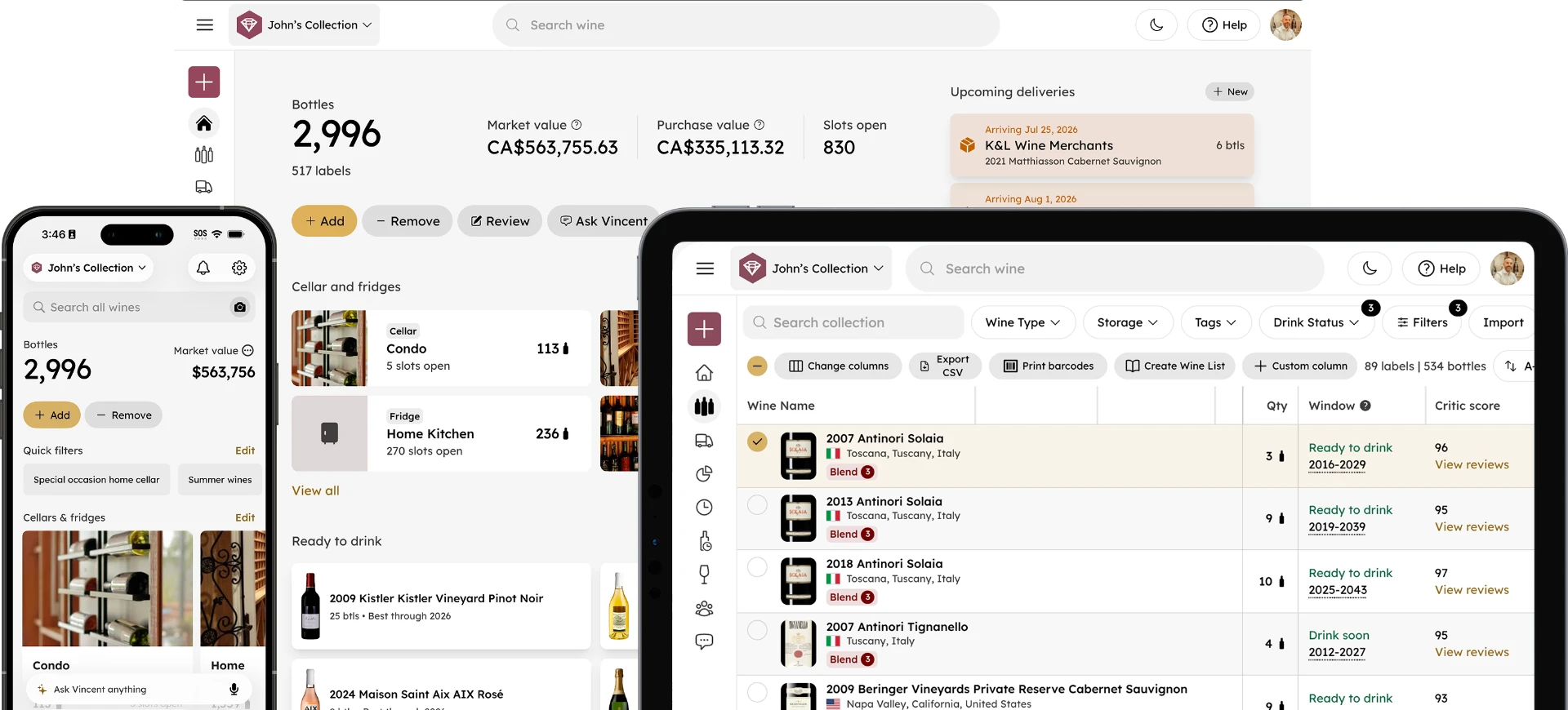
All the wines above can be tracked in InVintory, including their purchase prices, tasting notes, drinking windows, market values, and ideal food pairings. You can build a dedicated Saved List for your rosé collection, log food pairing notes for each bottle, and use Vincent to ask about your rosé holdings and what to open.
For more on how InVintory handles wine variety knowledge, this guide to red wine varieties and this guide to white wine varieties cover the full picture.
Track Your Rosé Collection in InVintory →
Frequently Asked Questions
Is Provence rosé always dry?
Yes. Quality Provence rosé is bone dry, with residual sugar typically below 2 g/L. The perception of sweetness in some rosés comes from ripe fruit aromatics rather than actual sugar.
How long does Provence rosé last?
Most Côtes de Provence rosé is best within two to three years of vintage. Bandol rosé is the exception; Mourvèdre-dominant examples from producers like Domaine Tempier and Château Pradeaux can age five to ten years and develop remarkable complexity.
What is the difference between Bandol and Côtes de Provence rosé?
Côtes de Provence produces the classic pale, fresh, delicate style. Bandol is Mourvèdre-dominant, darker, more structured, and age-worthy. Bandol is the Grand Cru of Provence rosé.
Why is Provence rosé so pale?
The pale color is a deliberate winemaking choice achieved through the direct press method: very brief skin contact of one to three hours. It is a sign of precision and intention, not weakness or dilution.
Can rosé age?
Most rosé is not built for long aging. Bandol rosé is the notable exception; the Mourvèdre grape gives it the structure to develop over five to ten years in the right conditions.
Rosé is a winemaking style, not a grape. Provence is where that style was perfected. Now go buy a bottle. You deserve it.
— Martine McLarney, Director of Wine, InVintory