Chardonnay Guide: Styles, Aging and Cellaring
Martine McLarney
September 14, 2026 · 5 min read
Chardonnay is the most widely planted white wine grape in the world, and also one of the most misunderstood. The same grape produces the lean, steely wines of Chablis and the rich, buttery bottlings of California, which is exactly why so many people say they don't like Chardonnay while really only disliking one particular style of it. This guide covers what actually shapes Chardonnay's flavor, how oaked and unoaked styles differ, which regions are worth collecting, how long to hold a bottle, and how to track drink windows across your own collection. For where Chardonnay sits among other white varieties, see our guide to white wine varieties.
What is Chardonnay?
Chardonnay is a green-skinned white grape that originated in Burgundy, France, and is now grown in nearly every wine-producing country on earth. On its own, the grape is relatively neutral, without the strong, built-in aromatic signature of a Riesling or Sauvignon Blanc. That neutrality is actually its defining trait: Chardonnay takes on the character of wherever it's grown and however it's made, which is why the same grape can taste like green apple and wet stone in Chablis and like pineapple and toasted vanilla in Napa. If you're building out the varietal side of your reference library, our guides to Pinot Noir and Cabernet Sauvignon cover the two other cornerstone grapes most collectors start with.
Taste and style
What does Chardonnay taste like?
Chardonnay's flavor depends almost entirely on style rather than grape alone. Unoaked versions lean toward green apple, citrus, pear, and wet stone, with bright acidity and a lighter body. Oaked versions add layers of vanilla, baking spice, toasted nut, and butter, along with a fuller, rounder mouthfeel. Climate matters too: cooler regions push Chardonnay toward citrus and orchard fruit, while warmer regions push it toward riper stone fruit and tropical notes like pineapple and mango.
What is the difference between oaked and unoaked Chardonnay?
Oaked Chardonnay is fermented or aged in oak barrels, which adds vanilla, toast, and spice, and is often put through malolactic fermentation, a secondary process that converts sharp malic acid into softer lactic acid and creates the wine's characteristic buttery, creamy texture. Unoaked Chardonnay, sometimes labeled "naked" or "unwooded," skips both steps and is fermented in stainless steel or neutral vessels, which preserves the grape's natural fruit and acidity without added oak flavor.
Oaked Chardonnay: Fuller-bodied, with vanilla, toast, and a creamy texture. Most California Chardonnay and richer white Burgundy from villages like Meursault fall into this style.
Unoaked Chardonnay: Lighter, crisper, and higher in acid, with citrus and green apple character. Chablis is the reference point most collectors use for this style.
Aging and regions
How long does Chardonnay age?
Unoaked Chardonnay drinks best within two to three years of the vintage, since its appeal is fresh fruit and acid that fade relatively quickly. Village and premier cru white Burgundy typically reward five to ten years, and top grand cru bottlings from producers in Meursault and Puligny-Montrachet can develop for fifteen to twenty years or more. Our guide on when a wine is ready to drink covers how to judge that window across your whole collection, not just Chardonnay.
Which regions make the best Chardonnay?
Burgundy remains the benchmark region for serious Chardonnay collectors, though it covers a wide range of styles within its own borders.
Chablis: Northern Burgundy, almost always unoaked, and the leanest, most mineral-driven expression of the grape, shaped by the region's limestone soil and cool climate.
Meursault and Puligny-Montrachet: Villages in Burgundy's Côte de Beaune that produce richer, often oaked Chardonnay, generally considered the grape's most collectible expression.
California: Ranges from lean, coastal styles out of Sonoma Coast and Santa Rita Hills to the riper, more heavily oaked versions historically associated with Napa.
Australia and New Zealand: Margaret River and the Yarra Valley in Australia, and Marlborough and Central Otago in New Zealand, both produce increasingly restrained, food-friendly Chardonnay that splits the difference between Old World structure and New World fruit.
Serving Chardonnay
What temperature should Chardonnay be served at?
Oaked Chardonnay is best served around 50 to 55°F, warm enough for its fuller body and texture to show. Leaner, unoaked styles like Chablis do better closer to 45 to 50°F, similar to other light, high-acid whites. Our wine serving temperature guide breaks down the full range for other white wine styles.
When should you drink a Chardonnay you are cellaring?
A Chardonnay is ready to drink when its fruit has settled into more savory, complex notes, think honey, hazelnut, or brioche, rather than pure fresh fruit, and its acid has softened slightly without going flat. For unoaked styles, this usually means drinking within a few years of release, while age-worthy white Burgundy can hold that window open for a decade or more. If you're not sure where a specific bottle in your own cellar falls, checking its calculated window is more reliable than guessing off the label alone.
Tracking Chardonnay in InVintory
How do you track Chardonnay drink windows across a collection?
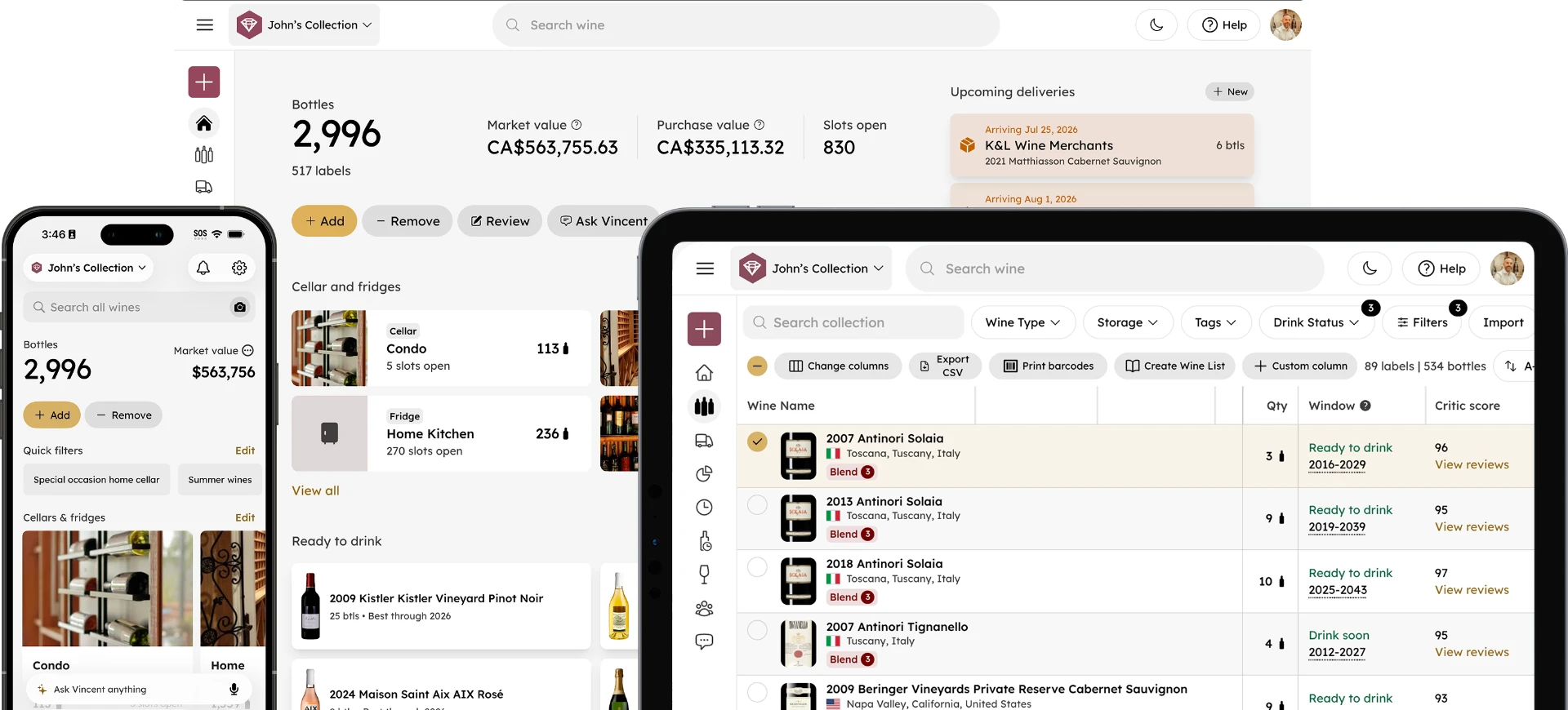
InVintory's Ready to Drink feature calculates a drinking window for every bottle in your collection automatically, including your Chardonnay, and surfaces which ones are in their window right now on your home screen. It factors in vintage, varietal, producer history, and expert review data, so you're not relying on a general grape-level rule for a bottle that might behave differently. Ready to Drink is part of InVintory's Premium and Elite plans, alongside Vincent and full VinLocate cellar mapping. Our feature walkthrough covers exactly how it works day to day.
See what's ready to drink in your own cellar, then ask Vincent which one fits tonight's dinner.
Chardonnay rewards knowing which style you're holding. Get that right, and the rest, serving temperature, food pairing, when to pull the cork, mostly takes care of itself.
See what's included in Premium and Elite, where Ready to Drink and full drink-window tracking live.
Frequently Asked Questions
Is Chardonnay a dry wine?
Yes. Virtually all still Chardonnay is fermented fully dry, with no meaningful residual sugar. The rich, almost creamy mouthfeel of some oaked styles can read as sweetness to some tasters, but that's texture and ripe fruit, not actual sugar.
What is the difference between Chardonnay and Chablis?
Chablis is a place, not a grape. It's a region in northern Burgundy that makes wine exclusively from Chardonnay. Chablis is almost always unoaked and known for its lean, high-acid, mineral style, so it's best thought of as one specific, well-defined expression of Chardonnay rather than a separate grape.
What food pairs well with Chardonnay?
It depends on the style. Unoaked Chardonnay pairs well with shellfish, oysters, goat cheese, and light salads, where its acidity can cut through. Oaked Chardonnay pairs better with richer dishes like roast chicken, lobster with butter, or creamy pasta, where its fuller body and texture have something to match.
Does unoaked Chardonnay age as well as oaked Chardonnay?
Generally, no. Oaked and barrel-fermented Chardonnay tends to come from more concentrated fruit and gains additional structure from the oak itself, both of which support longer aging. Unoaked styles are built around fresh fruit and acidity that are best enjoyed young, though top examples from serious producers can outlast that general rule.
Log your first bottle in InVintory and let Ready to Drink tell you when to open it.