Wine Cellar Lighting: Does Light Damage Wine?
Madeleine Cruickshank
October 15, 2026 · 5 min read
Does light damage wine?
Yes. Light damages wine, and ultraviolet and violet light do the most harm. In white, rosé and sparkling wine, it causes a fault called light strike that smells of cooked cabbage and onion, and once it sets in, it cannot be reversed. The fix is simple: keep bottles out of sunlight, use warm white LED bulbs, and keep cellar lights off when no one is looking.
What is light-struck wine?
Light-struck wine is wine that has developed sulfur off aromas after exposure to light. A review in Trends in Food Science and Technology (Fracassetti and colleagues, 2021) describes the chain reaction: riboflavin, a vitamin naturally present in wine, absorbs light and breaks down the amino acid methionine into methanethiol and dimethyl disulfide. Those two compounds give the wine an aroma the authors compare to onion and cooked cabbage.
The damaging range is narrow. A 2022 study in OENO One (Laposa and colleagues) identifies UV-A and violet light, between 320 and 440 nanometers, as the wavelengths that cause the fault.
Which wines are most at risk?
The research focuses on white and rosé wines, both still and sparkling, which the Fracassetti review notes are usually bottled in clear glass. The studies cited here do not test red wine, but there is no reason to leave any bottle in the light.
How fast can light strike happen?
Faster than most collectors expect. A 2021 study by Arapitsas and colleagues tested white wine on supermarket shelves. A few wines in clear glass developed the fault after one to two days, and all of them had it after three to four weeks. Wines in green glass held up for the whole test period.
The same study found the damage was permanent: moving exposed wine into cold, dark storage did not remove the fault. The wines in clear glass also lost color, fading more in two days than the same wines in green glass did in 50 days.
Does bottle color protect wine from light?
Yes, and dark glass protects far better than clear. The Laposa study measured how much of the damaging light gets through different bottles:
- Clear glass: up to 35 percent.
- Bluish green glass: up to 8 percent.
- Light amber glass: up to 1.2 percent.
- Dark amber glass: about 0.2 percent.
In its shelf life model, white wine in clear and bluish green bottles lasted only days under display lighting, amber bottles about a month, and dark amber bottles more than a year. Those figures model retail display shelves, not a dark home cellar, but the ranking holds: the clearer the glass, the more care the bottle needs.
Which light bulbs are safe for a wine cellar?
Warm white LEDs are the safest choice. The Laposa study found that “soft white” or “warm white” LED lamps emit little light in the damaging range, while compact fluorescent bulbs are not suitable because they emit strongly at two wavelengths inside it.
- Warm white LED: the best option for cellars and display lighting.
- Compact fluorescent: avoid near bottles.
- Incandescent and halogen: these give off heat, which is its own risk for wine stored close to the bulb.
- Sunlight: keep it out entirely. Use blackout blinds or UV filtering film on any window that faces your storage.
How should you light a display cellar or glass front wine fridge?
Light a display cellar for viewing, not around the clock. Glass fronted storage looks best lit, but every hour the lights are on adds exposure.
- Use warm white LEDs for every fixture that reaches the bottles.
- Put lights on a timer or motion sensor so they turn off when the room is empty.
- Keep the riskiest bottles in the darkest spots. Store whites, rosés and sparkling wine, especially in clear glass, low, at the back or in their cases.
- Check the door glass. If a wine fridge is sold with UV resistant glass, confirm it on the spec sheet rather than assuming every glass door filters light.
- Keep sunlight off the glass, even for part of the day.
For the rest of a cellar build, from insulation to doors, see our guide on how to build a wine cellar at home.
How can you tell if a wine is light-struck?
Smell it. A light-struck wine smells of cooked cabbage or onion rather than fruit, and white wines may look paler than they should. If you are unsure whether you are smelling light strike or another fault, our guide to wine faults covers how to tell corked, oxidized and heat damaged wine apart.
Light is one of three storage variables
Temperature, humidity and light are the three conditions that decide how well wine ages in storage. Light is the easiest to control, but it is only one part of the picture:
- Wine storage temperature: the ideal range and what matters most.
- Wine cellar mold and humidity: causes and fixes.
- Summer heat: what to check before a heat wave.
FAQ
Does light affect red wine?
Research on light strike focuses on white and rosé wines, which are more often bottled in clear glass. The studies cited here do not test red wine, so keep reds out of strong light as well rather than assuming they are immune.
Can light-struck wine be fixed?
No. The Arapitsas study found that moving exposed wine into cold, dark storage did not remove the fault. Prevention is the only option.
Are LED lights safe for wine?
Warm white LEDs are the safest common option because they emit little light in the 320 to 440 nanometer range that causes light strike. Keep them on only when you need them.
Is a short time under store lights a problem?
It can be for wine in clear glass. In the Arapitsas study, some clear bottled wines developed the fault after one to two days on a supermarket shelf. Buy clear bottled whites and rosés from stores that keep them away from bright display lights, and store them in the dark at home.
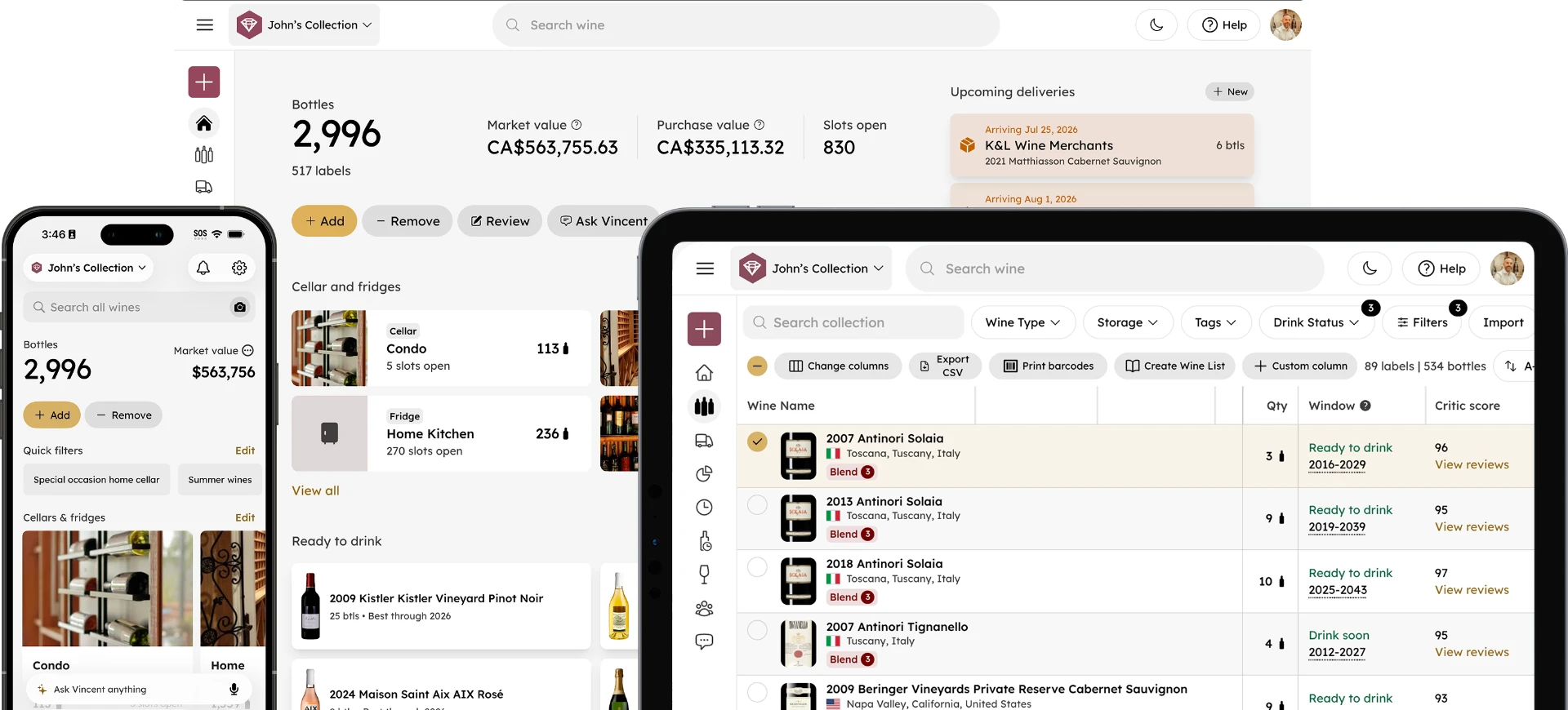
Know exactly which bottles sit closest to the light. Map your cellar in InVintory, or see InVintory Elite for larger collections.