Syrah vs Shiraz: One Grape, Two Styles
Martine McLarney
October 6, 2026 · 5 min read

If you've ever wondered whether you're buying two different wines or the same wine with a passport stamp, it's the second one. Syrah and Shiraz cause more confusion than almost any other pair of wine names, mostly because the two versions can taste genuinely different in the glass, even though nothing about the plant itself changes. This guide covers what actually shifts between the two styles, where each one comes from, what to serve alongside them, how long they age, and how to keep them straight in your own cellar records. For where this grape sits among other reds, see our guides to red wine varieties and red wine body styles.
Are Syrah and Shiraz the same grape?
Yes. Syrah and Shiraz are the same grape variety, and the name signals winemaking style and origin, not a different plant. The grape originated in France's Rhone Valley, where it's called Syrah. When it took off in Australia in the 19th century, the name Shiraz stuck there instead, and South Africa largely followed Australia's lead. Neither name is more correct than the other; they're regional convention, and today the choice mostly tells you what style to expect in the bottle rather than anything about the grape's genetics.
Style differences between Syrah and Shiraz
The two names have come to signal genuinely different styles, even though the underlying grape hasn't changed.
Syrah (Northern Rhone style): Cooler-climate, savory, and structured, with black pepper, olive, and cured meat notes alongside dark fruit. Tannin is firmer and alcohol tends to sit lower, generally in the 12.5 to 13.5 percent range.
Shiraz (Australian style): Riper, bolder, and more fruit-forward, with jammy dark fruit, chocolate, and often a noticeable oak influence. Alcohol runs higher, frequently 14.5 percent or above, and tannin feels rounder and more approachable young.
Neither style is objectively better. A restrained Cote-Rotie and a full-throttle Barossa Shiraz are both excellent examples of the same grape doing exactly what its climate and winemaking pushed it to do. Blind tasting the two side by side is one of the clearest ways to understand how much climate and winemaking choices can shape a single variety, arguably more dramatically than with any other major red grape.
Where Syrah and Shiraz come from
The name on the label is a genuinely useful signal here, more so than with most grapes, because regional convention lines up closely with regional style.
Northern Rhone (Syrah): Hermitage, Cote-Rotie, and Cornas produce the grape's most classic, savory expression, often at serious prices for the top appellations.
Southern Rhone (Syrah): Blended more often than not, most famously alongside Grenache and Mourvedre in Chateauneuf-du-Pape and other GSM-style wines.
Barossa Valley and McLaren Vale (Shiraz): Australia's benchmark regions for rich, full-throttle Shiraz, generally riper and more concentrated than anything the Rhone produces.
Hunter Valley (Shiraz): A cooler, more restrained Australian style that splits the difference between Rhone structure and Barossa ripeness.
South Africa (Shiraz): Follows Australia's naming convention and produces a style that often sits between the two poles, riper than Northern Rhone but less jammy than Barossa.
Washington State and California (either name): Producers here use both names inconsistently, so the name on the label is a weaker style signal than it is in the Rhone or Australia. Check the alcohol level and producer notes instead.
Food pairing
Northern Rhone Syrah's savory, peppery character pairs naturally with grilled or roasted meats that have their own char and smoke, lamb, duck, and mushroom dishes especially. Riper, bolder Shiraz stands up well to barbecue, grilled sausage, and other dishes with sweet or smoky glazes, where its jammy fruit and softer tannin have something substantial to match rather than compete with. If you're not sure which style is in the glass, taste before you commit to a pairing; the alcohol and tannin will tell you faster than the label does.
How long do Syrah and Shiraz age?
Everyday, commercial-tier Shiraz from Australia or Chile drinks best within five to eight years of the vintage. Premium Barossa and McLaren Vale Shiraz, along with serious Hunter Valley bottlings, can develop well for ten to fifteen years. Northern Rhone Syrah from top producers in Hermitage or Cote-Rotie is built for the longest haul, often rewarding fifteen to twenty-five years or more in a strong vintage. As with most structured reds, the deciding factor isn't the grape alone; a warmer-climate, riper-style Shiraz reaches its window sooner than a cooler-climate, more tannic Syrah of the same age, even from a comparable price point.
If you're stocking up for summer entertaining rather than the cellar, our guide to enjoying red wine in summer covers which bolder reds still hold up with a slight chill, and which don't.
How to record Syrah and Shiraz consistently in your cellar
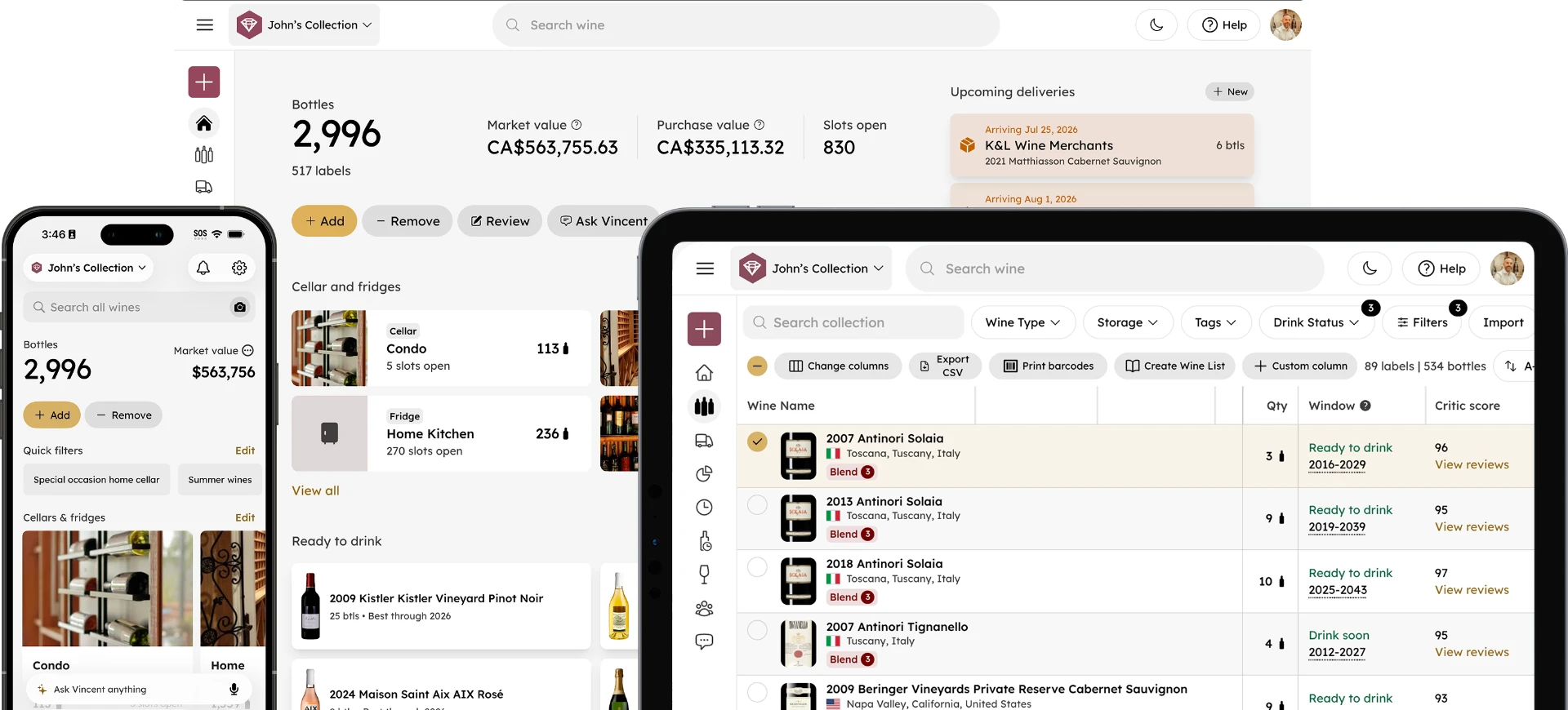
Because the same grape shows up under two different names, it's easy to end up with your collection split in half without meaning to, half your bottles logged as Syrah and half as Shiraz, when you actually want to see them together. When you're adding a bottle, InVintory's Wine Guide records the grape composition on that bottle's profile regardless of which name is on the label, so stay consistent about which spelling you use and your Collection Analytics and saved searches will group them as one variety instead of splitting your cellar into two categories that don't talk to each other.
Log your first bottle in InVintory and keep your Syrah and Shiraz tracked as one variety from day one.
Two names, one grape, and now you know which questions to actually ask about a bottle in front of you: where it's from and how it was made, not what it's called.
Ask Vincent whether that bottle in your cellar leans Rhone or Barossa in style, and what to serve alongside it tonight.
Frequently Asked Questions
Is Syrah the same as Petite Sirah?
No. Despite the similar name, Petite Sirah is a different grape, a cross of Syrah and a grape called Peloursin created in the 1880s. It's grown mostly in California and tends to produce darker, more tannic wines than Syrah itself.
Why does the same grape have two different names?
It comes down to regional convention rather than any rule. The Rhone Valley, the grape's origin, uses Syrah. Australia adopted Shiraz in the 19th century, and South Africa followed Australia's lead. There's no requirement tying either name to a specific style; it's simply what caught on in each region.
Does Syrah or Shiraz need to be decanted?
Young, tannic examples benefit from it, typically one to two hours for a young Northern Rhone Syrah or a structured Barossa Shiraz. Older bottles with visible sediment need less time, usually fifteen to thirty minutes, mainly to separate the clear wine from the sediment. Our guide to decanting wine covers how to judge timing for a specific bottle.
What is a GSM blend?
GSM stands for Grenache, Syrah, and Mourvedre, a blend most associated with the Southern Rhone (Chateauneuf-du-Pape) and widely adopted in Australia and elsewhere. Syrah typically contributes structure and dark fruit, Grenache adds warmth and red fruit, and Mourvedre brings earthy, savory depth.
Try InVintory free and see how quickly logging Syrah and Shiraz consistently keeps your cellar organized by grape, not by label.