How to Clean a Wine Fridge, Step by Step
Madeleine Cruickshank
November 12, 2026 · 5 min read

What is the short routine for cleaning a wine fridge?
Unplug it, take out the bottles and shelves, wash the shelves and interior with lukewarm water and a mild soap, clean the door seal, dust the condenser, dry everything and plug it back in. That routine follows the maintenance guidance from EuroCave and LeCavist cited below, but steps differ by model, so follow your own model's manual first.
This guide covers how often to clean, what to clean with, what to do with your bottles, defrosting, seals and odors, and the checks that keep a fridge running. For how long a unit lasts, see how long do wine fridges last.
How often should you clean a wine fridge?
Once a year for a full clean, according to EuroCave. Its ShowCave manual says to thoroughly clean the inside once a year after unplugging and unloading the unit, and to vacuum the condenser's air inlets and outlets once a year. EuroCave's FAQ also recommends replacing the activated carbon filter about once a year. LeCavist's manual says to dust the condenser at the back of the unit occasionally, because dust buildup can reduce performance.
What should you clean a wine fridge with?
Lukewarm water and a mild soap, unless your manual says otherwise.
Interior walls and shelves: EuroCave's FAQ says to clean aluminum interior walls with lukewarm water and mild soap, then dry carefully. LeCavist's manual says to wash shelves and walls in lukewarm water with a mild, unscented detergent, rinse and dry thoroughly.
Glass doors: EuroCave recommends a microfiber cloth and a non ammonia glass cleaner.
What to avoid: LeCavist says not to use abrasive products or sponges with scrapers, inside or out, and never to clean the unit with flammable products.
Can you use ordinary dish soap? Neither manual names a brand. Both call for a mild soap or detergent, and LeCavist specifies unscented, so check your own manual before you use one.
What do you do with the bottles while you clean?
Take them out, as both manuals instruct before cleaning. Neither gives a time limit for how long bottles can sit out, so we do not give one either. Keep them somewhere cool and out of the light, lying down if you can: EuroCave notes that bottles should be stored horizontally to keep the cork in contact with the wine.
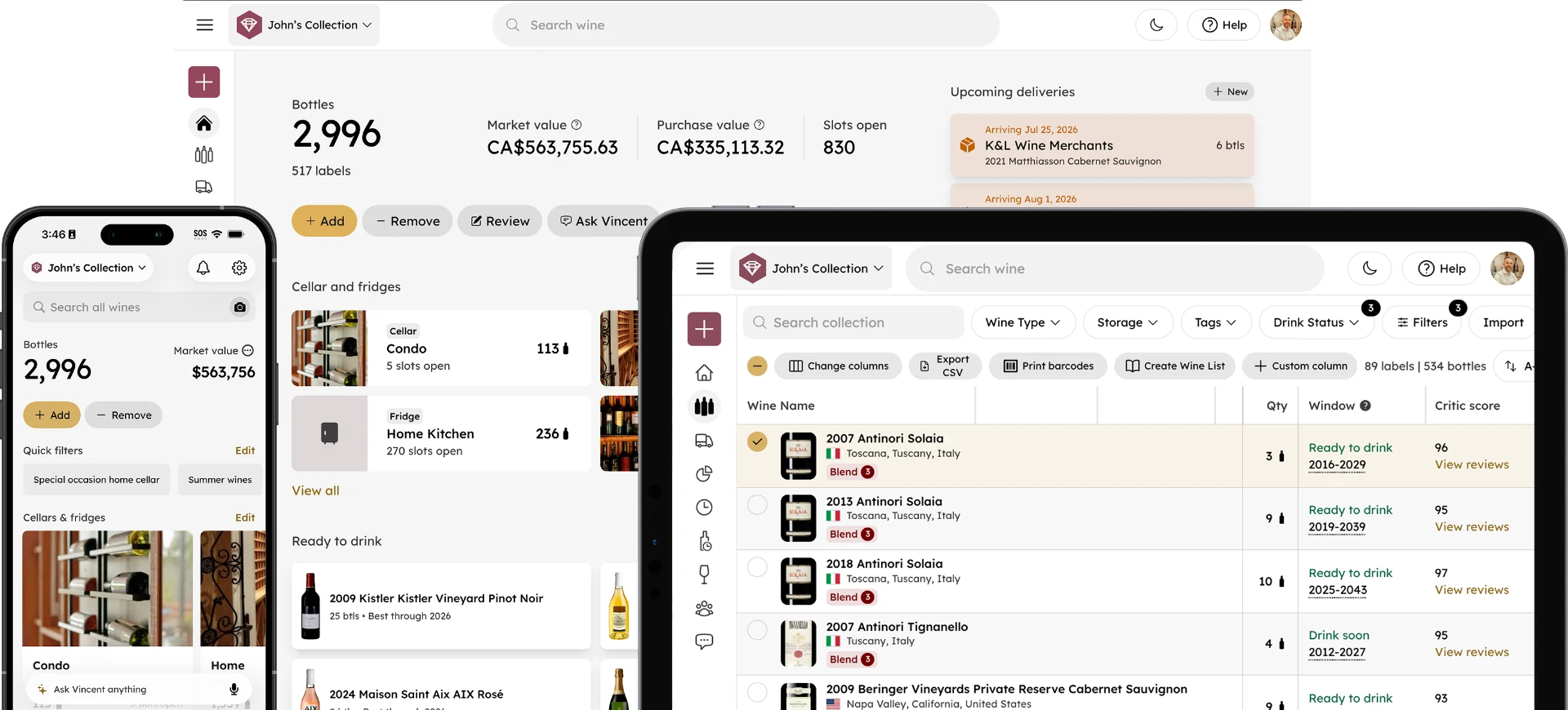
Before you unload, record where each bottle sits so it goes back to the same spot. If your fridge is mapped in a 3D cellar app, the map does this for you. InVintory's VinLocate (3D wine cellar mapping) offers fridge templates built from real fridges from Wine Enthusiast, LeCavist and EuroCave, so the shelves match your unit. See wine fridge app setup templates.
Do you need to defrost a wine fridge?
Usually not. EuroCave's FAQ says most modern wine fridges manage defrosting automatically. If unusual frost forms, for example after the door was left open, it recommends switching the fridge off, leaving the door open for about 24 hours and cleaning the interior, which can be done once a year during general maintenance.
LeCavist's manual describes automatic defrosting in which meltwater drains to a container near the compressor and evaporates, and says to keep the drain and gutter clean so water does not flow inside.
How do you clean the door seal and remove odors?
Wash the seal and the area underneath it, as LeCavist's manual instructs. For odors, EuroCave says its activated carbon filter keeps outside smells from changing the wine's aromas, and that regular maintenance helps prevent odors and humidity from building up. For a new unit, LeCavist says to clean it with soapy water and leave it open to get rid of residual odors before first use.
What checks prevent breakdowns?
Condenser: Keep it dusted, per both EuroCave and LeCavist.
Placement: EuroCave says not to place a wine fridge near a heat source or in direct sunlight.
Noise: EuroCave says a slight compressor noise is normal, and that noise depends on the model, the installation, the adjustment of the feet and the stability of the shelves.
Electrical work: EuroCave's manual says any work on the electrical system must be done by a qualified electrician.
Long absences: LeCavist says to empty and clean the unit and keep the door ajar for the whole period it is off.
Temperature: A monitor shows swings a single reading misses. See wine cellar temperature monitors compared and what to do when you get a temperature alert.
Shopping for a new unit instead? See the best wine fridges for collectors.
Keep track of every bottle while you clean. Get started with InVintory or visit the help center.
Frequently asked questions
Should you unplug a wine fridge before cleaning it?
Yes. LeCavist says to unplug the unit before cleaning, and EuroCave says to clean the inside after unplugging and unloading it.
How often should you change a wine fridge's charcoal filter?
About once a year, per EuroCave's FAQ.
How long does a wine fridge last?
It varies by unit and care. See how long do wine fridges last for the sourced detail.
Why does my wine fridge smell?
Check the carbon filter if your unit has one, and clean the interior and seal. EuroCave says regular maintenance helps prevent odors from building up.
InVintory is available on iPhone, iPad, Android and web. Get InVintory on the App Store, get InVintory on Google Play, or start on the web.