How Long Do Wine Fridges Last? Lifespan and Signs
Madeleine Cruickshank
July 22, 2026 · 6 min read
How long does a wine fridge last?
A standard wine fridge or cooler typically lasts 10 to 15 years with proper installation and care. Self-contained units on the lower end of that range tend to run closer to 5 to 10 years, while professionally installed split and ducted cooling systems for larger cellars can last up to 20 years.
What Shortens a Wine Fridge's Lifespan
Poor ventilation
Both built-in and freestanding units need proper airflow to expel heat. A built-in unit with blocked front vents, or a freestanding unit pushed flush against a wall, works harder than it should, which wears down the compressor faster over time.
Extreme ambient temperature
A wine fridge installed in a hot garage, uninsulated space, or anywhere that regularly exceeds its rated ambient temperature range has to work continuously rather than cycling normally, shortening its effective lifespan considerably.
Frequent door opening and overloading
Every time the door opens, the unit has to work to recover its internal temperature. Frequent access, or packing the unit beyond its rated capacity in a way that restricts airflow inside, both add unnecessary strain.
Lack of basic maintenance
Dust and debris buildup on condenser coils is one of the most common, and most preventable, causes of reduced cooling performance and premature failure.
Warning Signs Your Wine Fridge Is Failing
The interior temperature doesn't match your set point
If the display reads correctly but you can verify with an independent thermometer that the actual temperature has drifted, especially during warmer months, that's an early sign of a struggling compressor.
Unusual noise from the compressor
A wine fridge that's suddenly louder, or making a noise it didn't make when new, is often signaling internal wear before an outright failure.
Visible ice buildup on interior coils
This usually points to a failing door seal or a defrost cycle issue, both of which get worse over time if left unaddressed.
The unit runs constantly without cycling off
Wine fridges are built to cycle on and off to maintain temperature. Continuous running, rather than the expected cycling pattern, suggests the unit is struggling to keep up.
Condensation or moisture where there shouldn't be any
This can indicate a door seal problem or a broader cooling system issue, both worth addressing before they affect the wine itself.
Maintenance Steps That Extend Lifespan
Clean the condenser coils roughly every six months to prevent dust buildup from reducing efficiency. Check and clean or replace door seals if you notice they're not sealing tightly. Keep the unit's surrounding clearance clear, don't stack items against vents, and avoid installing it somewhere that regularly exceeds its rated ambient temperature. If you have a smart temperature and humidity sensor set up, reviewing the data periodically (rather than only when an alert fires) can help you catch a slow drift before it becomes a full failure.
When should you replace a wine fridge instead of repairing it?
Replace rather than repair when the unit is already near or past the 10 to 15 year mark, when repairs are becoming frequent or expensive relative to the cost of a new unit, or when it can no longer reliably hold temperature even after cleaning and basic troubleshooting. A unit still well within its expected lifespan with a single, addressable issue is usually worth repairing first.
How Usage Patterns Affect Lifespan
Two identical wine fridges, used differently, can have meaningfully different lifespans.
Capacity headroom matters
A unit running consistently near or at full capacity works harder to maintain even temperature throughout than one with some breathing room, since a fully packed fridge restricts internal airflow. If you're regularly near capacity, that's a sign either to consider a larger unit or to be more mindful of how bottles are arranged for airflow.
Access frequency adds up
A wine fridge opened several times a day, common in a kitchen or entertaining space, works harder to recover temperature than one in a dedicated cellar room accessed occasionally. This doesn't mean frequent access is a problem to avoid, just a factor that can modestly shorten the practical lifespan compared to manufacturer estimates based on more typical use.
Age of the unit changes the calculus on repairs
Early in a unit's life, most issues are worth repairing, since the unit still has most of its expected lifespan ahead of it. Once a unit passes the 10 to 15 year mark, the same repair becomes a harder call, since you're investing in a unit nearing the end of its expected life regardless of the fix.
Is It Time to Upgrade Rather Than Replace Like-for-Like?
If your collection has grown significantly since you bought your current unit, a failing or aging wine fridge is also a natural point to reconsider capacity, not just replace what you have with something similar. Moving from a single small unit to a larger one, or adding a second unit rather than overloading the first, can solve both the immediate problem and a capacity issue you may have been managing around for a while.
Monitoring Your Wine Fridge So You're Not Caught Off Guard
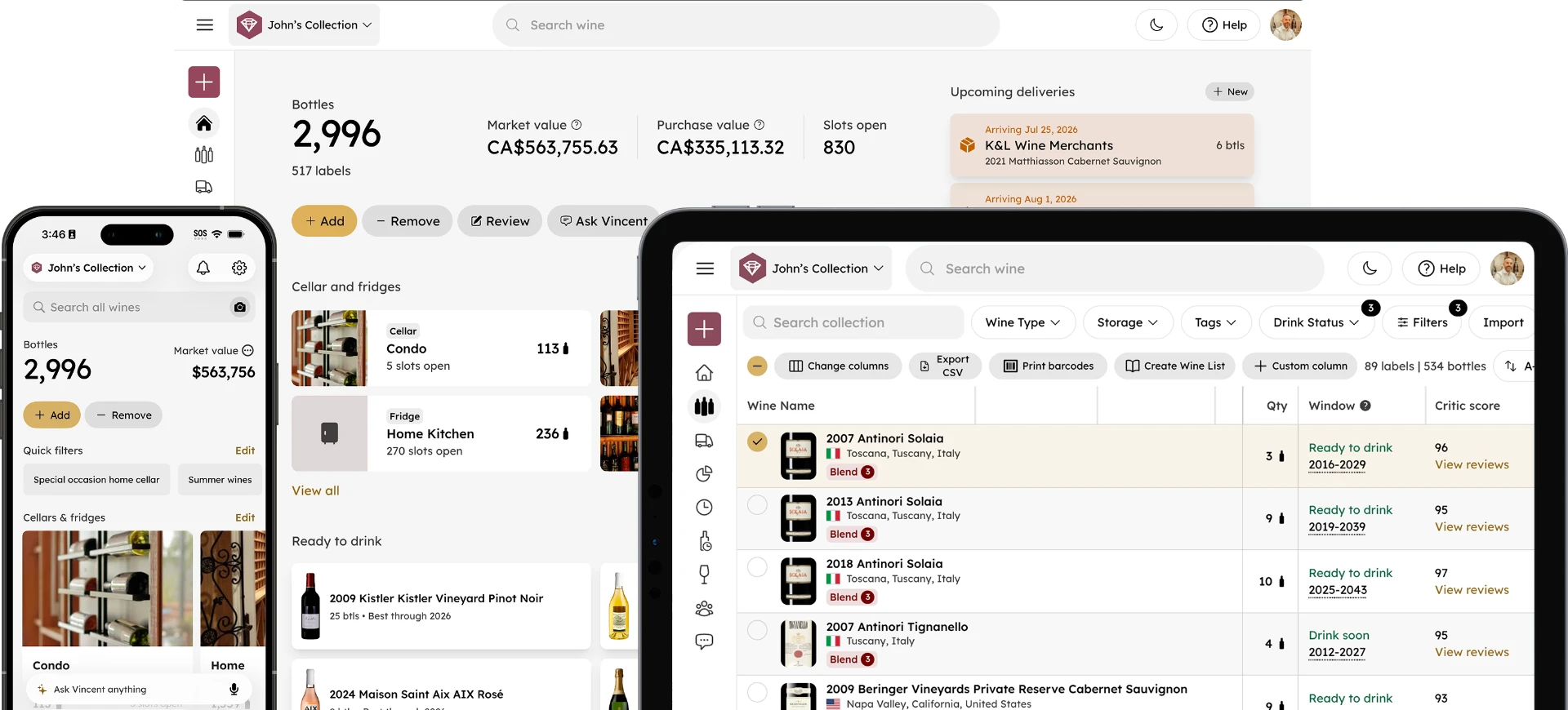
The warning signs above are much easier to catch early with continuous monitoring rather than periodic manual checks. InVintory Elite integrates with Govee and other IoT temperature and humidity sensors, so you get an alert the moment conditions drift outside your set range, rather than discovering a problem after it's already affected your wine. For a full walkthrough of what to do when that alert fires, see our temperature and humidity monitoring playbook.
If your current unit is showing any of the warning signs above, or you're shopping for a replacement, see our buying guide to the best wine fridges for collectors in 2026. For general storage temperature guidance beyond just the fridge itself, see our wine storage temperature guide and, if you're dealing with a heat wave right now, our guide to wine storage in summer heat.
A wine fridge is protecting a collection that's often worth far more than the appliance itself. Catching a failing unit early is worth far more than the cost of the checks it takes to do it.
Want to know the moment your storage conditions start to drift?
Explore Sensor Monitoring With InVintory Elite →
FAQ
How long should a built-in wine fridge last compared to a freestanding one?
Both generally fall in the same 10 to 15 year range, though built-in units are more sensitive to ventilation issues since they're installed flush into cabinetry, and proper front-venting matters more for their longevity than it does for a freestanding unit with open clearance.
What's the most common reason a wine fridge fails early?
Poor ventilation, whether from blocked vents on a built-in unit or insufficient clearance around a freestanding one, is one of the most common and most preventable causes of premature failure.
Can a wine fridge be repaired instead of replaced?
Often, yes, especially for a single, identifiable issue like a failing door seal or a dirty condenser. Replacement makes more sense once a unit is near or past its expected lifespan or requires frequent, costly repairs.
Does a wine fridge need professional installation to last as long as expected?
For built-in units, yes, professional installation ensures proper ventilation and electrical setup, both of which affect long-term reliability. Freestanding units are more forgiving but still need proper clearance on all sides.
Ready to keep a closer eye on your wine fridge's conditions?