How to Store Wine Without a Wine Cellar
Madeleine Cruickshank
August 12, 2026 · 6 min read
Can you store wine without a cellar?
Yes, with the right spot and a stable temperature, a cellar isn't required to store wine properly. What matters is consistency, not a dedicated room: a cool, dark, vibration-free spot that stays within a reasonable temperature range will protect most wine you're planning to drink within a few years just fine.
Where Is the Best Place to Store Wine in an Apartment?
An interior closet, away from exterior walls and windows, is usually the best option in an apartment, since exterior walls experience more temperature swing from outdoor conditions. A closet under stairs, if you have one, works for the same reason: it's insulated by surrounding structure rather than exposed to a wall that heats up in direct sun.
Avoid the kitchen entirely if you can, since appliances generate heat and temperature swings throughout the day. Avoid anywhere near a radiator, heating vent, or a window that gets direct sun for any part of the day. A closet floor is often cooler than a closet shelf, since heat rises, which matters if you're choosing between two spots in the same space.
If your only realistic storage space gets some light, wrap bottles in a cloth or store them in their original cardboard case to block it, since light exposure degrades wine over time regardless of temperature.
What Temperature Should Wine Be Stored at Without a Cellar?
Aim for the same general range that applies to any wine storage: roughly 45°F to 65°F, with about 55°F often cited as ideal, and consistency matters more than hitting an exact number. A closet that stays steady at 65°F is better for your wine than one that swings between 55°F and 75°F throughout the day. For the full underlying science on temperature, humidity, and light, see our wine storage temperature guide, which covers the general principles this post builds on.
How long can wine sit in imperfect, non-cellar conditions?
Most everyday wine, meant to be enjoyed within a year or two, holds up fine in a reasonably stable closet or interior space even without cellar-grade precision. Wine you're planning to age for a decade or more is a different situation, and imperfect conditions become a real risk the longer you're planning to hold a bottle.
Is a Wine Fridge Worth It for a Small Collection?
For most apartment dwellers with a growing collection, yes, a compact wine fridge is worth the investment once you're storing more than a shelf's worth of bottles or holding anything you plan to age for several years. A wine fridge removes the guesswork of finding a naturally cool spot and holds a stable temperature regardless of the season or your apartment's own heating and cooling.
Compact, countertop-style units are a reasonable starting point for a dozen or two bottles, and thermoelectric coolers (quieter, though less powerful in very warm rooms) versus compressor-based coolers (more powerful, slightly noisier) are the main technology choice at this size. For a full buying guide, see our roundup of the best wine fridges for collectors, and for what to check if a unit you already own seems to be underperforming, see our guide to how long wine fridges last.
Watch for Humidity, Not Just Temperature
Apartments, especially ones with forced-air heating or cooling, often run drier than ideal wine storage humidity, which can dry out corks over time on bottles held long-term. A small humidity tray or a room humidifier near your storage spot helps if you notice this becoming an issue, particularly in winter when heating systems pull moisture from indoor air. If you notice actual mold or a musty smell rather than just dryness, see our guide to diagnosing wine cellar mold and humidity problems for what that specifically signals.
Using Off-Site or Professional Storage for Overflow
Once a collection outgrows whatever apartment space you can dedicate to it, professional, bonded storage facilities are a legitimate option for bottles you're not planning to access regularly, particularly higher-value bottles where climate precision matters most. This lets you keep an everyday selection at home in whatever space you've set up, while more significant bottles sit somewhere purpose-built.
Choosing the Right Rack for a Small Space
Even without a cellar, an actual rack, rather than bottles stacked loosely in a box, protects corks by keeping bottles horizontal and makes a small collection easier to see and access. A compact freestanding rack fits inside most closets without much trouble. See our guide to choosing a wine rack for options that work well in a limited footprint.
Tracking a Small Collection From the Start
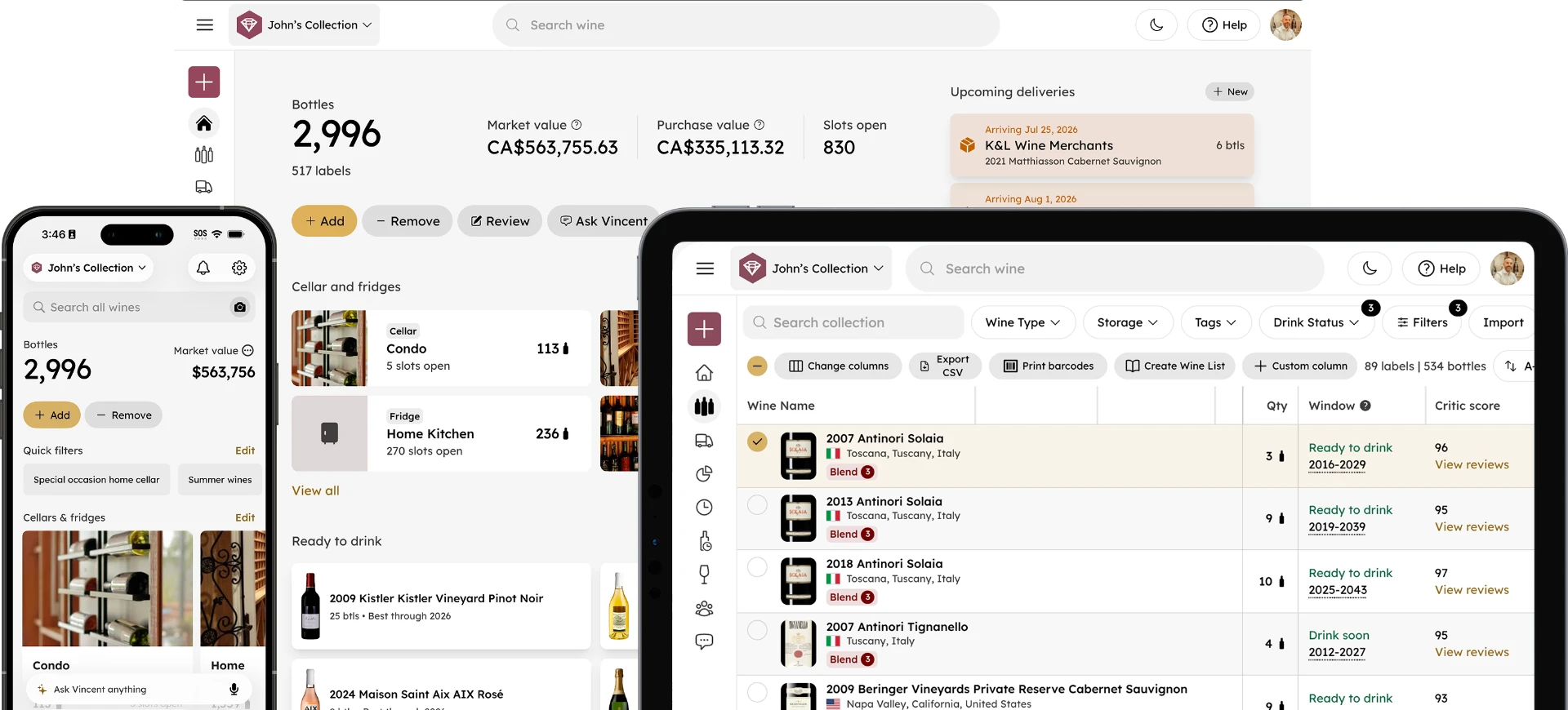
A small, apartment-based collection is exactly the kind of collection where good tracking habits are easiest to build, since there's less to organize. Logging bottles as you buy them, on InVintory's Free tier, costs nothing and means you're not starting from scratch once your collection grows large enough to need a real system. If you're not sure whether a specific bottle in an imperfect storage spot is still good to drink, ask Vincent for guidance based on what's actually in your collection rather than a general rule.
Start tracking your collection at no cost: see InVintory's Free tier →
A cellar makes storing wine easier, but it isn't a requirement for storing it properly. A little deliberate planning in whatever space you have covers most of what a dedicated room would otherwise do for you.
Ready to organize your collection, cellar or not?
FAQ
Can I store wine in a regular closet?
Yes, an interior closet away from exterior walls and heat sources is a reasonable storage spot for wine you're not planning to age for decades. Keep it dark, as stable in temperature as possible, and away from vibration.
Is it bad to store wine standing up instead of on its side?
For corked bottles held longer than a few months, yes, storing horizontally keeps the cork in contact with the wine, preventing it from drying out. Screw-cap bottles are less affected by orientation.
How do I know if my apartment is too warm for wine storage?
If the space regularly exceeds 70°F, especially for sustained periods, it's likely too warm for anything you plan to hold for more than a year or two. A wine fridge solves this without requiring you to change how you heat or cool the rest of the apartment.
What's the cheapest way to store wine properly without a cellar?
An interior closet or cabinet, wine wrapped or boxed to block light, and a simple horizontal rack cost very little and cover the basics well for a modest collection meant to be enjoyed within a year or two.