How to Choose a Wine Rack: Size, Material, and Capacity
Madeleine Cruickshank
June 23, 2026 · 4 min read
Choosing a wine rack sounds straightforward until you're standing in front of a wall of options and realizing there are more variables than expected. The wrong rack creates real problems: bottles that don't fit, labels you can't read, storage that can't grow with your collection, or a unit that looks out of place in your space.
This guide covers the decisions that actually matter when choosing a wine rack.
Step 1: Know How Many Bottles You Actually Need to Store
What capacity wine rack do I need?
Start with an honest count of your current collection, then add 25 to 30 percent for where you're headed. Wine collections are living things and they tend to grow when you aren't looking. Always plan for 25 percent more capacity than you think you need.
A collector with 40 bottles today should be looking at racks with capacity for at least 50 to 60. A collector with 100 bottles who is actively buying should be planning for 150.
Avoid buying a wine rack that you'll outgrow in 18 months. Instead, buy modular storage that can expand, or buy at the capacity you expect to reach in the next three years.
Step 2: Understand Your Bottle Types
Do all wine bottles fit in a standard wine rack?
No. The standard Bordeaux bottle is the industry benchmark, but if your palate leans toward Champagne, wide Burgundy Pinot Noirs, or tall Alsatian Rieslings, standard racks will fail you. You'll find yourself forcing bottles into tight spots, risking torn labels or broken glass.
Before buying any rack, check the slot dimensions against the bottles you collect most:
- Standard Bordeaux: fits most standard racks
- Burgundy and Champagne: wider base, requires wide-format slots
- Alsatian Riesling: tall and narrow, may not fit standard slots
- Magnums and large formats: require dedicated large-format shelving
If you collect across multiple formats, look for racks with adjustable or mixed-format configurations, or plan a combination of standard and wide-format sections.
Step 3: Choose Your Material
What is the best material for a wine rack?
The right material depends on your space, your aesthetic preference, and how much maintenance you're willing to do.
The right mix depends on your collection size, access needs, and whether the cellar is for private or commercial use. Storage type also varies by budget, materials, and design preferences.
Wood
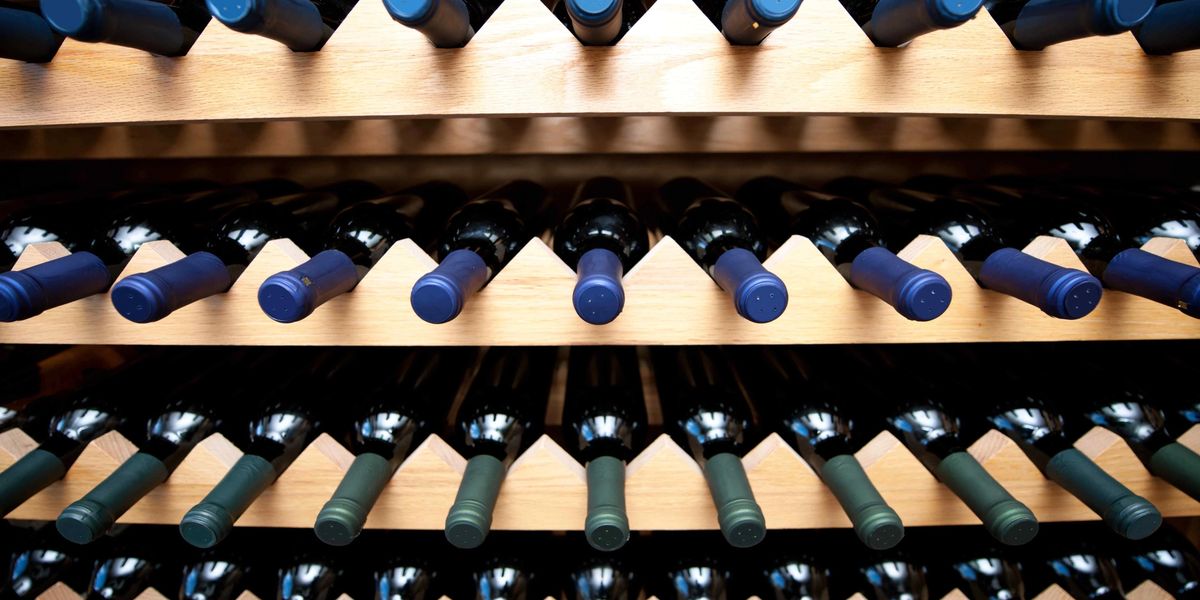
The classic choice for traditional cellars. Redwood, mahogany, and pine are the gold standards. They offer a warm, classic look and a tactile softness that feels correct for aging wine. Wood requires more maintenance than metal, so avoid high-humidity environments that can cause warping, and check periodically for structural integrity in older installations.
Metal
Modern, durable, and easy to clean. Steel and iron racks suit contemporary spaces and industrial-aesthetic cellars. They're typically more resistant to humidity and easier to maintain long-term. Label-forward metal systems from companies like VintageView have become the standard for modern wine displays.
Mixed material
Combines the warmth of wood with the structural strength of metal. Mixed material racks combining metal with wood result in a popular industrial-rustic style that is usually very sturdy and visually interesting. A practical choice for collectors who want the aesthetic of wood with the durability of metal.
Step 4: Decide on the Rack Style
What type of wine rack should I choose?
Individual bottle slots
These are best for bottles you access regularly and want to identify easily. Label-forward designs display every label visibly without pulling bottles out, which is a significant practical advantage for collections above 50 bottles.
Diamond bins
These are best for bulk aging storage. Bulk storage maximizes capacity and minimizes cost per bottle. While it limits access to individual bottles, bulk storage adds visual interest and is ideal for high-volume collectors. Use diamond bins for bottles you won't open for years, like futures, case purchases, long-term aging wine.
Case storage
This lets you keep wine in its original packaging. Wood cases offer the best durability and keep bottles properly positioned on their sides. Useful for collectors who buy in case quantities and want to preserve groupings.
Most serious collectors use a combination: label-forward individual slots for accessible bottles, diamond bins for deep aging storage, and case storage for unopened purchases.
Step 5: Consider Your Space
What else do I need to think about before buying a wine rack?
Ventilation
Wine racks need adequate airflow to maintain consistent temperature. Don't place a rack against a warm exterior wall, above a heat source, or in a space with poor air circulation.
Light exposure
UV light degrades wine. Avoid locations with direct sunlight or strong artificial lighting. If your rack will be in a lit space, look for racks that position bottles with labels facing away from light sources.
Vibration
Avoid locations near appliances, speakers, or high-traffic areas. Constant vibration disrupts sediment and accelerates aging unpredictably. For more on storage conditions and their effect on wine, this post on wine storage temperature covers the full picture.
Mapping Your Wine Rack in InVintory
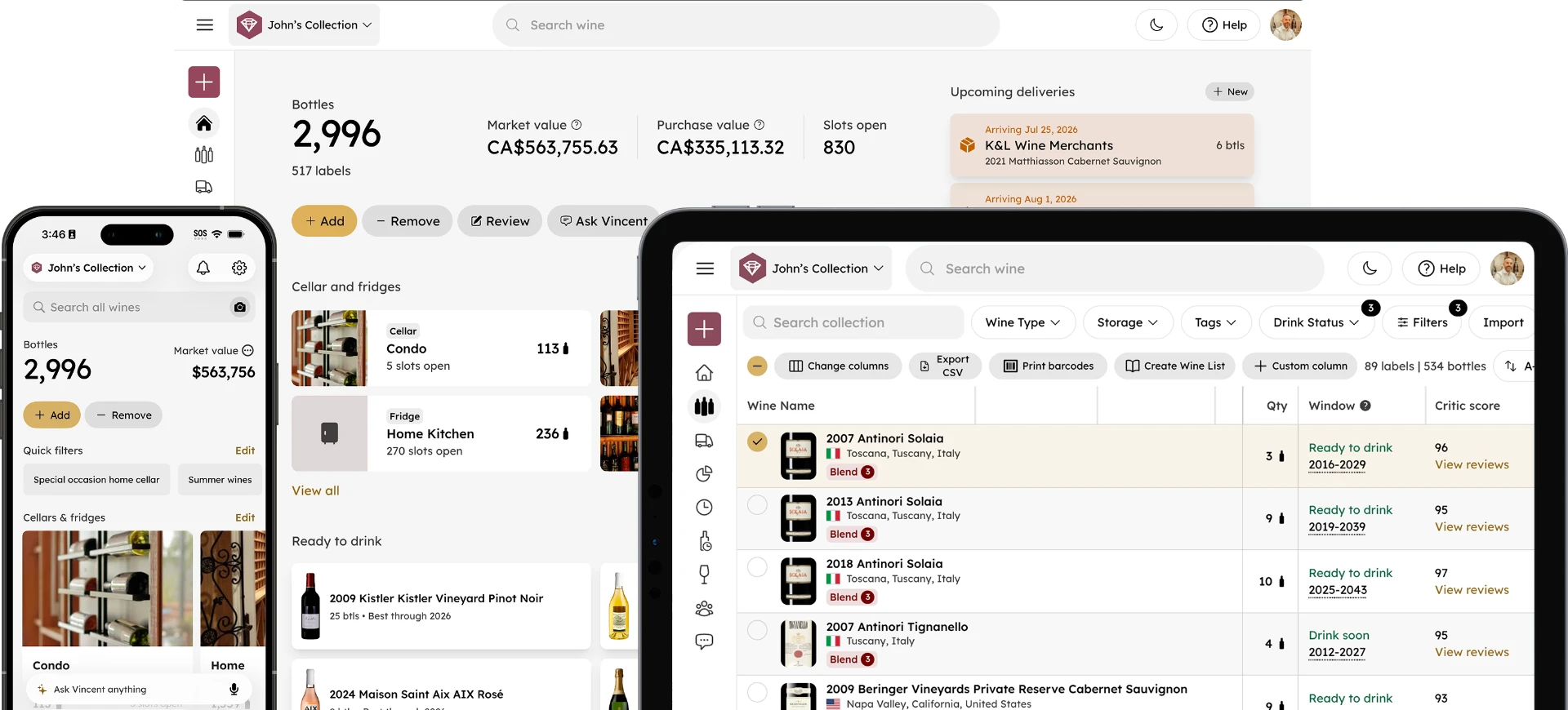
Once your rack is installed, map it in InVintory with VinLocate so every bottle has a precise, searchable location. When you search for any wine, InVintory highlights exactly where it's stored in your rack. No need to manually scan labels, and no pulling out individual bottles to read them.
InVintory's VinLocate builder lets you map any configuration of rows, columns, bins, and sections to match your exact physical setup. For a step-by-step guide, this post on setting up VinLocate covers the process in detail.
Map Your Wine Rack in InVintory →
Frequently Asked Questions
What size wine rack do I need for 100 bottles?
Buy a rack with capacity for at least 125 to 130 bottles to account for collection growth. Look for modular options that can expand further if your collection continues to grow.
Can I use the same rack for red and white wine?
Yes: rack storage doesn't differentiate between red and white. Temperature is the differentiator: reds are best aged around 55 degrees Fahrenheit, whites at a similar temperature. If you want to serve whites at a lower temperature, a separate wine fridge for service-ready bottles is more practical than two separate racks.
What wine racks work for Champagne and large-format bottles?
Standard Bordeaux-format racks often don't fit Champagne or Burgundy bottles properly. Look for racks that specifically advertise wide-format compatibility, or plan a dedicated section of your storage for non-standard bottle sizes.
Do I need to anchor a wine rack to the wall?
For freestanding racks under 50 bottles, anchoring is optional but recommended for safety, particularly in earthquake-prone areas. For large freestanding installations and all wall-mounted systems, proper anchoring into studs is essential.
The right wine rack is the one that fits your collection today, grows with it tomorrow, and makes every bottle easy to find. Map it in InVintory and nothing gets lost.