Understanding the 100-Point Wine Score: A Collector's Guide
Madeleine Cruickshank
August 3, 2026 · 6 min read

What does a 100-point wine score actually mean?
A 100-point wine score is a critic's quality rating on a 50-to-100 scale, where the number reflects how that specific taster judged the wine at the time they tasted it. It's a quick, comparable shorthand for a critic's overall impression, not an objective measurement, and different critics scoring the same wine can land on meaningfully different numbers.
Where the 100-Point Scale Came From
The scale traces back to Robert Parker, who introduced it in the first issue of The Wine Advocate in 1978. Parker's goal was clarity: he felt existing wine writing leaned on vague, flowery language that made wines hard to compare, and he wanted a familiar, school-grade-style number that readers could use across regions, vintages, and price points. The approach caught on well beyond his own publication, and Wine Spectator, James Suckling, and numerous other critics and platforms now use some version of the same 100-point structure.
How the Scale Breaks Down
Though exact wording varies slightly by publication, the standard bands are widely recognized: 50 to 59 is unacceptable, 60 to 69 is below average, 70 to 79 is average, 80 to 89 is good to very good, 90 to 95 is outstanding, and 96 to 100 is extraordinary. In practice, almost every wine a critic bothers to publish a score for lands at 80 or above, since publications generally don't review wines they expect to score poorly.
Why does a 90-point score matter so much for pricing?
Crossing from the high 80s into the 90s is widely recognized as a psychological and commercial threshold. A wine that moves from an 89 to a 90 often sees a real jump in price and demand, even though the underlying quality difference between an 89 and a 90 is, in practice, quite small. Producers and retailers are well aware of this, which is part of why score announcements around new releases can move prices noticeably.
Why Critics Disagree on the Same Wine
Score variance between publications is normal, not a sign that one critic is simply wrong. A few real factors drive it.
Tasting conditions differ
Some publications taste blind, without knowing the producer, while others taste with full knowledge of what's in the glass. Even among blind tastings, the specific flight (which wines are tasted alongside which) can subtly shift a taster's frame of reference.
Palates genuinely differ
One critic may consistently favor riper, more powerful wines, while another favors restraint and structure. This isn't a flaw in either critic, it's a real difference in the kind of wine each one values most, and it shows up consistently across their scoring history if you pay attention over time.
Scores are a snapshot, not a permanent verdict
A wine tasted young, sometimes even from barrel before bottling, can score differently than the same wine tasted again once bottled and settled, or years later once it's matured. A single published score reflects one moment, not the wine's entire life.
"Parkerization" is a real, debated phenomenon
Critics point out that when one scoring style becomes dominant enough, some producers adjust their winemaking toward the style that scores well with influential critics, which can push an entire category toward a more uniform, crowd-pleasing profile over time. This is worth knowing as context for why some regions' wines have shifted stylistically over the decades.
What a Score Doesn't Tell You
It doesn't tell you about value
A 95-point wine at $500 and a 90-point wine at $40 aren't being compared on the same axis when it comes to whether either is actually worth buying. Score and price-to-quality ratio are two different questions.
It doesn't tell you whether you'll personally like it
A high score reflects one critic's assessment of technical quality and character, not a guarantee that its style matches your own preferences. A powerful, oak-driven wine can score extremely well and still not be the style you enjoy drinking.
It doesn't account for how the specific bottle in front of you has been stored
A poorly stored bottle of a 95-point wine won't taste like a 95-point wine, regardless of what the score sheet says. The score describes the wine as tasted under good conditions, not any particular bottle you happen to own.
How to Actually Use Scores When Buying
Check more than one critic when you can
A wine that scores well across multiple independent critics is a stronger signal than a single high score from one source, especially for a significant purchase.
Learn which critics' palates you tend to agree with
Over time, you'll likely notice that your own taste lines up more closely with some critics than others. Once you know this, their scores become more genuinely useful to you personally than a critic whose favored style doesn't match yours.
Don't treat a one or two point difference as meaningful
The gap between an 89 and a 91 is well within normal tasting variance, even from the same critic on different days. Treat scores as a range, not a precise ranking.
Weigh score against price deliberately
A slightly lower-scoring wine at a fraction of the price is often the better purchase for regular drinking, even if a scoring chart alone would suggest otherwise.
Recording Your Own 100-Point Scores
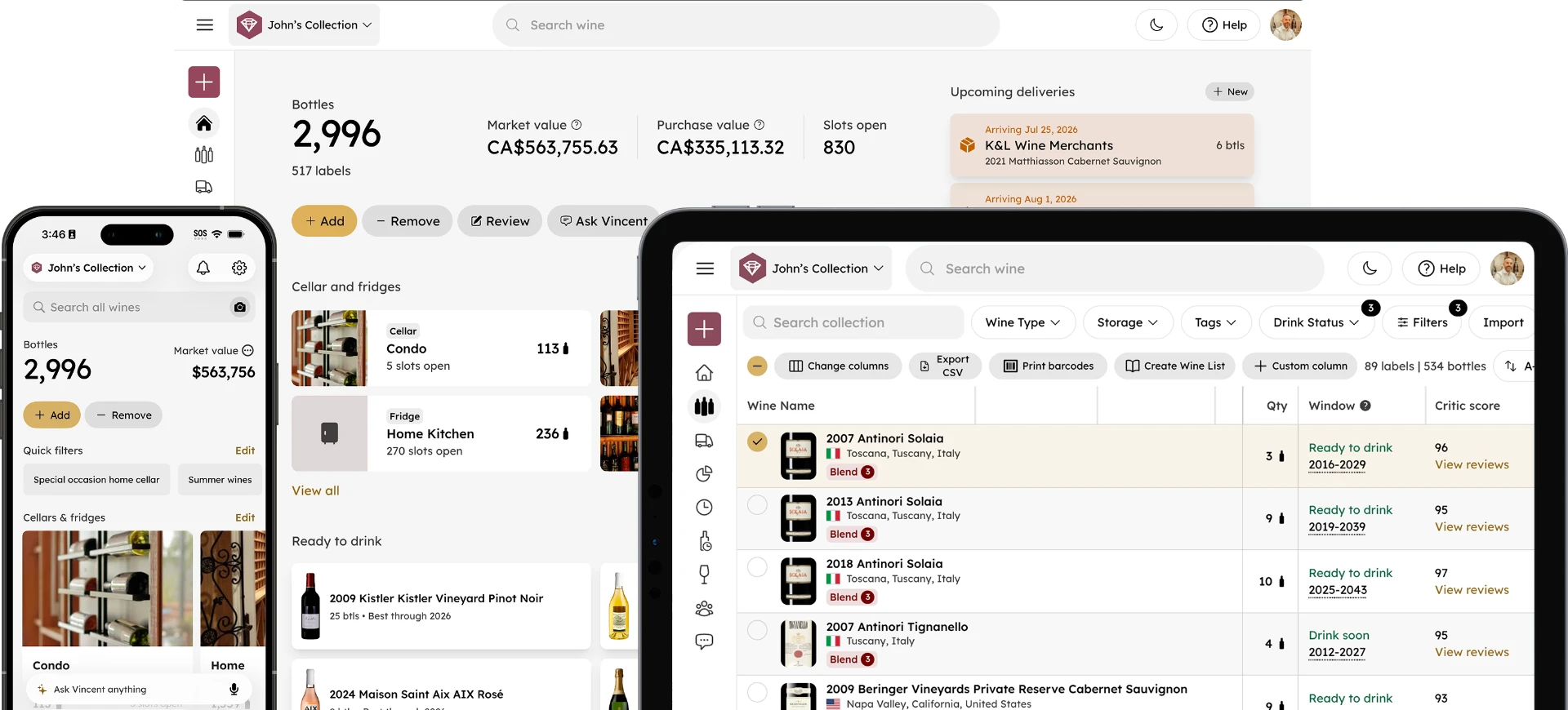
Critic scores are a useful reference point, but your own scoring history, built consistently over time, is more useful for your specific collection than any external critic's opinion. InVintory's wine reviews now include a direct 100-point rating field alongside maturity, value for price, and detailed sensory notes, so you can score bottles the way you're already used to thinking about them, and build a personal record that reflects your own palate rather than someone else's. For the full walkthrough of what's new, see Wine Reviews, Revamped.
Over enough bottles, your own scoring history becomes genuinely predictive of what you'll like, in a way a critic's score, however well-regarded, can't be for you personally.
For more on how score and reputation factor into what actually holds value in a collection, see our guide to which wines actually hold their value, and for a deeper look at one of the varieties most frequently discussed in scoring conversations, see our Cabernet Sauvignon guide.
A number on a shelf tag is a starting point for a decision, not the decision itself.
Start building your own scoring history.
Try InVintory's New Wine Reviews →
FAQ
What is considered a good wine score on the 100-point scale?
90 and above is generally considered outstanding, and 80 and above is considered good to very good. Very few published scores fall below 80, since most publications don't bother reviewing wines they expect to score poorly.
Why do different critics give the same wine different scores?
Differences in tasting conditions, individual palate preference, and the specific moment a wine was tasted all contribute. This is normal and doesn't mean one critic is right and another is wrong.
Should I only buy wines that score 90 or above?
Not necessarily. A slightly lower score at a much better price is often the smarter purchase for everyday drinking, and personal taste fit matters more than chasing a specific number.
Does a wine's score change over time?
The specific published score is tied to when it was tasted, but the same wine can genuinely taste different, and score differently if retasted, as it ages. A young, structured wine and that same bottle a decade later are not identical tasting experiences.