InVintory vs VinoCell: Which App Wins?
Madeleine Cruickshank
July 6, 2026 · 3 min read

VinoCell and InVintory both manage a physical wine collection digitally, but they take almost opposite approaches to get there. Here is how they compare.
What is the main difference between InVintory and VinoCell?
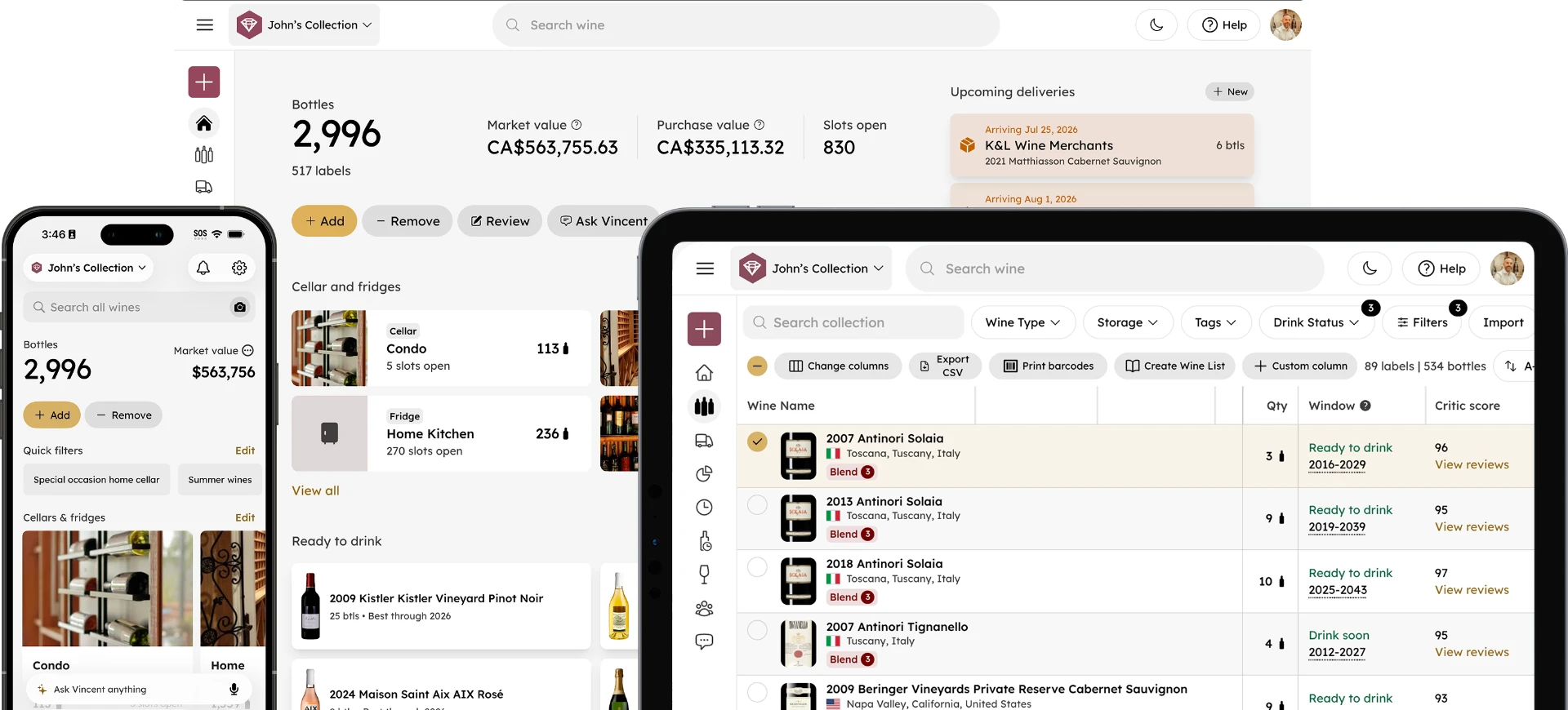
VinoCell is built around deep manual customization, with up to 50 data fields per wine and a graphical cellar layout you configure yourself. InVintory is built around automation, with a visual 3D map of your actual cellar (VinLocate) and an AI assistant (Vincent) that generates recommendations from your own collection.
Cellar Mapping
VinoCell lets you build a graphical representation of your cellar from a set of predefined rack and shelf shapes, then place bottles manually using a double-tap gesture. It is a two-dimensional, schematic layout rather than a true visual model of your specific space.
InVintory's VinLocate creates a visual, searchable 3D map of your actual cellar or wine fridge. Search for a bottle by producer, region, vintage, or price, and VinLocate highlights its exact rack, row, and slot. On the Elite plan, InVintory's team builds a fully custom, photorealistic model of your real cellar, matching actual wood textures, finishes, and decor.
Data Entry and Database
VinoCell supports a large wine database and up to three photos plus 50 descriptive fields per bottle, giving detail-oriented collectors full control over their records. Several long-time users note that entering a large collection accurately takes considerable manual effort, since matches in the wine database can be inconsistent.
InVintory's database is sommelier-curated and covers over 2 million wines. You can add bottles by searching, scanning a label, or importing directly from CellarTracker, Vivino, or a spreadsheet.
AI and Recommendations
This is the sharpest difference between the two apps. VinoCell does not include an AI recommendation engine. It supports manual tasting notes and lets you add professional ratings from a large set of world guides and competitions, but it does not suggest what to drink or generate pairings on its own.
InVintory's Vincent is a built-in AI wine assistant. Ask about food pairings, get curated "open tonight" picks based on your own collection, or ask Vincent to add or remove a bottle through natural conversation.
Valuation and Market Data
VinoCell includes a market price search feature and lets you compare merchant listings around the world.
InVintory tracks real-time market value for individual bottles and your total collection, sourced from multiple market data providers, which is useful for insurance or investment tracking.
Pricing
VinoCell is a one-time paid download rather than a subscription, with no free tier.
InVintory offers a Free plan with unlimited bottle tracking, plus Premium and Elite tiers with expanded features including VinLocate, Vincent, and collection valuation. See the full breakdown on our pricing page.
Which App Should You Choose?
Choose VinoCell if you do not need AI-driven recommendations or a visual cellar model.
Choose InVintory if you want your cellar mapped visually, want an AI assistant that understands your specific collection, or want to track your collection's value automatically rather than researching it yourself.
Ready to see your own cellar mapped out? Try InVintory free.
FAQ
Does VinoCell have an AI sommelier?
No. VinoCell supports manual tasting notes and professional ratings but does not generate AI-based recommendations.
Can I import my VinoCell collection into InVintory?
InVintory supports import from CellarTracker, Vivino, and spreadsheets. If your VinoCell data can be exported to CSV or XLS, it can generally be reformatted for import; check our import guide for details.
Which app is better for a large collection?
Both are built to handle large collections. VinoCell suits collectors who want to manually manage extensive custom fields. InVintory suits collectors who want automated cellar mapping, valuation, and recommendations at scale.