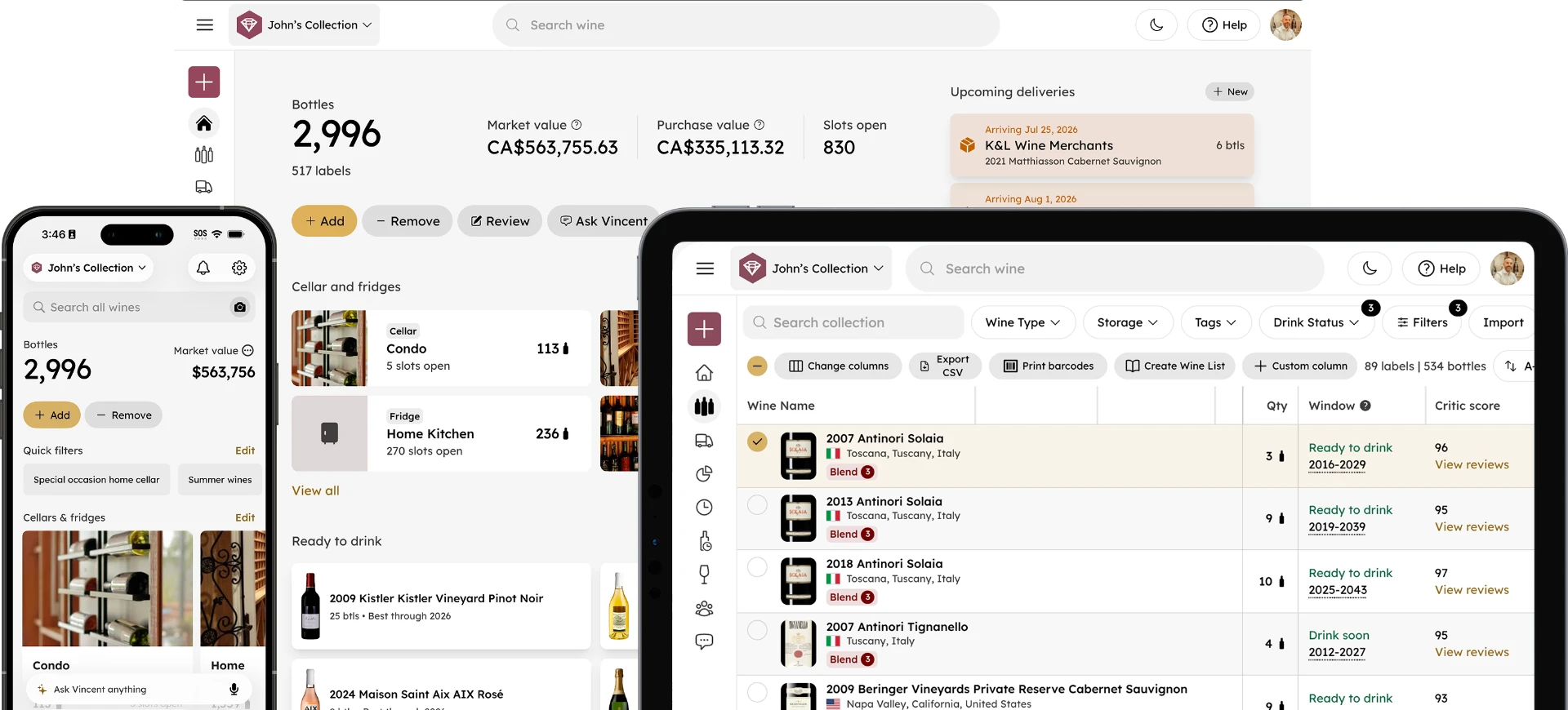
Imported a Wine List? 7 Ways to Keep Your Cellar Data Clean
Paul Michael
May 19, 2026 · 4 min read
In the world of wine collecting and cellar management, maintaining a clean, accurate database is essential. Yet, even the most organized collectors can find themselves facing unexpected challenges with wine inventory software duplicate records. The issue often surfaces after a major import; whether pulling in data from spreadsheets, another app, or a bulk CSV upload. It’s not just a wine problem: in U.S. hospitals, duplicate patient records occur at a rate of 10%, and B2B contact data can decay at 70% per year, fueling more duplicates even after a system is “clean” (tech-write.co.uk; landbase.com).
If it can happen in healthcare and business, wine cellars are certainly not immune.
That’s why, for any collector using a modern platform made by collectors, for collectors like InVintory, understanding how duplicates arise (and how to merge bottles cleanly) is a must for both peace of mind and cellar accuracy.
How Duplicate Records Sneak Into Your Wine Inventory
It’s a question nearly every wine collector and cellar manager faces: why do duplicate records appear, even when you’re careful? The reality is that duplicates most often creep in during bulk imports, manual data entry, or when merging legacy records from older systems. Overworked staff or rushed uploads can lead to fresh records being created rather than searching for existing ones—one study found that 92% of duplicates begin at the point of entry, not during system integration (landbase.com).
Aggregating wine data from several suppliers or platforms also increases the risk of duplicate entries if bottle identifiers aren’t standardized.
Legacy data migrations are another culprit: incomplete mapping or inconsistent data standards can result in unintentional doubling of bottles or lots (macroglobal.co.uk).
When importing hundreds of bottles at once, like in large-scale CSV jobs, even the best wine inventory software is only as good as the data you feed it. For best practices on imports at scale, see our guide to How to Import 1,000 Bottles into a Wine Inventory App (Fast).
The Real Risks: What Happens If Duplicates Go Unchecked?
Too many collectors and organizations focus only on building their collection, not realizing the downstream risks of duplicate records.Key takeaway: Duplicate wine bottle records can lead to inaccurate inventory counts, misstatements in financial reports, and critically, compliance and audit challenges.
Duplicates also increase the risk of overstocking and stockouts, creating confusion during order fulfillment and impacting everyday operations.
Duplicates also increase the risk of overbuying, missed bottles, and incorrect counts, especially when you’re trying to decide what to open next or what you already own enough of.
Making this shift can be transformational. With careful data hygiene, collectors avoid errors that could cost them both operationally and financially.
For those who need to export audit-ready inventories, see Insurance for Collectors: Exporting Audit-Ready Wine Inventories.
How Modern Wine Inventory Software Tackles Duplicates
Modern platforms like InVintory’s wine inventory app with 3D bottle-finding & valuation and others have made major strides in helping collectors keep their databases clean. Here’s how leading tools stand out:
- Automated duplicate detection: Platforms such as Vorby offer bulk import tools that check for duplicate entries as you catalog large collections.
- Guided data mapping: CellarTracker, for example, allows users to map their imported wines to existing records, reducing accidental duplication.
- Customizable rules and unique IDs: Most advanced systems let users set specific criteria like matching SKU, producer, and vintage to catch potential duplicates.
- Comprehensive audit trails: Every merge or edit is logged, allowing users to track changes and correct errors if needed.
Cloud-based inventory systems that sync data in real time across all devices further help prevent duplicates caused by out-of-date records.
According to UpKeep, 75% of supply chain professionals are prioritizing improvements to inventory management; automation and validation are now core features, not bonuses. InVintory’s sommelier-managed database and focus on data integrity further reduce the risk for collectors handling valuable or diverse cellars.
Step-by-Step: Merging Duplicate Bottles Without Losing Data
Efficiently merging duplicate wine bottle records comes down to following a clear, auditable process:
Review suspected duplicates: Use your app’s search or duplicate detection tool to identify entries with matching core attributes (like SKU, name, vintage, producer). Advanced systems may allow you to set custom rules that automate part of this process.
- Select a primary record: Choose the entry with the most complete information as your “master” record.
- Consolidate details: Carefully merge tasting notes, purchase info, and location data to make sure nothing is lost.
- Use audit trails: Confirm that every merge is tracked in the system, so changes can be reviewed or reversed if needed. As the FDA notes, audit trails are critical for maintaining data credibility during merges (pharmagmp.in).
- Validate and verify: Double-check the final record for accuracy and completeness.
For a list of the most common errors to avoid during cleaning, read 14 Common Wine Inventory Mistakes (and How Apps Solve Them).
Advanced Tips: Preventing Duplicates Before They Start
Proactive steps make all the difference when it comes to stopping duplicates before they start.User training and validation features significantly reduce the risk of duplicate records.
Standardizing naming conventions, using unique identifiers for every bottle, and regularly validating imported data are essential habits. According to data governance experts, organizations that invest in user training and advanced validation can reduce duplicate rates by 30-40% in just a few months (sapien.io; landbase.com).
Integration with smart tags and IoT-enabled tracking can also cut down on manual data entry errors, stopping duplicates at the source.
Staff training and clear protocols help collectors and teams avoid the “quick add” trap that often leads to duplicates in the first place.
If you’re starting from scratch or want a simple way to validate your data, try a free wine inventory app to set up best practices from day one.
Expert Insight: What the Pros Say About Data Hygiene
When it comes to data hygiene in wine collection databases, the takeaway is simple: inconsistent naming and messy imports create confusion about what you actually own, especially when you’re relying on counts for buying decisions or exports.
Continuous monitoring systems can help test for inconsistencies and duplicate entries before they escalate.
A clean, well-managed inventory saves time and keeps your cellar usable, so you’re not untangling data errors later.
For more on the high cost of data errors, see The Real Cost of Mismanaging a Wine Cellar (and How Apps Prevent It).
The Future of Deduplication: Machine Learning, Cloud, and Beyond
Picture a not-so-distant future where AI-powered inventory systems handle deduplication automatically, learning from your past edits and recognizing patterns humans might miss.In practice, organizations implementing these advanced algorithms have reduced duplicates by 30-40% in just a few months, with healthcare leaders maintaining rates as low as 0.14% over five years (landbase.com).
Tools like HubSpot and Dedupely already use AI-powered matching to detect and resolve duplicates far faster than manual review (sales-leads-crm.com). Similar tools are now being adopted in retail and logistics industries, setting new standards that are quickly influencing best practices in wine inventory management.
For collectors, this means a future where smart apps and cloud-based tools will do the heavy lifting, freeing up time to focus on the bottles that matter most.
For a closer look at how technology is transforming wine collection management, see 3D Wine Cellar Apps: How Bottle-Finding Tech Saves Collectors Hours.
References
- American Health Information Management Association. (n.d.). Duplicate data statistics in healthcare. tech-write.co.uk/wp-content/uploads/2025/05/CDS_duplicate_data.pdf
- Landbase. (n.d.). Duplicate record rate statistics. landbase.com/blog/duplicate-record-rate-statistics
- PharmaGMP. (n.d.). Why duplicate records can invalidate your entire batch? pharmagmp.in/why-duplicate-records-can-invalidate-your-entire-batch
- Aaron Hall. (n.d.). Problems from duplicate equity entries across systems. aaronhall.com/problems-from-duplicate-equity-entries-across-systems
- Sapien.io. (n.d.). Data duplication and its hidden costs. sapien.io/blog/data-duplication-and-its-hidden-costs
- Sales-Leads-CRM. (n.d.). CRM deduplication guide. sales-leads-crm.com/blog/crm-deduplication-guide