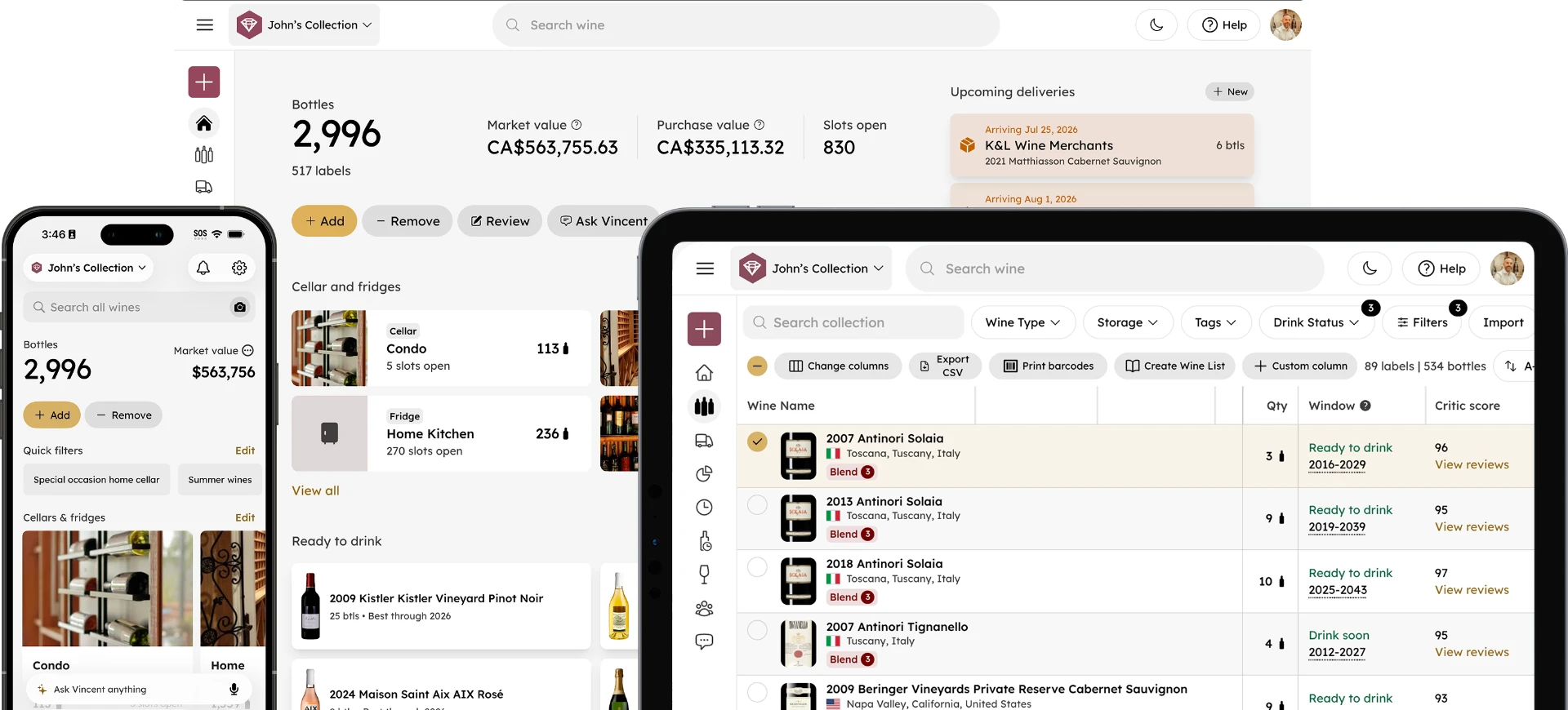
Building a “Drink Soon” Rotation: A Weekly Workflow Using Drink Windows and Lists
Paul Michael
April 29, 2026 · 4 min read

For serious collectors, the difference between a memorable wine experience and a missed opportunity often comes down to timing—specifically, whether you open a bottle at its peak. Building a “Drink Soon” rotation, grounded in drink windows and structured lists, is the most reliable way to protect both your enjoyment and investment. Made by collectors, for collectors, InVintory brings the latest in cellar management to solve this exact challenge, helping you transform your approach from guesswork to precision.
Few moments frustrate collectors more than realizing a bottle has slipped past its prime just as you pull the cork for a special dinner.
Most collectors have experienced the disappointment of opening a prized bottle too early, or finding a forgotten favorite after it’s past its best. Without a system, it’s easy to lose track, especially when relying on memory or manual notes.
Opening a wine at the wrong time isn’t just disappointing, it’s preventable with the right workflow.
Beyond lost enjoyment, timing mistakes can also waste value—especially for bottles you meant to open for a specific moment. A simple rotation system helps you prioritize what to open next so fewer bottles slip past their best.
Build Your Weekly Shortlist in 10 Minutes
Efficient wine rotation starts with a simple weekly shortlist: a focused list of bottles ready to be opened, identified in minutes with the right tools.
Here’s a step-by-step playbook for building your shortlist:
- Review Your Inventory: Use your wine inventory management app or digital cellar to scan your full collection.
- Filter by Drink Windows: Identify bottles approaching or currently in their optimal drinking period.
- Check for Occasions: Cross-reference the shortlist with any upcoming dinners, events, or seasonal preferences.
- Update and Save Your List: Tag or flag the selected bottles for easy access throughout the week.
- Automate the Process: Apps like InVintory can send reminders or generate “drink soon” lists automatically. See how drink-window automation works here.
Many apps also offer food pairing suggestions for your weekly shortlist, supporting better meal planning.
A rotation only works if it’s easy enough to maintain, so keep the shortlist small and rebuild it on a consistent schedule.
Set Rules for Occasion and Season
Adapting your rotation to fit the season or special occasions means you’re always pouring the right wine at the right moment. During warmer months, lighter wines like rosés and whites are typically favored, while heartier reds are enjoyed in the winter. Collectors and sommeliers often adjust their wine consumption planning and wine lists throughout the year to match both the weather and their planned events.
For example, one industry summary notes: “During summer months, lighter wines such as rosés and whites are favored, while in winter, fuller-bodied reds become more popular.” This approach means wines are not only consumed at their best, but also complement the meals and moods of each season.
Some collectors tag bottles specifically for upcoming events, like “holiday picks” or “summer BBQ,” to be sure special wines are featured at just the right time.
Use Lists and Tags to Keep It Consistent
Consistency is at the heart of successful cellar management. Tagging bottles and maintaining dynamic lists (like “Drink Soon,” “Hold,” or “Open Tonight”) makes it easy to stay organized and maximize the potential of every bottle.
- Tags and lists prevent forgotten bottles and allow for quick, systematic rotation.
- Digitally tagging bottles by readiness, occasion, or varietal means you can always find something perfect, fast.
- Organized inventory prevents wasted spend by reducing duplicates and making it easier to see what you already have.
Advanced tags can also include details like vintage, region, and producer, turning your rotation lists into a personal wine encyclopedia.
Tracking tasting notes builds your wine knowledge over time, deepening your appreciation and understanding.
For more on maintaining and tracking your collection’s value, see How to Track Your Wine Collection’s Value Automatically.
After-Opening Workflow: Keep It Current
Keeping your rotation accurate depends on logging every bottle that leaves your cellar. This step is often skipped, but even a simple note or app update prevents future confusion and keeps your inventory reliable.
Most modern tools make it quick to mark a bottle as opened, so your count stays accurate.
Key takeaway: Logging post-consumption isn’t just about lists, it’s about accuracy and peace of mind.
Best practice guidelines emphasize this habit: regularly updating your records after opening a bottle means your collection is always up to date, so you never reach for a bottle that’s no longer there.
For details on tuning your drink windows and keeping your queue accurate, see Drink Window Tuning: When to Edit Windows and How to Keep Your Queue Accurate.
The Impact: Fewer Missed Bottles, More Enjoyment
A well-managed “Drink Soon” rotation delivers measurable benefits: fewer missed drink windows, less waste, and more great wine moments.
A well-managed “Drink Soon” rotation delivers practical benefits: fewer missed drink windows, less waste, and fewer “what should we open?” decisions that turn into guesswork.
Higher turnover also means more frequent chances to rediscover wines you might have otherwise overlooked.
Rotating systematically, rather than randomly, pays off because it keeps your best bottles from getting buried and forgotten.
Wine maturity, optimal drinking period, and wine aging potential are at the core of these results.
Common Pitfalls and How to Avoid Them
Even with the best intentions, common mistakes can undermine your rotation system:
- Over-relying on generic drink windows instead of regularly reviewing your collection.
- Failing to personalize your lists based on storage conditions, personal taste, and real-world consumption patterns.
Neglecting to log bottles after opening, leading to confusion and missed opportunities.
A quick audit of your collection every six months is a proven way to stay ahead of changes in taste or storage conditions.
As one expert noted, “Even legendary vintages have a window—an arc where their character peaks, their structure softens, their personality shines. Miss it on either side, and you don’t get the wine you paid for” (esommelier.com).
AI-driven recommendations can help here. See AI Wine Assistant: How Smart Apps Build Your ‘Open Tonight’ List.
Getting Started: Your First “Drink Soon” Rotation
Ready to build your rotation? Start here:
Choose a Digital Tool: Pick a reliable app or digital inventory system. InVintory’s wine inventory app is a top choice for collectors.
- Enter Your Bottles: Record each wine’s details, focusing on drink windows and readiness.
- Tag and List: Assign tags like “Drink Soon” or “Hold” and create your first weekly shortlist.
- Set Reminders: Use app notifications to prompt regular reviews and avoid missed windows.
- Log Consumption: Track every bottle you open to keep your system current.
Wine collecting, wine inventory management, and drink windows all come together in this simple, actionable workflow, designed to maximize your collection’s value and your enjoyment.
References
- eSommelier. (2023). When great wine is opened too soon or too late. https://www.esommelier.com/post/when-great-wine-is-opened-too-soon-or-too-late
- G2 Crowd. (2020). State of Wine Industry Trends in Tech Whitepaper. https://images.g2crowd.com/uploads/attachment/file/157513/2020-10-State-of-wine-industry-trends-in-tech-whitepaper-FINAL-_1_.pdf
- Alibaba.com. (2023). How to keep track of wine collection using a smartphone app. https://www.alibaba.com/product-insights/how-to-keep-track-of-wine-collection-using-a-smartphone-app.html
- InVintory. (2023). The real cost of mismanaging a wine cellar and how apps prevent it. https://invintory.com/blog/the-real-cost-of-mismanaging-a-wine-cellar-and-how-apps-prevent-it
- InVintory. (2023). Common wine inventory mistakes and how apps solve them. https://invintory.com/blog/common-wine-inventory-mistakes-and-how-apps-solve-them