Introducing the InVintory Partner API for Wine Businesses
Madeleine Cruickshank
May 25, 2026 · 5 min read
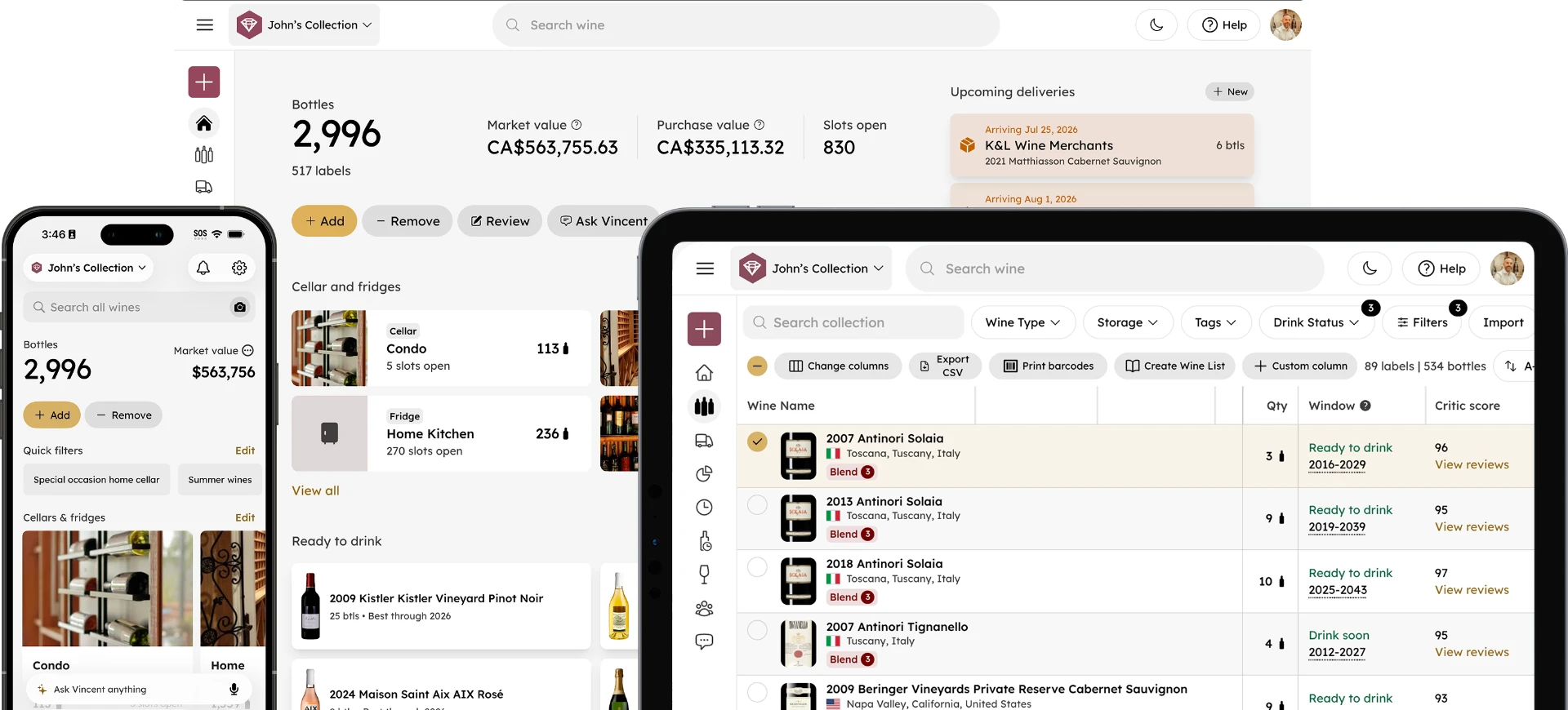
InVintory started as a tool for individual wine collectors. Today, the infrastructure that powers it (including the database of over 1.5M wines, the label recognition engine, and the inventory management layer), is all available to any team that wants to build with it.
The InVintory Partner API is now open for integration. It gives hospitality groups, wine retailers, marketplaces, and software platforms programmatic access to the wine data and collection management tools that collectors have relied on for years, through a single, documented API built for production use.
What the InVintory Partner API Does
What can you build with the InVintory Partner API?
The Partner API gives you access to six core capabilities through a single integration point.
Collection management
Programmatic access to cellars, bottles, locations, and movements. Add, remove, and reconcile inventory across any system you already run, whether that's a property management system, an ERP, or a custom back-of-house tool.
Label recognition
Identify bottles directly from a photo of the label. The computer vision endpoint returns producer, vintage, region, and matched catalogue records, making it possible to add bottles to inventory through a phone camera rather than manual entry.
Wine database and search
Query a catalogue of 2 million wine labels with rich metadata including producers, appellations, vintages, tasting notes, and provenance. This is the same database that powers InVintory's collector app, now available as a queryable API.
POS and system integrations
Connect wine inventory to your point-of-sale, ERP, or reservation system. Sync depletions, surface stock at the table, and close the loop on every pour without manual reconciliation.
Operational workflows
Build custom flows for receiving, transfers, audits, and reporting. Webhooks keep your stack in sync as bottles move through the cellar, removing the need for manual data entry at each step.
Enterprise-grade access
Scoped API keys, role-based permissions, and a dedicated partner success contact. Built for hospitality groups, retailers, and software platforms that need reliability and accountability from their integrations.
InVintory Partner API documentation →
Who the Partner API Is Built For
Is the InVintory Partner API right for my business?
The API is designed for three types of teams.
Hospitality Groups
Hotels, restaurant groups, and private dining operations that manage wine programs across multiple venues often run inventory across disconnected systems. Staff manually reconcile depletions at the end of service, pricing updates happen in isolation from stock levels, and table-side teams have no live visibility into what's available.
The Partner API changes that. Embed live inventory into your POS, surface stock levels at the table, and sync depletions automatically as pours are recorded. The label recognition endpoint also gives receiving teams a faster way to log deliveries without manual data entry.
Retailers and Marketplaces
Wine retailers and online marketplaces need accurate, rich product data to build compelling listings. Manually maintaining producer details, vintage notes, appellation information, and tasting profiles across thousands of SKUs is a significant operational burden.
The Partner API gives retailers access to InVintory's 2 million label catalogue to enrich product listings automatically, and the label recognition endpoint makes it possible for customers to scan bottles to add wines to lists, wishlists, or purchase history within your platform.
Software Platforms
Development teams building apps in the wine, hospitality, or food and beverage space often face the same problem: the wine data layer is expensive and time-consuming to build from scratch. Sourcing, cleaning, and maintaining a reliable database of producers, vintages, appellations, and tasting notes is a years-long investment.
InVintory’s Partner API removes that barrier. Add wine identification, search, and collection features to your application without building the data infrastructure yourself. InVintory's catalogue and computer vision endpoints are available from day one, letting your team focus on the product rather than the pipeline.
Why InVintory's Wine Database Is Different
Most wine APIs are built around pricing and market data. They tell you what a bottle costs on the secondary market. InVintory's database is built around the bottle itself: the producer, the appellation, the vintage, the tasting profile, the drinking window, and the cellar location.
That distinction matters for the use cases the Partner API is built for. A hospitality group doesn't just need to know what a bottle is worth. They need to know what it is, where it is, and when to open it. A retailer doesn't just need a price feed. They need rich metadata that helps customers understand and choose what they're buying. A software platform building a collection tool needs a complete wine identity layer, not just market data.
The Partner API gives you all of that through a single integration point, backed by the same database that InVintory's collector app has been built on.
Getting Started With the Partner API
How do I access the InVintory Partner API?
Partner pricing is tailored to your volume and use case. Reach out to the InVintory team and you'll hear back shortly.
Full API documentation is available at api.invintorywines.com/partners/docs, covering authentication, endpoints, request formats, webhook configuration, and rate limits.
Frequently Asked Questions
What is a wine inventory API?
A wine inventory API is a programmatic interface that lets software systems access wine data, manage bottle inventory, and connect with other tools like point-of-sale systems. Rather than building a wine database and inventory layer from scratch, developers use an API to access existing infrastructure and focus on their own product.
What wine data does the InVintory API include?
The InVintory Partner API includes access to a catalogue of 2 million wine labels with producer details, appellations, vintages, tasting notes, and provenance data. It also includes endpoints for label recognition via image upload, inventory management, and webhook-based operational workflows.
Can the InVintory API integrate with my existing POS system?
Yes. The Partner API is designed to connect with point-of-sale, ERP, and reservation systems. It supports inventory sync, depletion tracking, and webhook-based updates so your wine inventory stays current as bottles move through your operation.
How does the label recognition endpoint work?
The label recognition endpoint accepts a photo of a wine label and returns matched records from the InVintory catalogue, including producer, vintage, region, and associated metadata. It is designed for use cases like receiving new stock, customer-facing bottle scanning, and mobile inventory audits.
Who is the InVintory Partner API designed for?
The API is built for hospitality groups, wine retailers and marketplaces, and software platforms that want to add wine data, inventory management, or label recognition capabilities to their products without building the underlying infrastructure from scratch.
How do I get access and what does it cost?
Partner pricing is customized based on your volume and use case. Contact the InVintory team at support@invintory.com for detailed pricing, or read our API documentation at api.invintorywines.com/partners/docs.
The wine industry runs on data that most platforms have never made accessible. The InVintory Partner API changes that, one integration at a time.