How to Keep Bottle Locations Accurate (Even When Bottles Move)
Paul Michael
May 20, 2026 · 4 min read
Every collector or hospitality professional has experienced the frustration of not being able to find a bottle at the right moment. The consequences go beyond inconvenience; misplaced bottles can result in financial losses, missed opportunities to enjoy wines at their peak, and inefficiency for staff or guests. Wine cellar inventory management isn’t just about organization; it’s about making every bottle count.
A recent study found that retailers absorbed $562 billion in losses due to overstocks alone, most of which was preventable with stronger inventory accuracy controls (altavantconsulting.com). While this figure is from the broader retail sector, it highlights how expensive inventory mismanagement can be and why a solution “made by collectors, for collectors” like InVintory is so valuable for anyone serious about their collection.
Common Causes of Bottle Location Errors in Wine Cellars
Manual processes and poor labeling are frequent sources of wine bottle location errors. This is especially true in wine locker programs, where the lack of digital tracking leaves both members and operators struggling with visibility and coordination.
Even a single error can ripple through your entire collection.
Without robust tracking, bottles get misplaced, mislabeled, or simply lost in the shuffle. In the absence of digital tools, operators lose visibility into what’s stored, making curation and member engagement much more challenging (invintory.com).
Broader studies indicate that up to 60% of SKUs in inventory can be inaccurate in related sectors (altavantconsulting.com), underscoring the need for better wine inventory reconciliation and systematic organization.
For more, see our guide to common wine inventory mistakes.
How to Re-Index Your Cellar: Step-by-Step Process
Re-indexing your cellar may sound daunting, but a systematic approach backed by the right technology makes the process efficient and rewarding.
- Gather Your Inventory Records: Start by consolidating all physical and digital records of your collection.
- Physically Audit Each Bottle: Go through your cellar section by section, verifying each bottle’s presence and details.
- Correct and Update Locations: As you verify, update your wine cellar organization tools or app to reflect accurate locations.
- Implement Consistent Labeling: Use clear, uniform tags or digital markers for future ease.
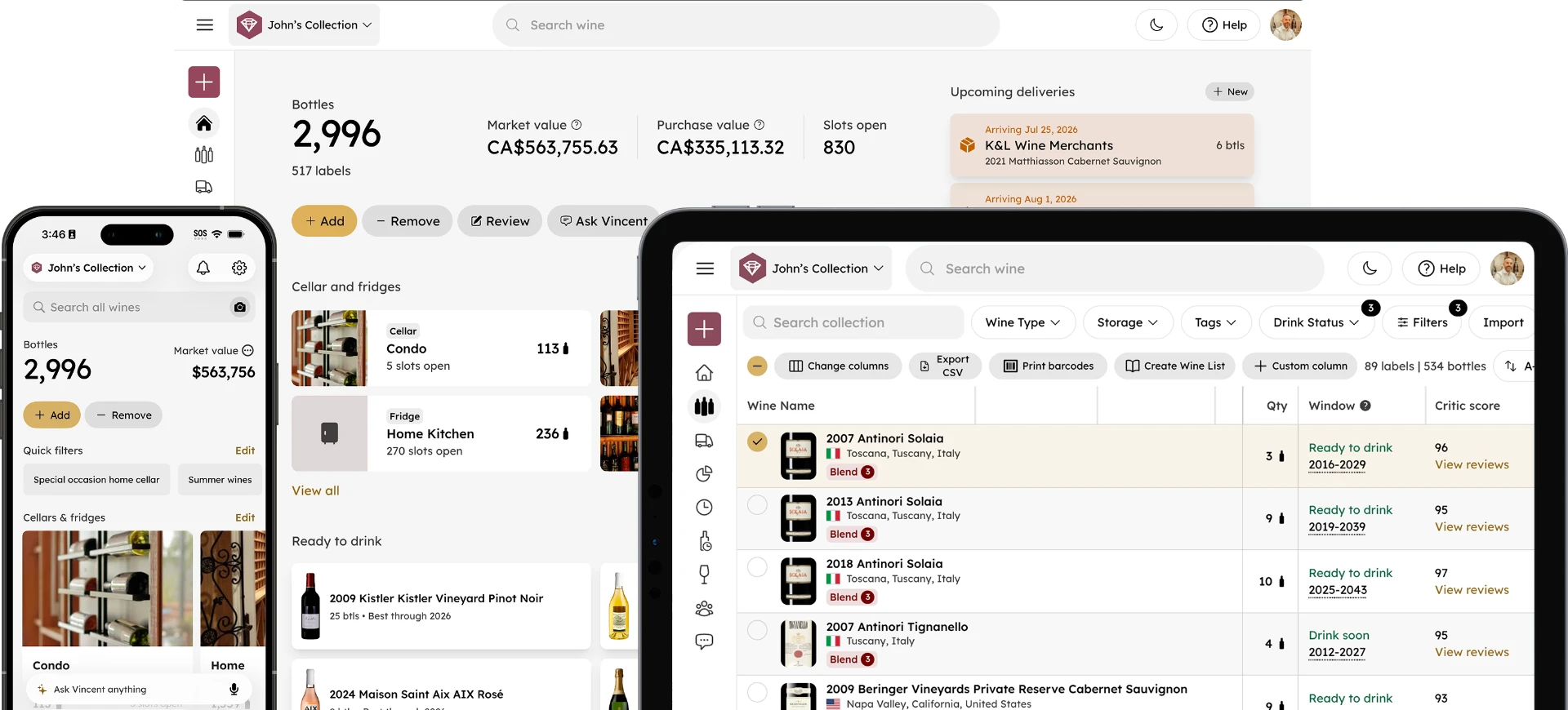
- Leverage Technology: Using a wine inventory app with 3D bottle-finding & valuation like InVintory can streamline re-indexing and ongoing management.
A recent study shows that computer vision platforms can cut inventory audit time by 45% (from 120 to 65 minutes) and improve accuracy from 82.5% to 91% (sciencedirect.com).
Regular re-indexing, especially when combined with periodic audits and digital tools, keeps your system reliable.
Digital Tools vs. Manual Methods: What Works Best for Re-Indexing?
It’s tempting to rely on familiar spreadsheets or handwritten notes, but digital solutions outperform manual tracking in both accuracy and efficiency.
Here’s how digital wine cellar solutions stand out:
- Dramatic Time Savings: Digital platforms reduce inventory counting time by 45% (sciencedirect.com).
- Fewer Errors: Precision rises to 91% with digital tools, compared to 82.5% using traditional methods (sciencedirect.com).
- Real-Time Insights: Apps offer instant analytics and alerts, helping you avoid costly mistakes.
Equally important, digital systems create detailed audit trails, helping you meet compliance requirements and maintain professional standards.
When White&Dry, a liquor store chain, switched to a digital system, they saw fewer inventory discrepancies and improved operational coordination (invintory.com).
For more on why collectors upgrade their tracking, see our resource on making the leap from spreadsheets to apps.
Best Practices for Preventing Future Inventory Errors
After you’ve re-indexed, it’s essential to adopt habits and systems that keep your collection in order.
Key best practices include:
- Regular Audits: Schedule periodic checks to maintain accuracy.
- Consistent Labeling: Keep tags or digital markers uniform and updated.
- Training: Educate all involved on your system and its importance.
- Technology Adoption: Use digital platforms for real-time tracking and audit trails.
- Maintain optimal storage conditions for your cellar to protect wine quality over time.
As Marcus Bell, Master Sommelier, notes: “Apps that log edits, preserve version history, and flag unverified entries? Those are non-negotiable.”
Prevention requires both the right tools and ongoing discipline.
For more tips, see our post on wine cellar management best practices.
The ROI of Getting It Right: Financial, Practical, and Enjoyment Benefits
Why invest in proper inventory management? The payoff is clear: less wasted wine, fewer missed moments, and a more valuable collection.
The global winery management software market is projected to grow from $1.43 billion in 2024 to $3.12 billion by 2033, reflecting a sweeping digital transformation (invintory.com).
A Peruvian winery achieved a 20% reduction in operational costs through digital adoption (vinetur.com).
This digital shift isn’t just for wineries; retailers like White&Dry have seen inventory turnover improve by 36% after switching to digital management.
For collectors, this means more confidence, less waste, and the peace of mind that comes from knowing exactly what’s in your cellar.
For a deeper dive, read about the real cost of mismanaging a wine cellar.
Frequently Asked Questions on Re-Indexing and Bottle Location
How can I fix a bottle location error in my cellar?
Audit your collection, update records, and use digital tools for ongoing accuracy. Platforms automate tracking and offer real-time analytics, making future errors less likely (invintory.com).
What’s the main reason bottles get misplaced?
Manual tracking and inconsistent labeling are the top culprits. Even a small oversight can snowball into bigger issues.
Are digital tools really worth it for a small collection?
Yes; digital platforms cut audit times by nearly half and boost accuracy, making them valuable for collections of any size (sciencedirect.com).
Are digital platforms secure?
Look for clear account controls and permission settings, especially if multiple people access the cellar.
For more on 3D bottle-finding technology, see InVintory Premium.
Conclusion: Make Every Bottle Count with Modern Inventory Management
In an era where every bottle matters, wine cellar inventory management is about more than tracking; it’s about maximizing enjoyment, minimizing waste, and protecting your investment.
Digital solutions are changing how collectors and hospitality professionals manage their cellars, making it easier than ever to keep track of every bottle.
Discover why so many are choosing tools “made by collectors, for collectors” at InVintory.
References
- Altavant Consulting. (2023). Inventory Accuracy ROI: The True Cost of Inaccuracy. https://altavantconsulting.com/ar/inventory-accuracy-roi/
- Invintory Blog. (2023). Why Member Wine Lockers Need Digital Inventory Tools. https://invintory.com/blog/why-member-wine-lockers-need-digital-inventory-tools
- ScienceDirect. (2024). Computer Vision in Inventory Management: Time & Accuracy Study. https://www.sciencedirect.com/science/article/pii/S2667305324001121
- Vinetur. (2023). Report: Global Wine and Digitalization. https://www.vinetur.com/documentos/article/87409/Report_Global%20Wine%20and%20Digitalization.pdf
- Invintory Blog. (2023). Common Wine Inventory Mistakes (and How Apps Solve Them). https://invintory.com/blog/common-wine-inventory-mistakes-and-how-apps-solve-them