How to Start a Wine Collection: A Beginner's Complete Guide
Madeleine Cruickshank
June 24, 2026 · 5 min read

Most wine collections start the same way; a bottle that surprised you, a meal where everything came together, or a trip that introduced you to a region you'd never considered before. That single bottle becomes two, then ten, then fifty, and somewhere along the way you realize you're a collector.
The question is whether you're building intentionally or just accumulating. This guide gives you the framework to start right.
Step 1: Define Why You're Collecting
What is the point of building a wine collection?
Starting a wine collection can feel overwhelming, but it comes down to understanding your own personal preferences and goals. Are you interested in collecting wine simply to enjoy it with friends and family, or are you looking at it as a potential investment? Perhaps a bit of both? Knowing your purpose will help guide your selection and storage methods.
Three purposes drive most collections:
Personal enjoyment
Building a cellar of wines you love, want to share, and plan to drink over the coming years. The emphasis is on variety, drinkability, and matching your actual taste.
Exploration and learning
Using your collection as a way to deepen your understanding of wine across regions, producers, and vintages. The emphasis is on diversity and discovery.
Investment and appreciation
Buying wines that will increase in value over time with an eye toward resale or drinking at peak. The emphasis is on age-worthy bottles, strong vintages, and producers with secondary market demand.
Most collectors pursue some combination of all three. Being clear about which one is most important to you shapes every buying decision that follows.
Step 2: Start Small and Buy With Intention
How many bottles should I start with?
You do not need a significant upfront cost. Many collectors follow the simple rule of buying two bottles at a time: one to explore now and one for later. It's a rule that helps reveal how wines evolve over time.
Starting small forces intentionality. Every bottle in a 20-bottle collection is chosen deliberately. Every bottle in a quickly assembled 200-bottle collection may not be. Build slowly enough that you understand why each bottle is there.
Diversifying your purchases early on creates a more balanced collection and provides an opportunity to explore different wine styles before expanding your inventory. A starter collection that spans a few regions, both red and white, and a range of price points gives you more to learn from than 20 bottles of the same wine.
Step 3: Learn the Basics of What Ages Well
Which wines are worth cellaring?
Not every wine improves with age. Age-worthy wines to invest in include Bordeaux, Barolo, and Napa Valley Cabernet Sauvignon, and these should be part of any collection from the beginning.
The general rule: wines built for aging have high acidity, high tannins, or high sweetness; the three natural preservatives in wine. Structured reds like Cabernet Sauvignon, Nebbiolo, and Syrah; mineral whites like Riesling and White Burgundy; and sweet wines like Sauternes all reward patience. Soft, fruit-forward wines, including most rosés, everyday Pinot Grigio, and approachable commercial reds, are built to be drunk within a few years of release and won't improve with cellaring.
A balanced collection includes both: wines that are ready to drink now alongside bottles that will reward holding.
Step 4: Get Your Storage Right Early
What storage do I need to start a wine collection?
Storage is the most important practical decision in starting a collection. Wine stored in the wrong conditions won't age correctly regardless of how good the bottles are.
The basics: consistent temperature around 55 degrees Fahrenheit, humidity between 60 and 70 percent, no direct UV light, and minimal vibration. A dedicated wine fridge handles all of these automatically. A wine fridge starting around $300 is ideal for small collections and apartments. For serious collectors storing 50 or more bottles, a dedicated wine cellar or cabinet is more appropriate.
For more on what storage conditions actually matter and which myths to ignore, this post on wine storage temperature covers the facts in detail.
Step 5: Track Your Collection From the Start
Do I need an app to manage a small wine collection?
Not immediately, but starting your digital inventory early makes everything easier as the collection grows. The habit of logging bottles when they arrive and removing them when you open them takes seconds and pays off significantly once you cross 50 bottles.
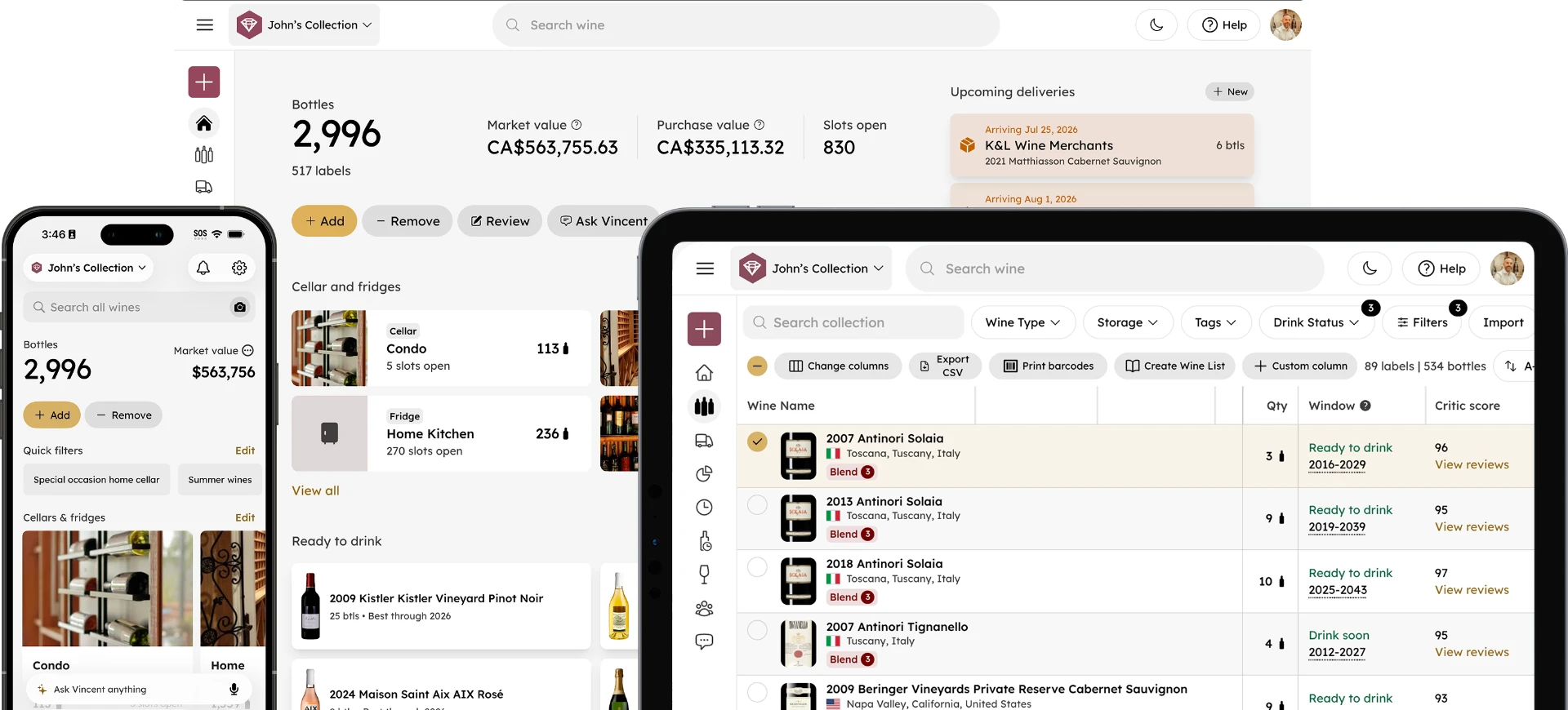
InVintory is free to start and covers the core tracking needs like bottle details, drinking windows, market prices, and consumption history, all without a subscription. As your collection grows, Premium unlocks VinLocate for physical cellar mapping, Vincent for AI-powered recommendations, and Collection Analytics for understanding what you've built.
For collectors switching from a spreadsheet as they get more serious, this post on upgrading from spreadsheets to a wine app explains exactly when manual tracking stops working.
Start Your Collection in InVintory →
Step 6: Explore Intentionally
How do I learn more about wine as I collect?
The best wine education happens through the glass. A wine collection is not about scale or status. It is about curiosity, exploration, and the joy of returning to a bottle that holds meaning. Build slowly. Build intentionally. And give yourself permission to enjoy any wine, anytime.
A few habits that accelerate the learning curve:
Keep tasting notes
Writing down what you taste, even briefly. This trains your palate faster than any wine course. InVintory lets you log tasting notes directly on any bottle in your collection.
Buy verticals
Getting two or three bottles of the same wine across different vintages lets you taste how a wine evolves year to year. It's one of the most efficient ways to understand a producer's style and how vintage variation affects a wine.
Ask Vincent
InVintory's AI sommelier can explain any wine in your collection, suggest what to try next based on what you've enjoyed, and answer questions about specific bottles while you're standing in front of your rack deciding what to open.
Frequently Asked Questions
How much does it cost to start a wine collection?
You do not need a significant upfront cost. Many collectors follow the simple rule of buying two bottles at a time: one to explore now and one for later. A starter collection of 20 to 30 thoughtfully chosen bottles might cost $500 to $2,000 depending on price points, but there's no required minimum.
Which wines should I buy first?
Start with wines from regions you already enjoy, then expand into one or two areas you're curious about. Including a range of styles (at least one age-worthy red, one approachable white, and something that will drink well in the next year), gives you a collection that's useful for different occasions.
How do I store wine without a cellar?
A dedicated wine fridge is the most practical solution for collectors without a cellar. A basic model handles temperature and humidity control effectively for collections under 100 bottles. For more on choosing a wine fridge, this guide to the best wine fridges for collectors covers the options in detail.
When should I upgrade from a spreadsheet to a wine app?
When keeping the spreadsheet accurate starts taking more time than it's worth, or when you lose track of where a specific bottle is stored; those are the signals that a dedicated wine app will pay for itself. InVintory's free tier handles the transition without a subscription commitment.
A wine collection is not about scale or status. It is about curiosity, exploration, and the joy of returning to a bottle that holds meaning. Start with one bottle you love. Everything else follows from there.