The Best Wine Racks for Serious Collectors in 2026
Madeleine Cruickshank
June 19, 2026 · 5 min read
A wine rack is more than a storage solution. It's the physical infrastructure of your collection, and the thing that determines how accessible your bottles are, how visible your labels are, and how well your cellar holds up as the collection grows.
This guide covers the best wine rack options for serious collectors in 2026, what to look for before buying, and how to map any rack in InVintory so every bottle has a searchable location the moment it's stored.
What to Look for in a Wine Rack
How do I choose the right wine rack for my collection?
Before looking at specific products, four factors should shape your decision.
Capacity
Buy for where you're going, not where you are now. Wine collections are living things and they tend to grow when you aren't looking. Always plan for 25 percent more capacity than you think you need. A collector with 50 bottles today will likely need 75 within a year.
Bottle compatibility
One of the most common mistakes new collectors make is assuming every wine bottle is created equal. The standard Bordeaux bottle is the industry benchmark, but if your palate leans toward Champagne, wide Burgundy Pinot Noirs, or tall Alsatian Rieslings, standard racks will fail you. Check dimensions before buying, particularly for Champagne and Burgundy-format bottles.
Material
Metal offers a modern, industrial, or minimalist look and is typically very sturdy, easy to clean, and often comes in black, silver, or copper finishes. Wood brings warmth, tradition, and a rustic feel. Mixed material racks combining metal with wood result in a popular industrial-rustic style that is usually very sturdy and visually interesting.
Access style
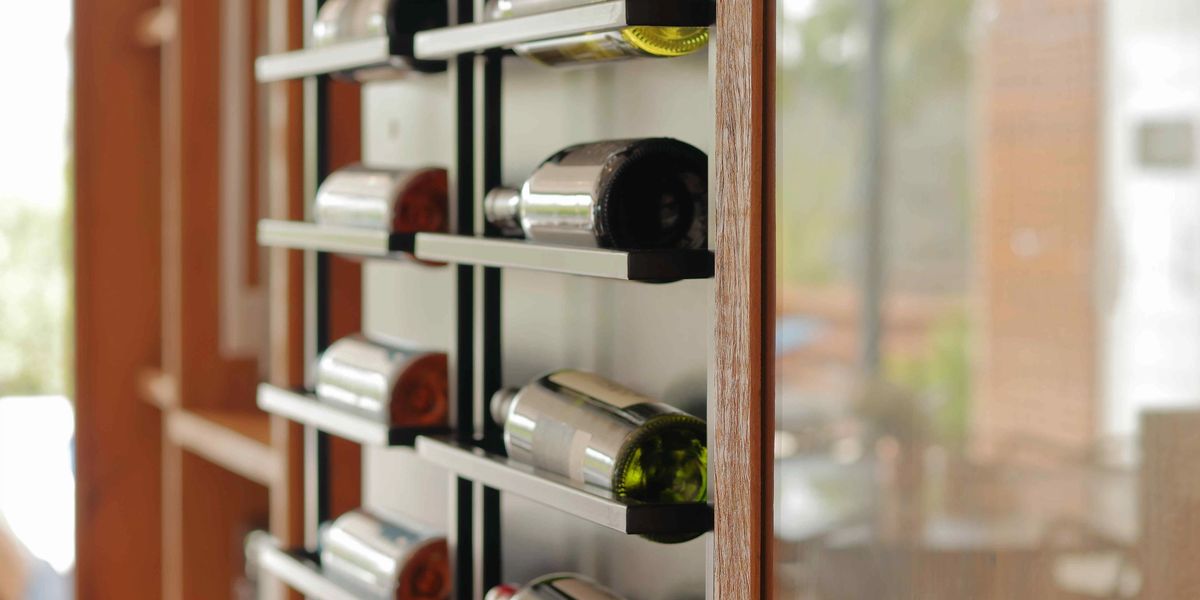
Label-forward racks display bottles horizontally with the label fully visible; available in single, double, and triple-deep configurations, they come in a range of materials and finishes and are often used in glass-enclosed cellars and contemporary spaces. Bulk storage bins maximize capacity and are better for bottles you won't touch for years. Most serious collectors use a combination of both.
The Best Wine Racks for Collectors in 2026
Wall-Mounted Racks: Best for Display and Space Efficiency
VintageView W Series
VintageView is the benchmark for label-forward wall-mounted wine storage. Based on capacity and build quality, the top systems in 2026 are the entry-level W Series 1', the mid-range W Series 7', and the large-capacity Evolution Wine Wall 3C. The W Series 1' is the best entry-level wall column for first-time buyers, kitchen displays, or small wall spaces. As a modular starting point, it can easily expand alongside your collection without requiring you to replace the entire system later.
The label-forward design means every bottle in the rack is visible and identifiable without pulling anything out, which is a significant practical advantage for collections above 50 bottles. VintageView racks are compatible with standard Bordeaux bottles and have separate wide-format options for Burgundy and Champagne.
Best for: Collectors who want a display-worthy installation that shows labels clearly and can expand over time.
Freestanding Racks: Best for Flexibility and Large Collections
Freestanding racks offer the most flexibility; they can be moved, reconfigured, and placed anywhere with adequate space. Freestanding racks can be placed in kitchens, dining rooms, basements, or dedicated wine cellars and are available in wood and metal in a range of capacities.
For serious collectors, modular freestanding systems that can be stacked or expanded as the collection grows are the most practical long-term investment. Look for systems that support both individual bottle slots and bulk storage bins; the former for bottles you access regularly, the latter for cases you plan to age undisturbed.
Best for: Collectors who want flexibility, large capacity, and the ability to configure their storage as the collection evolves.
Countertop Racks: Best for Everyday Drinkers
Countertop racks hold 2 to 12 bottles and are often as decorative as they are functional. These racks prioritize access and style, so whether you're prepping dinner or hosting guests, your favorite bottles are right where you need them, beautifully displayed.
For collectors who rotate a selection of ready-to-drink bottles in the kitchen or dining room alongside a deeper cellar elsewhere, a countertop rack keeps the drinking bottles accessible without mixing them into the aging stock.
Best for: Collectors who want immediate access to a rotating selection of bottles in an entertaining space.
Diamond Bins: Best for Bulk Aging Storage
Diamond bins are the high-capacity, low-access storage option of choice for serious collectors aging wine long-term. Bulk storage maximizes capacity and minimizes cost per bottle. It typically includes diamond cubes, rectangular bins, and shelving for full cases. While it limits access to individual bottles, bulk storage adds visual interest and is ideal for high-volume collectors.
Diamond bins are best used for bottles you don't plan to open for years: Barolo, Bordeaux futures, Champagne aging on the lees. Pair them with label-forward individual slots for bottles you access regularly.
Best for: Collectors who age significant quantities of wine long-term and prioritize capacity over accessibility.
Mapping Your Wine Rack in InVintory
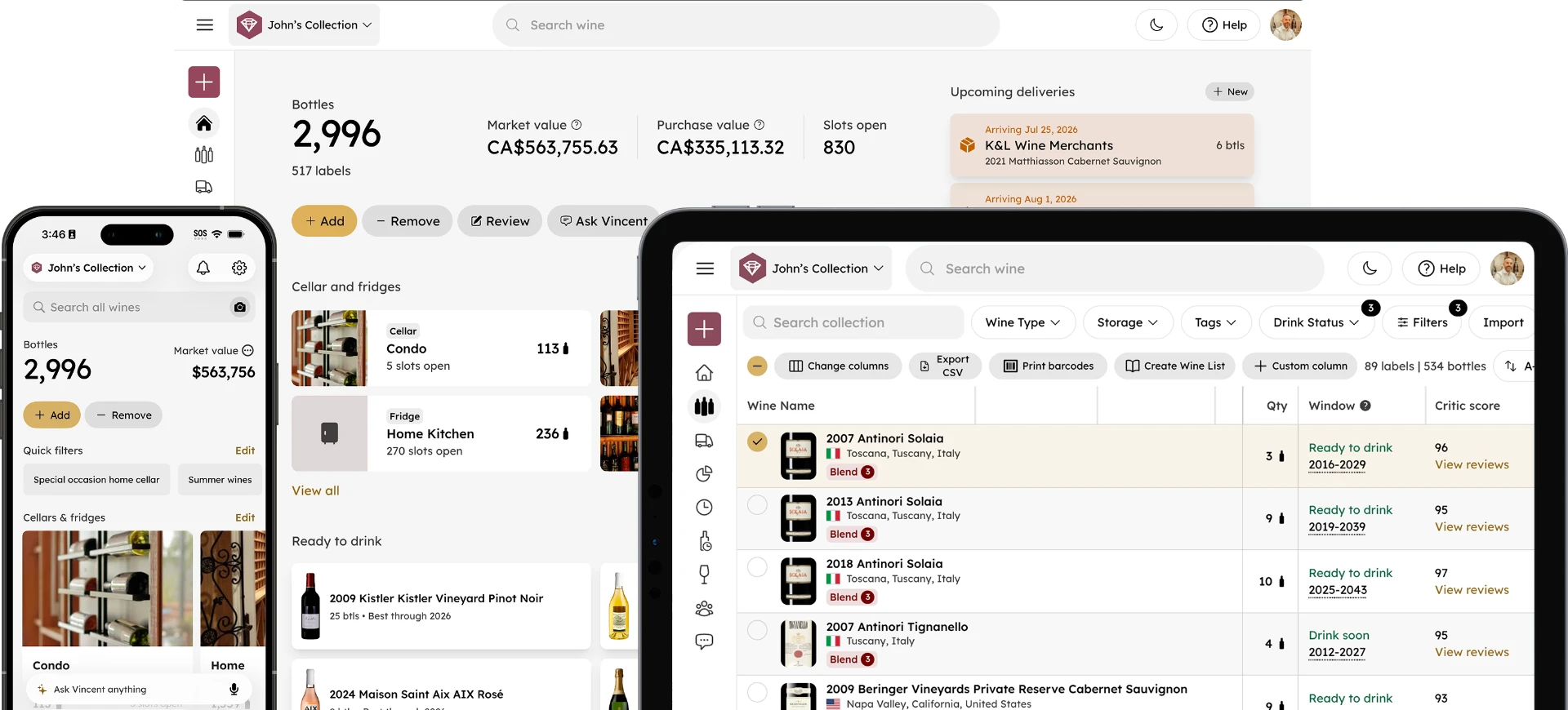
Once your rack is installed, mapping it in InVintory with VinLocate gives every bottle a precise, searchable location. When you search for any wine, InVintory highlights exactly where it is in your rack: no scanning labels, no pulling bottles out to check.
InVintory's VinLocate builder lets you map any rack configuration: rows, columns, bins, and cases. For a full guide to setting up VinLocate for your specific storage, this post on mapping racks, bins, and fridges covers the process step by step.
Map Your Wine Rack in InVintory →
Frequently Asked Questions
What is the best wine rack material?
Redwood, mahogany, and pine are the gold standards for traditional cellars, offering a warm, classic look. Metal offers a modern, industrial look and is typically more durable and easier to maintain. The best material depends on your space, aesthetic preference, and how the rack will be used.
How many bottles should my wine rack hold?
Buy at least 25 percent more capacity than your current collection requires. Collections grow faster than expected, and replacing a rack that's too small is more disruptive than buying a larger one from the start.
Can I track my wine rack in an app?
Yes. InVintory's VinLocate technology maps your exact rack layout and assigns every bottle a precise location. Search for any wine and InVintory highlights exactly where it's stored. Available on iPhone, iPad, and web with a Premium subscription.
What wine racks work with Champagne bottles?
Standard racks sized for Bordeaux-format bottles often don't accommodate Champagne's wider base. VintageView and several other manufacturers offer wide-format options specifically designed for Champagne, Burgundy, and large-format bottles. Always check dimensions before purchasing if your collection includes these formats.
The right rack makes every bottle easier to find and every addition to your collection more intentional. Map it in InVintory and the two work together.